Answers
How to change a Seiko strap
Five minutes, one $7 tool, and two mistakes that put a permanent scratch between the lugs. Here is the order to do it in.
By Stephen V. · Updated Oct 17, 2026
Changing a Seiko strap takes about five minutes and needs exactly one tool: a spring bar tool with a forked end. Measure the lug width first — the gap between the lugs, in millimeters, which on this site’s Seikos is 18, 20 or 22 — then work with the watch face-down on a folded cloth, slide the fork under the spring bar from the outside, and compress it toward the center of the case. Never pry upward against the lug, which is where every scratch comes from.
This is the cheapest meaningful change you can make to a watch, and the reason it is worth a page of its own is the failure mode: a slipped spring bar tool leaves a bright scratch on the inside face of the lug, in the one spot on the case that is impossible to hide and costs more to correct than every strap you will ever own. The procedure that avoids it is not difficult. It is just specific.
Step 1 — find your lug width before you buy anything
Lug width is the distance between the two lugs, which is also the width of the strap end that fits there. It has nothing to do with case diameter — the 45 mm Prospex Sumo takes a 20 mm strap and the 42.5 mm Seiko 5 Sports takes 22 mm, which catches people out constantly. Measure across the gap with a ruler or calipers, or look the reference up: the lug-width guide lists this registry by measurement. Seiko does not publish a lug width for every reference, and where it does not, measuring is the only honest answer.
| Reference | Case | Lug width |
|---|---|---|
| Seiko 5 SNK809 | 37.0 mm | 18 mm |
| Prospex Alpinist SPB505 | 39.5 mm | Not published by Seiko |
| Essentials SUR311 | 40.2 mm | 20 mm |
| Prospex Diver SRPG57 | 42.4 mm | 20 mm |
| Prospex Samurai SRPF03 | 43.8 mm | 22 mm |
| Prospex Sumo SPB103J1 | 45.0 mm | 20 mm |
Step 2 — set up so a slip cannot reach the case
- Fold a cloth or a tea towel and put the watch face-down on it. A microfiber cloth over a hard surface is ideal. This protects the crystal and stops the watch sliding while you push.
- Work on one strap end at a time. Removing both before fitting either is how spring bars get lost and mixed up.
- Use the forked end of the tool, not the pin end. The fork straddles the spring bar and compresses it. The pin end is for push-pin bracelets and drilled lugs, and it is the end that slips on a lug face.
Step 3 — the removal
Slide the fork into the gap between the strap end and the lug, locate the shoulder of the spring bar, and press it toward the middle of the case— parallel to the strap, never levering upward. The bar compresses, that end clears the lug hole, and the strap drops free with gentle pressure outward. If it will not go, you are on the wrong part of the bar, not using too little force. Keep the spring bars; they are matched to the width and they are the part nobody has a spare of.
If your Seiko has drilled lugs— visible holes through the outside of the lug — this is much easier. Push the pin end of the tool straight into the hole from the outside, the bar compresses, and nothing goes near the inside lug face at all. If you are choosing between two references and you change straps often, drilled lugs are a real advantage.
Step 4 — fitting the new strap
Thread the bar through the new strap’s end loop, seat one tip in its lug hole, then compress the other tip with the fork and walk it into place. You should feel and usually hear it seat. Then test it before you wear it: hold the watch head and pull the strap firmly away from the case. A bar that is not seated will come out there, on your desk, rather than on a street. Do that on both ends every single time.
What changes between the strap types
- Straight-end straps fit anything of the right width. They leave a visible crescent of daylight between the strap and a curved diver case. That gap bothers some people and not others; it is cosmetic, not a fault. Seiko’s own 22 mm diver’s urethane strap is a straight end.
- Curved-end straps are cut for a specific case. They close the gap completely and they are not interchangeable — a curved end cut for a Turtle will not sit properly on a different case. Confirm your reference before buying one, because “22 mm” is not enough information on a curved end.
- A NATO adds height. The strap passes underneath the case back, so the watch sits a few millimeters higher on the wrist and wears taller. On an already thick diver that is noticeable. The compensation is that a NATO needs no sizing, fits any wrist out of the box, and is the only strap type that keeps the watch on your arm if one spring bar fails.
- Quick-release spring bars are worth seeking out. They have a small lever on the bar itself and need no tool at all. Many aftermarket straps now ship with them; Seiko’s factory bars generally do not.
Two things this page is not
It is not bracelet resizing. Taking links out of a steel bracelet is a different job with a different tool end, and that has its own page— keep the links you remove, in the box, because they are the item that becomes unobtainable later and the one a future buyer asks for.
And it is not a shopping list. If what you actually need is to choose a strap rather than fit one, the strap and bracelet roundup ranks the options by width and material, and the bracelet replacements page covers the solid-link upgrades. The four items below are the minimum kit: the tool, a nylon strap that fits any wrist, the factory-correct Seiko urethane, and a curved-end rubber for a diver case.
The watches on this page
Specifications are transcribed from Seiko’s published documentation. Prices come from Amazon and carry the date they were verified. We have not handled these watches — here is what we did instead.
Price as of October 23, 2026. Prices move — Amazon's is the one that counts.
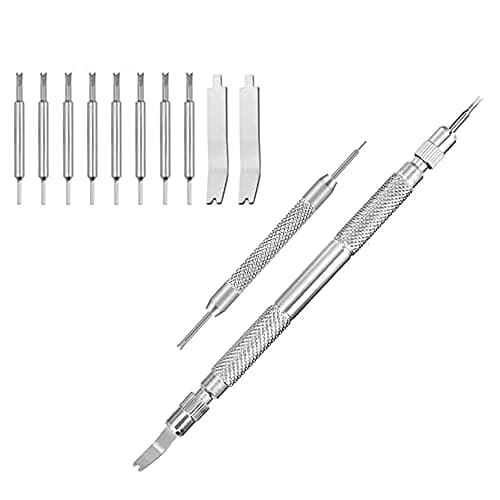
#ad · we may earn a commission from this link to Selizo Spring Bar and Link Tool Kit
Selizo Spring Bar and Link Tool Kit
Best for: Anyone who owns more than one strap
The cheapest thing on this site and the one that unlocks everything else. You cannot change a strap without it.
- Spec completeness for the price
- 8.8
- Build quality for the price
- 7.4
- Fit range
- 9.4
- Durability
- 7.0
- Availability
- 9.2
What it gets right
- Costs less than a single strap and pays for itself on the first change
- Covers both spring bars and bracelet pins
- Replacement tips included, because you will bend one
What it gets wrong
- Cheap tool tips bend and need replacing
- No case-back opener
- A slip scratches the lug — work over a cloth
Skip this one if: you plan to have a shop do every strap change. That is a legitimate choice and it costs about the same as this kit each time.
| Contents | Spring bar tool, link pin pusher, replacement tips |
|---|---|
| Use | Strap changes and bracelet resizing |
| Skill required | None beyond patience and a soft cloth under the watch |
Price as of October 23, 2026. Prices move — Amazon's is the one that counts.
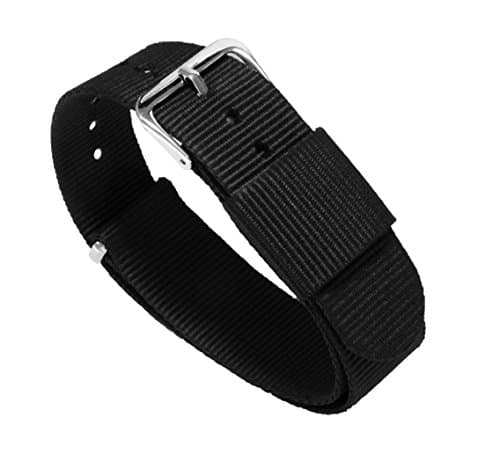
#ad · we may earn a commission from this link to Barton Ballistic Nylon NATO 22mm
Barton Ballistic Nylon NATO 22mm
Best for: The cheapest way to make a Seiko feel like a different watch
The default cheap strap change. Ballistic nylon, hardware that does not rust, and it costs less than takeout.
- Spec completeness for the price
- 9.0
- Build quality for the price
- 8.6
- Fit range
- 8.8
- Durability
- 8.4
- Availability
- 9.4
What it gets right
- Adds about 15 dollars of change to a 300 dollar watch
- Nylon survives water, which leather does not
- The second layer means a broken spring bar does not drop the watch
What it gets wrong
- The extra strap layer raises the watch off the wrist
- 22 mm only — check your lug width first
- Nylon frays at the keeper eventually
Skip this one if: your watch already sits tall. Adding a NATO under a 13.4 mm SRPD makes an already thick watch thicker.
| Width | 22 mm — fits SRPD, Turtle, Samurai |
|---|---|
| Material | Ballistic nylon |
| Hardware | Stainless steel |
| Fit note | A NATO passes under the caseback and adds a few mm of height |
Price as of October 23, 2026. Prices move — Amazon's is the one that counts.
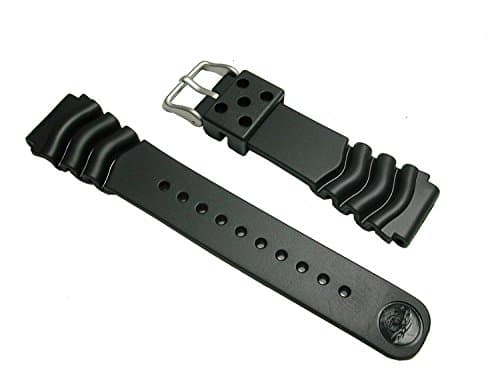
#ad · we may earn a commission from this link to Seiko Genuine Diver's Rubber Strap 22mm
Seiko Genuine Diver's Rubber Strap 22mm
Best for: The factory-correct strap for a Seiko diver
Seiko's own diver's rubber. Not the most refined strap you can buy, but it is the one the watch was designed around.
- Spec completeness for the price
- 8.0
- Build quality for the price
- 7.6
- Fit range
- 8.8
- Durability
- 8.6
- Availability
- 8.4
What it gets right
- Seiko's own part
- Cheap
- Straight ends fit any 22 mm watch
What it gets wrong
- Seiko urethane is stiffer than aftermarket rubber
- Straight ends leave a lug gap on curved cases
- Attracts dust
Skip this one if: you want the strap to feel good immediately. Seiko urethane takes weeks to break in, and softer aftermarket rubber does not.
| Width | 22 mm |
|---|---|
| Material | Seiko urethane |
| Part number | DAL0BP |
| Fit | Straight end — fits any 22 mm lug |
Price as of October 23, 2026. Prices move — Amazon's is the one that counts.
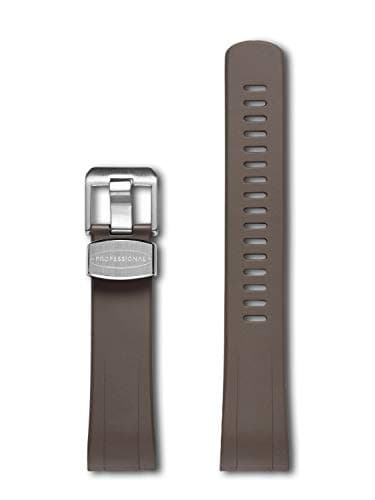
#ad · we may earn a commission from this link to Crafter Blue 22mm Curved-End Rubber
Crafter Blue 22mm Curved-End Rubber
Best for: A gap-free rubber strap on a Turtle or SRPD
A curved-end rubber strap cut for Seiko diver cases. The gap-free fit is the thing generic straps cannot do.
- Spec completeness for the price
- 8.6
- Build quality for the price
- 9.2
- Fit range
- 6.8
- Durability
- 9.0
- Availability
- 8.2
What it gets right
- Curved ends sit flush against the case with no daylight in the gap
- Rubber handles water and sweat without complaint
- Considerably better finished than generic rubber
What it gets wrong
- Case-specific, so it will not transfer to a different watch
- Costs a real fraction of an entry-level Seiko
- Rubber attracts dust
Skip this one if: you swap watches often. A case-specific curved end is the opposite of a universal strap — it fits one family and looks wrong on anything else.
| Width | 22 mm |
|---|---|
| Material | Vulcanized rubber |
| End type | Curved, case-specific — closes the lug gap |
| Fit | Cut for Seiko diver cases; confirm your reference before buying |
Questions
What size strap does my Seiko take?
Measure the gap between the lugs in millimeters — that is the strap width. On this site’s registry the answer is 18, 20 or 22 mm, and it does not follow case diameter: the 45 mm Sumo takes 20 mm while the 42.5 mm Seiko 5 Sports takes 22 mm. The lug-width guide lists them.
Do I need a special tool to change a Seiko strap?
You need a spring bar tool with a forked end, which costs a few dollars. People do it with a small screwdriver and a thumbnail, and that is exactly how the inside lug faces get scratched. If you own more than one strap, buy the tool.
How do I avoid scratching the lugs?
Work face-down on a folded cloth, use the forked end, and compress the spring bar toward the center of the case rather than levering upward against the lug. If the watch has drilled lugs, push the pin end in from the outside instead and nothing touches the inside face at all.
Why is there a gap between my strap and the case?
Because the strap has a straight end and the case is curved. It is cosmetic. A curved-end strap cut for your specific case closes it, but curved ends are case-specific, so the width alone is not enough information when buying one.
Does a NATO strap make a watch wear bigger?
Taller, yes — the strap passes under the case back and lifts the watch a few millimeters off the wrist. On a thick diver that is noticeable. In exchange it needs no sizing, fits any wrist, and holds the watch on even if a spring bar lets go.
Can I reuse the old spring bars?
Usually yes, and keep them either way — they are matched to the lug width and nobody has spares. Replace any bar that is bent, or whose tips no longer spring back crisply when you compress them.
Sources
- Seiko instruction manuals and caliber documentation
- Seiko Watch Corporation — US catalog and specifications
- Seiko customer service — warranty and servicing
- Seiko 5 Sports collection — official specifications
Specifications are transcribed from manufacturer documentation and published standards. Where a manufacturer does not publish a figure, this page says so rather than estimating one.
Read next
- Best Seiko straps and braceletsWhat to buy, by width and material, once you know how to fit it.
- Seiko lug widths by referenceThe measurement this whole job depends on, listed for the registry.
- How to resize a Seiko braceletThe other half of the job: taking links out of the factory bracelet.
- Gifts for someone who owns a SeikoThe tool and a strap are the two gifts that always fit.