Answers
Is Seiko a luxury brand?
Seiko sells at $150 and at $50,000. Whether that is 'luxury' depends on which part you mean.
Answers
The question first, answered in a sentence. Then the detail, with the documentation it came from.
Every page in this section opens with the answer. Not a history of Seiko, not a paragraph establishing that watches are interesting — the answer, in the first sentence, in plain language. Then the detail, then the documentation it came from. If you only read the first sixty words of one of these pages you should have what you came for.
Is this brand any good, and is it luxury?Two different questions that get asked as one. Seiko manufactures its own movements, its own hairsprings and its own dials, which puts it in a very small group of companies worldwide. It also sells watches for under two hundred dollars. Whether that makes it “luxury” depends entirely on what you mean by the word, and the page on it takes both readings seriously rather than picking the flattering one.
What does this spec actually mean? Hardlex versus sapphire is the most-asked version and the one with the most nonsense attached, and water resistance is the one where misunderstanding actually costs people a watch. Both pages give you the standard the number refers to, not just the number.
How do I use this thing? Setting an automatic, winding it, sizing the bracelet. These are mechanical procedures with a right way and several ways that damage the watch — setting the date while the movement is in its date-change window is the classic one, and it is the reason the setting guide exists.
Is this one real? Counterfeit Seikos are common at the entry level precisely because the genuine watches are cheap enough that a fake is plausible. The page on it works through the checks that do not require opening the watch, and buying a Seiko on Amazon covers the check before that one: who is selling it, and what Seiko’s warranty requires of them.
Who actually makes this? Seiko is one of four Japanese companies behind nearly every Japanese watch in a US store, and several famous names belong to one of the other three. Japanese watch brands sorts them by owner, with dates from each company’s own history, and what is a Japanese movement goes a layer deeper, into the three companies that make the calibers everyone else buys. Two pages take the question in the directions it actually gets asked: Seiko, Alba, Pulsar and Lorus sets out which cheaper badges Seiko owns, using what those brands publish about themselves, and Seiko versus the fashion watch brands answers the Armani, Diesel and Michael Kors comparisons with the one fact that settles them — Fossil Group’s own filings name those brands as licences. The third variant, Seiko versus the homage brands, runs the other way: Pagani Design and the rest advertise a Seiko movement because they have one.
Two questions about price and colour. Is there a good Seiko under $100 answers the most-searched budget question honestly — Seiko’s own movement factory sets a floor above that number — and says where the floor actually is instead of padding a list. And Seiko Pepsi bezel watches counts the references whose published bezel row names both red and blue, which turns out to be a much shorter list than the search volume suggests, and explains why nearly all of them are PADI editions.
What does this collection name mean? Prospex is the only Seiko line whose name is a specification claim rather than a style, and Seiko Prospex explained sets out what it certifies, how Land, Sea and Sky differ and which reference to start with in each. Inside it, Seiko Speedtimer explained covers the chronograph line Seiko writes least about — the solar, quartz and mechanical tiers, what Seiko publishes for each, and the one reference a US buyer can reliably get.
Should I buy the old one?The vintage question gets answered with photographs of patina, when the thing that actually decides it is whether the movement can still be repaired — and Seiko publishes the list of calibers it will no longer touch. Buying a vintage Seiko reproduces that list, puts Seiko’s own service prices beside it, and does the replace-versus-restore arithmetic; servicing a Seiko covers the same decision on a watch that is still in production, and buying a used Seiko handles the pre-owned-but-current market, where the live new price decides everything.
Is my watch broken, or is this the specification? Most of what gets reported as a fault is a datasheet nobody read. Why a Seiko runs fast or slow sets Seiko’s published accuracy window against each caliber family — a mechanical Seiko is specified in seconds per day, not per month — and covers the one cause worth checking before you pay anybody. Do Seiko watches need batteries? sorts the range into its four power systems, because an automatic, a battery quartz, a solar and a Kinetic ask completely different things of an owner.
Which number am I even looking at? A Seiko carries three identifiers and the one people quote is usually not on the watch. Seiko model numbers explained separates the marketing reference from the caliber-case code on the back, and shows why prefix decoder tables are unreliable — SRPB43, SRPD93 and SRPE99 are a Presage, a Seiko 5 Sports and a Prospex. Alongside that, every Seiko nickname decoded handles the parallel vocabulary — Turtle, Samurai, Sumo, Willard — and marks which of those words Seiko actually prints and which belong to the forums.
What is it worth, and how do I keep it wearable? Do Seiko watches hold their value? answers the resale question with the mechanism rather than a percentage: volume production works against scarcity, discontinuation is the only reliable engine, and five things are genuinely in your hands. And changing a Seiko strap is the five-minute job that changes a watch more than any dial variant, written around the two mistakes that leave a permanent scratch between the lugs.
Will it fit, and what goes on it? Two measurements answer most of the questions this site receives, and they are not the one every listing leads with. Lug-to-lug rather than diameter decides whether a watch sits on your wrist — which is why a 45 mm Turtle wears more easily than a 45 mm Sumo — and the lug width table decides which straps and bracelets physically fit, reference by reference. From there, Seiko bezel types explains what the ring around the dial is for, and how to mod a Seiko puts the changes in the order that keeps the warranty intact for as long as possible.
Is the number on the spec sheet the number I get? Sometimes not, and power reserve is the clearest case. What a Seiko’s published reserve really gets you works the arithmetic through all four of the ways Seiko powers a watch — roughly 41 hours on the 4R and 7S families, about 70 on the 6R35, months on solar, a three-year cell on quartz — and explains why a watch that has stopped by Sunday morning is almost always performing to specification rather than broken. It is also the page to read before you pay the step up to a three-day movement, because the figure matters enormously to someone rotating three watches and not at all to someone wearing one.
Specifications come from manufacturer documentation — Seiko’s own spec pages, instruction manuals and caliber datasheets. Standards claims reference the standard: ISO 6425 for divers’ watches, ISO 22810 for general water resistance. Neither of those is a detail we can hand-wave, because the whole point of a rating is that it was tested against something specific.
We do not copy specifications from other watch sites. That propagates their errors and adds nothing, and it is how a wrong lug-to-lug figure ends up on nine pages that all cite each other. Where sources genuinely disagree — which happens most often on JDM references — the page says so and shows both figures.
Where a claim would require handling the watch, we do not make it. There are no accuracy measurements here, no lume duration timings, no comfort judgments, no “in our experience.” That rules out a lot of the sentences these pages could otherwise contain, and it is the constraint that makes the rest of them worth reading.
If you find an error, tell us. Material corrections get made and dated on the page — the process is written down on the editorial policy.
38pages. Prices are pulled live and carry the date they were checked; where we could not verify one, the button reads “Check price” rather than showing a number we cannot stand behind.
Answers
Seiko sells at $150 and at $50,000. Whether that is 'luxury' depends on which part you mean.
Answers
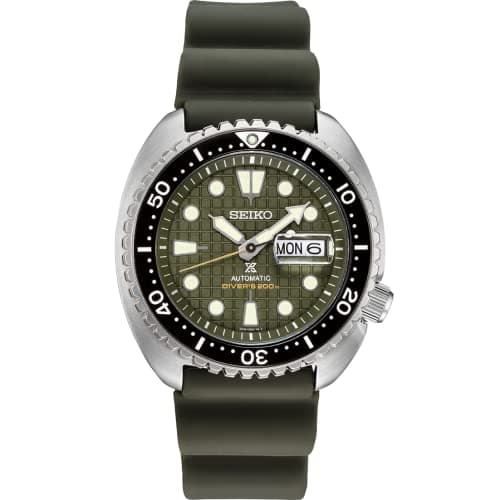
Hardness, shatter resistance and cost. Why Seiko still fits Hardlex to 200m divers.
Top pick
Seiko Prospex King Turtle SRPE05
Price as of October 23, 2026. Prices move — Amazon's is the one that counts.
#ad · we may earn a commission from this link to Seiko Prospex King Turtle SRPE05
Answers
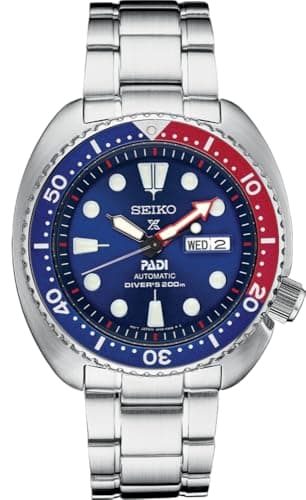
What 30m, 100m and 200m actually permit, and what the ISO 6425 DIVER'S marking certifies.
Top pick
Seiko Prospex Turtle SRPE99
No buyable offer at the last check (October 23, 2026). We show nothing rather than a stale number.
#ad · we may earn a commission from this link to Seiko Prospex Turtle SRPE99
Answers
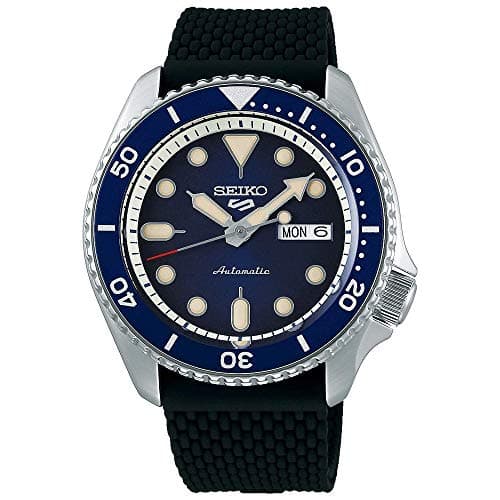
Seiko 5, Prospex, Presage, King Seiko, Grand Seiko — what each name signals and where prices land.
Top pick
Seiko 5 Sports SRPD93
No buyable offer at the last check (October 23, 2026). We show nothing rather than a stale number.
#ad · we may earn a commission from this link to Seiko 5 Sports SRPD93
Answers
The correct sequence, the date-change window that damages the movement, and how to start a stopped watch.
Top pick
Seiko 5 Sports SRPD93
No buyable offer at the last check (October 23, 2026). We show nothing rather than a stale number.
#ad · we may earn a commission from this link to Seiko 5 Sports SRPD93
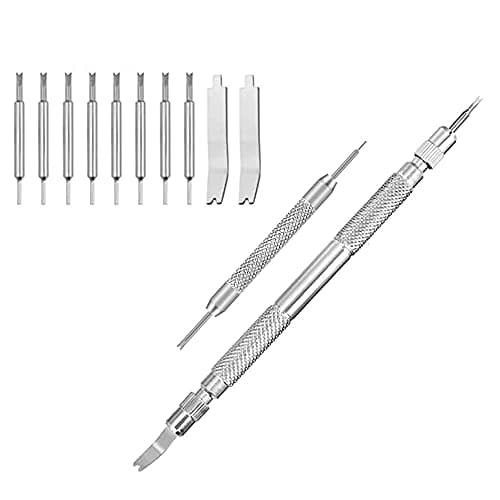
Answers
Pin-and-collar versus screwed links, which links to remove, and how not to scratch the bracelet.
Top pick
Selizo Spring Bar and Link Tool Kit
Price as of October 23, 2026. Prices move — Amazon's is the one that counts.
#ad · we may earn a commission from this link to Selizo Spring Bar and Link Tool Kit
Answers
The checks that identify a counterfeit without opening the watch — reference numbers, printing, behavior, seller.
Top pick
Seiko 5 Sports SRPD93
No buyable offer at the last check (October 23, 2026). We show nothing rather than a stale number.
#ad · we may earn a commission from this link to Seiko 5 Sports SRPD93
Answers
In-house movements down to entry level, real dive certification, and the honest caveats: finishing, Hardlex, QC.
Answers
Vertical integration, where the money goes as you climb, and why the movement is often the cheaper part of the gap.
Answers
Hand-wind a 4R or 6R from the neutral crown; the 7S26 is the exception; you cannot overwind an automatic.
Answers
Seiko's non-radioactive strontium-aluminate lume: how it charges, how it fades overnight, and why it never needs replacing.
Answers
A Japanese company since 1881, designing its movements in Japan - but not every watch is assembled there.
Answers
First character is the year's last digit, second is the month. Why it repeats every ten years and cannot prove authenticity.
Answers
The three-to-five-year guideline, what a service includes, and when replacing beats servicing on an inexpensive Seiko.
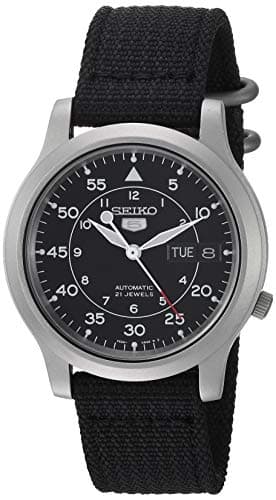
Answers
Five guaranteed attributes in 1963, and an honest count of how many a current Seiko 5 still delivers.
Top pick
Seiko 5 SNK809
$359.009% off
Price as of October 23, 2026. Prices move — Amazon's is the one that counts.
#ad · we may earn a commission from this link to Seiko 5 SNK809
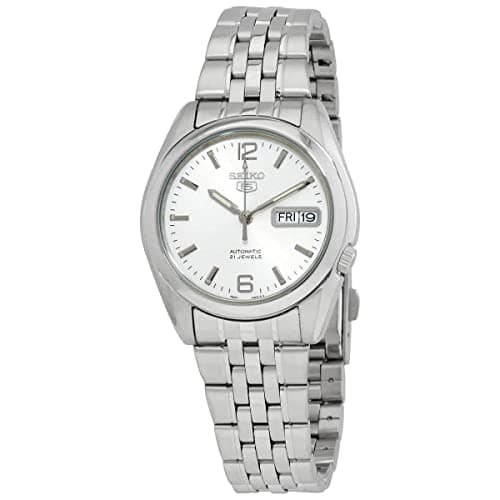
Answers
Seiko's own no-service caliber list, what an overhaul costs by caliber family, and the honest replace-versus-restore math on a cheap vintage Seiko.
Top pick
Seiko 5 SNK385
No buyable offer at the last check (October 23, 2026). We show nothing rather than a stale number.
#ad · we may earn a commission from this link to Seiko 5 SNK385
Answers
Seiko, Citizen, Casio and Orient, and the dozen brand names they run between them — Grand Seiko, Bulova, G-SHOCK, Orient Star and more — sorted by owner, with dates.
Top pick
Seiko 5 Sports SRPD93
No buyable offer at the last check (October 23, 2026). We show nothing rather than a stale number.
#ad · we may earn a commission from this link to Seiko 5 Sports SRPD93
Answers
What Seiko USA's warranty actually requires, how to read an Amazon watch listing, Seiko's own counterfeit warning, and a six-point checklist.
Top pick
Seiko 5 Sports SRPD93
No buyable offer at the last check (October 23, 2026). We show nothing rather than a stale number.
#ad · we may earn a commission from this link to Seiko 5 Sports SRPD93
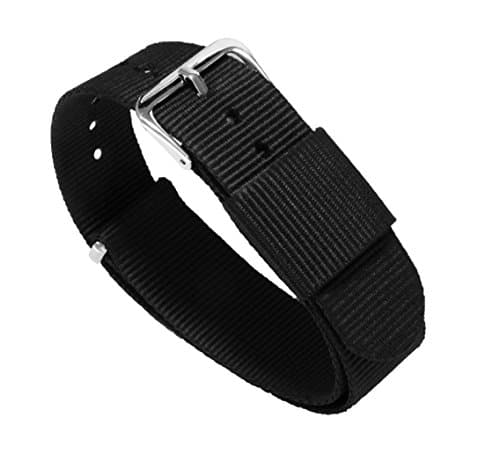
Answers
Which lug width every tracked Seiko uses, how to measure a reference Seiko does not publish, and the three fitment traps that make a correct-width strap still not fit.
Top pick
Barton Ballistic Nylon NATO 22mm
Price as of October 23, 2026. Prices move — Amazon's is the one that counts.
#ad · we may earn a commission from this link to Barton Ballistic Nylon NATO 22mm
Answers
Why lug-to-lug, not diameter, decides whether a watch fits — with the published figures for every tracked Seiko and the cushion-case exception that breaks the rule.
Top pick
Seiko 5 SNK809
$359.009% off
Price as of October 23, 2026. Prices move — Amazon's is the one that counts.
#ad · we may earn a commission from this link to Seiko 5 SNK809
Answers
The order to do a Seiko mod in, what the NH-series movement footprint lets you swap, and the honest cost: the warranty and the water-resistance rating.
Top pick
Seiko 5 Sports SRPD93
No buyable offer at the last check (October 23, 2026). We show nothing rather than a stale number.
#ad · we may earn a commission from this link to Seiko 5 Sports SRPD93
Answers
The four bezels Seiko actually uses — unidirectional elapsed-timing, 24-hour GMT, tachymeter and fixed — with what each one does and which tracked reference carries it.
Top pick
Seiko Prospex Turtle SRPE99
No buyable offer at the last check (October 23, 2026). We show nothing rather than a stale number.
#ad · we may earn a commission from this link to Seiko Prospex Turtle SRPE99
Answers
Judging a pre-owned Seiko that is still in production: the caseback checks, the movement tests by caliber, the service math, and when used stops being a saving.
Top pick
Seiko 5 Sports SRPD93
No buyable offer at the last check (October 23, 2026). We show nothing rather than a stale number.
#ad · we may earn a commission from this link to Seiko 5 Sports SRPD93
Answers
What a Japanese movement actually is, the three companies that make them, and why Japan movement on a dial is not the same claim as made in Japan.
Top pick
Seiko 5 Sports SRPD93
No buyable offer at the last check (October 23, 2026). We show nothing rather than a stale number.
#ad · we may earn a commission from this link to Seiko 5 Sports SRPD93
Answers
The Seiko references whose published bezel specification names both red and blue, why they are almost all PADI Special Editions, and what the GMT bezel does differently.
Top pick
Seiko Prospex Turtle SRPE99
No buyable offer at the last check (October 23, 2026). We show nothing rather than a stale number.
#ad · we may earn a commission from this link to Seiko Prospex Turtle SRPE99
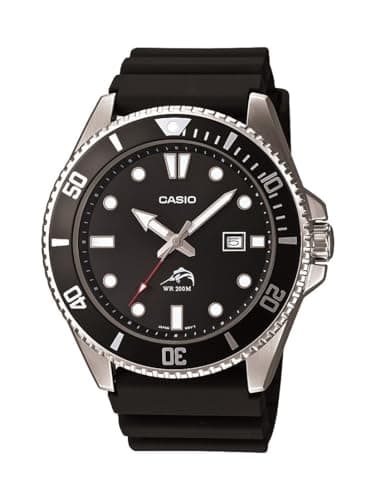
Answers
Why no new Seiko lands under $100, where the real floor of the range is, and the four watches at the bottom of this site's registry worth pricing against each other.
Top pick
Casio Duro MDV106
$84.9519% off
Price as of October 23, 2026. Prices move — Amazon's is the one that counts.
#ad · we may earn a commission from this link to Casio Duro MDV106
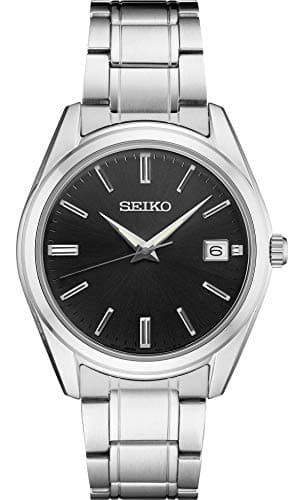
Answers
Why the fashion-brand watch question is really a question about licensing, what Fossil Group's own filings say, and the Seiko references that compete at the same prices.
Top pick
Seiko Essentials SUR311
$265.0019% off
Price as of October 23, 2026. Prices move — Amazon's is the one that counts.
#ad · we may earn a commission from this link to Seiko Essentials SUR311
Answers
Why the homage brands name the Seiko NH35 in their own listings, what that does and does not tell you, and where Seiko's own range answers the same brief.
Top pick
Seiko 5 Sports SRPD93
No buyable offer at the last check (October 23, 2026). We show nothing rather than a stale number.
#ad · we may earn a commission from this link to Seiko 5 Sports SRPD93
Answers
What Lorus and Alba publish about their relationship to Seiko Watch Corporation, where Seiko Epson and Orient actually sit, and the Seiko references that cost about the same.
Top pick
Seiko Essentials SUR311
$265.0019% off
Price as of October 23, 2026. Prices move — Amazon's is the one that counts.
#ad · we may earn a commission from this link to Seiko Essentials SUR311
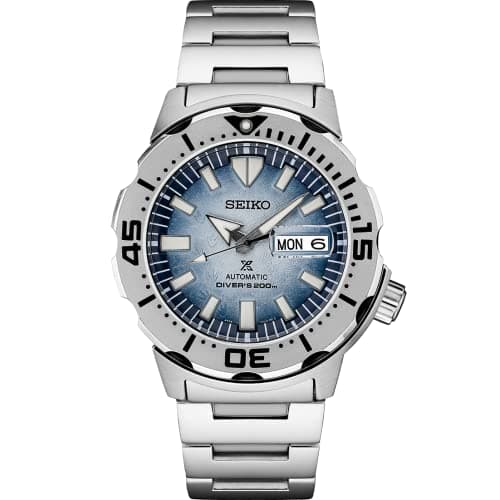
Answers
What the Prospex name certifies, how Land, Sea and Sky differ, the calibers behind each, and the reference to start with in every branch of the collection.
Top pick
Seiko Prospex Diver SRPG57
$550.009% off
Price as of October 23, 2026. Prices move — Amazon's is the one that counts.
#ad · we may earn a commission from this link to Seiko Prospex Diver SRPG57
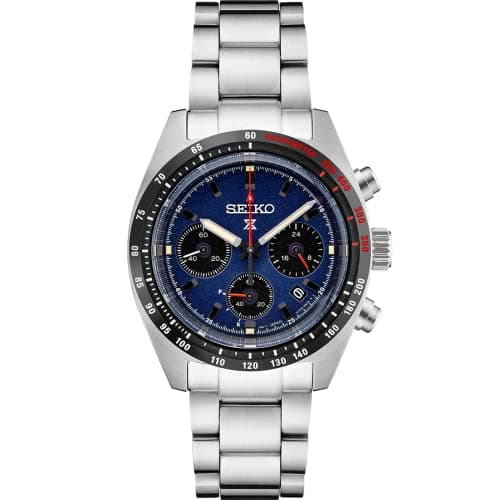
Answers
The three Speedtimer tiers — V192 solar, 8A50 quartz and the 8R mechanicals — what Seiko publishes for each, and the one reference with a reliable US listing.
Top pick
Seiko Prospex Speedtimer Solar Chronograph SSC815
Price as of October 23, 2026. Prices move — Amazon's is the one that counts.
#ad · we may earn a commission from this link to Seiko Prospex Speedtimer Solar Chronograph SSC815

Answers
Turtle, Samurai, Sumo, Monster, Willard, Tuna and the rest — what each name refers to, the reference numbers behind it, and which names are Seiko's own.
Top pick
Seiko Prospex Sumo SPB103J1
Price as of October 23, 2026. Prices move — Amazon's is the one that counts.
#ad · we may earn a commission from this link to Seiko Prospex Sumo SPB103J1
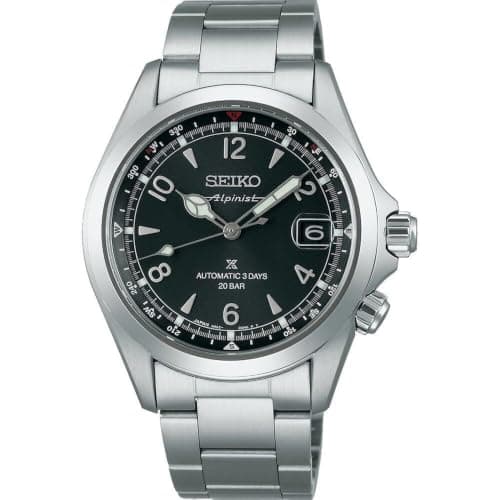
Answers
The stated accuracy window for every Seiko caliber family, how to measure your own watch over a week, and the four fixable causes of a bad rate.
Top pick
Seiko Prospex Alpinist SPB505
No buyable offer at the last check (October 23, 2026). We show nothing rather than a stale number.
#ad · we may earn a commission from this link to Seiko Prospex Alpinist SPB505
Answers
Automatic, battery quartz, solar and Kinetic — which Seikos need a battery, which need daylight, which need winding, and what each costs to keep running.
Top pick
Seiko Essentials SUR311
$265.0019% off
Price as of October 23, 2026. Prices move — Amazon's is the one that counts.
#ad · we may earn a commission from this link to Seiko Essentials SUR311
Answers
Why volume production works against resale, which Seikos are the exception, and the five practical things that protect what a watch is worth when you sell it.
Top pick
Seiko Prospex Sumo SPB103J1
Price as of October 23, 2026. Prices move — Amazon's is the one that counts.
#ad · we may earn a commission from this link to Seiko Prospex Sumo SPB103J1
Answers
Measure the lug width, use the forked end, work with a cloth under the watch — the whole strap-change procedure, plus what curved ends and NATO height change.
Top pick
Selizo Spring Bar and Link Tool Kit
Price as of October 23, 2026. Prices move — Amazon's is the one that counts.
#ad · we may earn a commission from this link to Selizo Spring Bar and Link Tool Kit
Answers
The marketing reference, the caliber-case code on the back and the serial number — what each tells you, where to find it, and why prefix decoders are unreliable.
Top pick
Seiko Prospex Sumo SPB103J1
Price as of October 23, 2026. Prices move — Amazon's is the one that counts.
#ad · we may earn a commission from this link to Seiko Prospex Sumo SPB103J1
Answers
41 hours, 70 hours, six months or three years — the four Seiko power systems, what each reserve figure means off the wrist, and the references that carry them.
Top pick
Seiko Prospex Sumo SPB103J1
Price as of October 23, 2026. Prices move — Amazon's is the one that counts.
#ad · we may earn a commission from this link to Seiko Prospex Sumo SPB103J1