Answers
Japanese watch brands, and who is behind each one
Four companies make nearly every Japanese watch you will see in a US store. Sort the names by company and the landscape gets much simpler.
By Stephen V. · Updated Sep 17, 2026
The big Japanese watch companies are Seiko (which also runs Grand Seiko, King Seiko and Credor), Citizen (which also owns Bulova, Frederique Constant, Alpina, Arnold & Son and the Miyota movement maker), Casio (G-SHOCK, Pro Trek, Edifice, Oceanus) and Orient, now operated by Seiko Epson. Most other Japanese names are small independents.
The short list
Searches for “Japanese watch brands” usually return a list of twenty names in no particular order. It is more useful to start from the companies, because a brand’s owner decides its movements, its service network and, often, its price floor:
| Company | Founded | Watch brands it runs | Known for |
|---|---|---|---|
| Seiko | 1881 | Seiko (Prospex, Presage, 5 Sports, King Seiko, Astron), Grand Seiko, Credor, Alba | The first quartz wristwatch, 1969 |
| Citizen | 1930 | Citizen, The Citizen, Promaster, Campanola, Bulova, Frederique Constant, Alpina, Arnold & Son; Miyota movements | Eco-Drive light power |
| Casio | 1957 | G-SHOCK, Baby-G, Pro Trek, Edifice, Oceanus | G-SHOCK, 1983 |
| Orient (Seiko Epson) | 1950 | Orient, Orient Star | Low-priced mechanical watches |
Seiko: the largest family tree
Seiko’s story starts in 1881, when a 21-year-old Kintaro Hattori opened a watch and clock shop in central Tokyo. According to Seiko’s own heritage pages, his company made Japan’s first wristwatch, the Laurel, in 1913, and the first watch to carry the Seiko name in 1924. The milestones since read like a list of the brand’s sub-lines: King Seiko in 1961, the Seiko 5 in 1963 (Seiko 5 Sports in 1968), Japan’s first diver’s watch in 1965, the Quartz Astron — the world’s first quartz wristwatch — on December 25, 1969, Credor in 1974, Alba in 1979 and Spring Drive in 1999.
Grand Seiko arrived in 1960 and, in 2017, was established as a fully independent brand; its American arm is a wholly owned subsidiary of Seiko Watch Corporation. King Seiko returned in 2022 after more than half a century. The parent company renamed itself Seiko Group Corporation in 2022. How the Seiko-branded lines rank against each other — 5 Sports, Presage, Prospex, King Seiko — is on the Seiko line hierarchy, and where Grand Seiko sits is on Grand Seiko vs Seiko.
Seiko Epson, Seiko Instruments and Orient: the connection people miss
Two of Seiko’s original factories became companies of their own, and both still matter to watch buyers. Seiko’s group history records that Daini Seikosha, now Seiko Instruments Inc., was established in 1937, and that the Suwa factory became independent in 1959 as Suwa Seikosha, now Seiko Epson Corporation. Seiko Instruments is the maker of the NH-series movements sold to other watch brands — the NH35 is its best-known.
Orient is the other half of that story. It began in 1950 as Tama Keiki Co., Ltd., became Orient Watch Co., Ltd. in 1951, launched Orient Star the same year, and merged with Seiko Epson in 2017; Seiko Epson now operates both the Orient and Orient Star brands. So an Orient is not a Seiko Watch Corporation product, but it comes from a company with Seiko roots. The practical comparison is on Seiko vs Orient.
Citizen: the other giant, and the owner of some American and Swiss names
Citizen traces itself to the Shokosha Watch Research Institute, set up in 1918. Its first product, a pocket watch, was named “CITIZEN” in 1924, and Citizen Watch Co., Ltd. was established in 1930. Its defining technology is light power: Citizen released the Crystron Solar Cell in 1976, which it calls the world’s first light-powered analog watch, and created the Eco-Drive name in 1994. The high end of its own range is The Citizen, created in 1995.
What surprises most people is how much of the watch world Citizen owns. Its corporate history lists Bulova as a consolidated subsidiary from 2008 and Frederique Constant from 2016; the 2016 deal also brought Alpina, and a 2012 acquisition brought Arnold & Son. Citizen also makes movements for other brands under the Miyota name, launched in 1980 from a factory Citizen built in 1959 — which is why so many microbrand watches have a Japanese movement inside. The Seiko side of that trade is on NH35 vs Miyota 8215; the brands head-to-head are on Seiko vs Citizen.
Casio: electronics first, watches second, G-SHOCK above all
Casio started as Kashio Seisakujo, founded in Tokyo in April 1946, and became Casio Computer Co., Ltd. in 1957. Its first watch, the Casiotron, came in 1974, and G-SHOCK followed in April 1983. Baby-G and Pro Trek came in the mid-1990s, Edifice in 2000, and Oceanus — Casio’s solar, radio-controlled, full-metal line — in 2004. Casio is a quartz and digital company; it is not where you go for a mechanical movement. The Japan-market side of the range is on JDM Casio, and the head-to-head is Seiko vs Casio.
The independents
Below the four majors is a small and growing field of independent Japanese brands. Two examples: Knot, founded in 2014 in Kichijoji, Tokyo, which sells customizable watches and straps; and Kurono Tokyo, whose watches are designed by the independent watchmaker Hajime Asaoka. We do not rank either here, because we have no verified retail listing for them to point you to, and this site only recommends watches it can show you a live price for.
“Japanese watch brands ranked”: the honest version
Any single ranking of these companies is an opinion dressed as a list. What can be ranked defensibly is which company leads in which category:
- Mechanical watches for the money: Seiko and Orient. Seiko has the depth of range and the dive ratings; Orient often has the sharper specification at the same price. See Prospex vs Kamasu.
- Light-powered quartz: Citizen, which was first and has built the most of its range on it, with Seiko Solar close behind — Seiko Solar vs Eco-Drive has the figures.
- Toughness and digital function: Casio’s G-SHOCK, without serious competition from the other three.
- Japanese high watchmaking: Grand Seiko, with Credor and The Citizen as the other two names at that level.
And one thing that should not decide it: where the brand is from. Every company above is Japanese, and none of them is better because of it. Whether a Japanese watch is a better buy than a Swiss one at the same money is a separate question, answered on specifications on Japanese vs Swiss watches.
Where to start with each
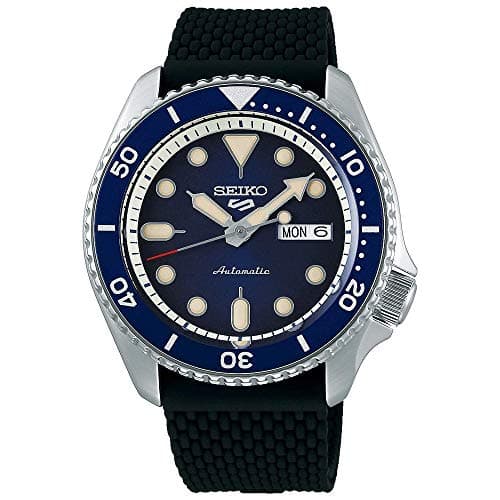
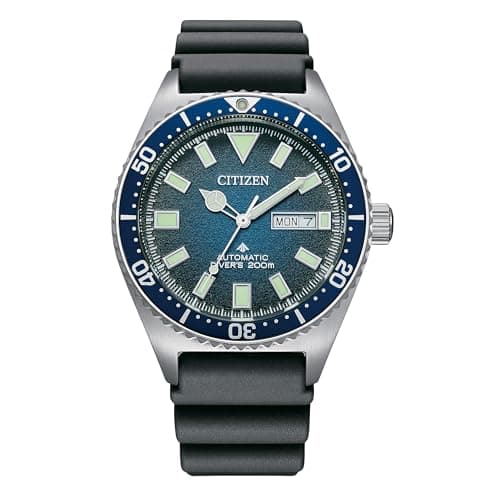
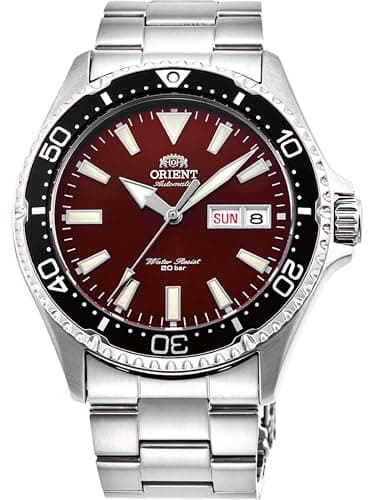
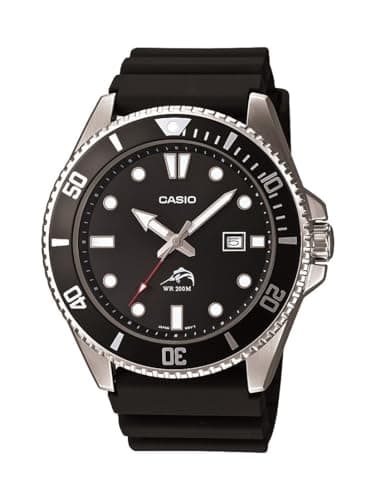
The four watches below are one representative from each company, chosen because each is the clearest example of what its maker does best at an accessible price: Seiko’s 5 Sports SRPD93 on the 4R36, Citizen’s ISO-rated Promaster Dive automatic, Orient’s sapphire Kamasu, and Casio’s 200 m Duro. If you want them ranked against each other by budget, the best Japanese watches under $500 does that.
What we are not claiming
Company dates, ownership and brand lists above come from each company’s own history pages, linked where they appear. Where a company’s page did not state something, we left it out — which is why this page gives no founding year for Kurono Tokyo and does not describe the current corporate status of every sub-brand.
The watches on this page
Specifications are transcribed from Seiko’s published documentation. Prices come from Amazon and carry the date they were verified. We have not handled these watches — here is what we did instead.
$350.0020% off
Price as of Sep 18, 2026. Prices move — Amazon's is the one that counts.
#ad · we may earn a commission from this link to Seiko 5 Sports SRPD93
Seiko 5 Sports SRPD93
SRPD93Best for: A first mechanical watch you will not outgrow
The 5KX case with a movement that hacks and hand-winds, in blue on a silicone strap. The default answer under $350, and the one most people should stop looking after.
- Spec completeness for the price
- 8.8
- Movement relative to bracket
- 8.5
- Case proportions
- 8.9
- Strap flexibility
- 9.5
- Availability
- 8.8
What it gets right
- Hacks and hand-winds — the SKX's biggest omission, fixed
- 22 mm lugs put the entire aftermarket strap catalog in play
- Day-date in a genuinely legible layout
- Case shape is the SKX profile people actually want
What it gets wrong
- Hardlex, not sapphire — it will scratch
- 100 m and no screw-down crown, so it is not an ISO 6425 diver despite the looks
- 13.4 mm thick under a shirt cuff
- Ships on a silicone strap rather than a bracelet
Skip this one if: you want an actual dive watch. The 100 m rating and the absence of a screw-down crown mean this is a dive-styled sports watch, not an ISO 6425 diver. The Turtle is the real one.
| Case diameter | 42.5 mm |
|---|---|
| Lug-to-lug | 46.0 mm |
| Thickness | 13.4 mm |
| Lug width | 22 mm |
| Crystal | Hardlex (hardened mineral) |
| Water resistance | 100 m — splash and swim, not scuba |
| Bezel | Blue unidirectional rotating |
| Dial | Blue sunray |
| Strap | Black silicone |
| Case back | See-through |
| Lume | LumiBrite |
| Caliber | Seiko 4R36 |
| Type | Automatic, hand-winding and hacking |
| Beat rate | 21,600 vph (6 beats/sec) |
| Jewels | 24 |
| Power reserve | Approx. 41 hours |
| Stated accuracy | -35 to +45 sec/day |
| Complications | Day and date |
$255.0014% off
Price as of Sep 18, 2026. Prices move — Amazon's is the one that counts.
#ad · we may earn a commission from this link to Citizen Promaster Dive Automatic NY0129
Citizen Promaster Dive Automatic NY0129
NY0129-07LBest for: A 200 m Japanese automatic diver at the lowest price
Citizen's automatic answer to the Turtle: an ISO 6425 200 m diver on Citizen's own 8204, on rubber, usually undercutting Seiko on price.
- Spec completeness for the price
- 8.6
- Movement relative to bracket
- 8.8
- Case proportions
- 8.4
- Strap flexibility
- 8.0
- Availability
- 8.6
What it gets right
- ISO 6425 certified 200 m diver at a price below most Seiko divers
- Day-date, a screw-down crown and a lumed unidirectional bezel
- Citizen publishes a stated daily rate, which Seiko does not for the 4R at this price
What it gets wrong
- Ships on urethane rather than a bracelet
- Citizen does not publish the crystal material or a lug-to-lug figure
- 13 mm thick
Skip this one if: you want a steel bracelet in the box. This reference ships on a black urethane strap, and Citizen does not publish a lug-to-lug figure to size an aftermarket one from.
| Brand | Citizen |
|---|---|
| Case diameter | 41 mm |
| Lug-to-lug | Not published by Seiko for this reference |
| Thickness | 13 mm |
| Case material | Stainless steel |
| Crystal | Crystal glass — Citizen does not publish the material |
| Water resistance | 200 m (20 bar), ISO 6425 certified |
| Movement | Citizen 8204 automatic |
| Power reserve | Approx. 42 hours |
| Stated accuracy | -20 to +40 sec/day |
| Crown | Screw-down |
| Bezel | Unidirectional rotating diver's bezel |
| Strap | Black urethane (rubber) |
| Dial | Blue |
| Complications | Day and date |
$344.505% off
Price as of Sep 18, 2026. Prices move — Amazon's is the one that counts.
#ad · we may earn a commission from this link to Orient Kamasu
Orient Kamasu
RA-AA0003R39BBest for: Sapphire on a 200 m diver at the lowest price
Sapphire and a 200 m rating at a price where Seiko still fits Hardlex. On paper, the single strongest argument against buying a Seiko diver.
- Spec completeness for the price
- 9.4
- Movement relative to bracket
- 8.8
- Case proportions
- 8.7
- Strap flexibility
- 9.0
- Availability
- 8.5
What it gets right
- Sapphire crystal, which the equivalently priced Seikos do not have
- Hacks and hand-winds
- 200 m with a screw-down crown
What it gets wrong
- Orient's resale and brand recognition are well below Seiko's
- Bracelet quality is the usual criticism
- Fewer aftermarket parts than the Seiko ecosystem
Skip this one if: you want the modding ecosystem. Almost every aftermarket dial, hand set and bezel insert is cut for Seiko cases and NH-series movements, not for Orient.
| Brand | Orient (owned by Seiko Epson) |
|---|---|
| Case diameter | 41.8 mm |
| Crystal | Sapphire |
| Water resistance | 200 m |
| Movement | Orient F6922 automatic, hacking and hand-winding |
| Complications | Day and date |
$84.9522% off
Price as of Sep 18, 2026. Prices move — Amazon's is the one that counts.
#ad · we may earn a commission from this link to Casio Duro MDV106
Casio Duro MDV106
Best for: The cheapest watch on this site that is still a real 200 m diver
A 200 m quartz diver for roughly the price of a strap. The honest floor of this entire category and the answer when the budget is genuinely tight.
- Spec completeness for the price
- 9.5
- Movement relative to bracket
- 8.0
- Case proportions
- 7.6
- Strap flexibility
- 8.4
- Availability
- 9.2
What it gets right
- 200 m for less than most people spend on a bracelet
- Quartz accuracy
- Genuinely hard to damage
What it gets wrong
- Resin strap and mineral crystal
- 44 mm and tall on a small wrist
- Nothing about it is special beyond the value
Skip this one if: you want something to keep. This is a tool that costs nothing and does its job; it is not an object you will still care about in ten years.
| Brand | Casio |
|---|---|
| Case diameter | 44 mm |
| Water resistance | 200 m |
| Movement | Casio quartz, battery-powered |
| Crystal | Mineral |
| Bezel | Unidirectional |
Questions
What are the main Japanese watch brands?
Seiko (including Grand Seiko, King Seiko, Credor and Alba), Citizen (including The Citizen and Promaster), Casio (G-SHOCK, Baby-G, Pro Trek, Edifice, Oceanus) and Orient (including Orient Star). Beyond those four companies are small independents such as Knot and Kurono Tokyo.
Is Orient owned by Seiko?
Not by Seiko Watch Corporation. Orient merged with Seiko Epson in 2017, and Seiko Epson now operates the Orient and Orient Star brands. Seiko Epson began as Seiko’s Suwa factory, which became an independent company in 1959, so the two share roots rather than an owner.
Is Bulova a Japanese brand?
Bulova is owned by a Japanese company: Citizen lists Bulova as a consolidated subsidiary from 2008. Citizen also owns Frederique Constant, Alpina and Arnold & Son.
Is Grand Seiko a separate brand from Seiko?
Yes, since 2017, when Grand Seiko was established as a fully independent brand. It is still part of the Seiko group: its US company is a wholly owned subsidiary of Seiko Watch Corporation.
What is the best Japanese watch brand?
It depends on the watch you want. For mechanical watches, Seiko has the deepest range; for light-powered quartz, Citizen; for toughness, Casio’s G-SHOCK; for high-end finishing, Grand Seiko. There is no single best that holds across all four.
Who makes Miyota movements?
Citizen. Miyota is Citizen’s movement brand, launched in 1980 from a movement factory Citizen built in the town of Miyota in 1959.
Sources
- Seiko — heritage (global)
- Seiko Group — corporate history
- Grand Seiko — 2018 press release (independent brand since 2017)
- Seiko — King Seiko returns (2022)
- Orient — about Orient
- Citizen — genealogy / company history
- Citizen — corporate history (acquisitions)
- Citizen — watch business and brands
- Citizen — Eco-Drive technology
- Federation of the Swiss Watch Industry — Citizen acquires Frederique Constant, Alpina, deMonaco (2016)
- Miyota — brand history
- Casio — corporate history
- Casio — history, chapter 2 (G-SHOCK)
- Knot — about
Specifications are transcribed from manufacturer documentation and published standards. Where a manufacturer does not publish a figure, this page says so rather than estimating one.
Read next
- Is Seiko Japanese?Where Seiko is owned, designed and made.
- Best Japanese watches under $500Seiko, Citizen, Orient and Casio ranked against each other.
- Seiko vs CitizenThe two largest Japanese makers, head to head.
- Seiko vs OrientThe shared roots, and where Orient wins on specification.
- Seiko vs CasioMechanical against quartz and digital.
- Grand Seiko vs SeikoWhere the independent high-end brand sits.