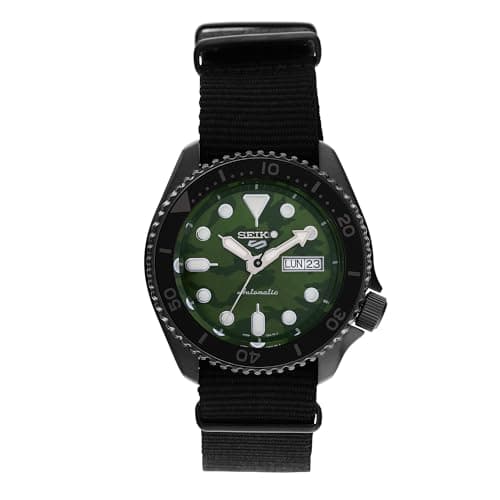
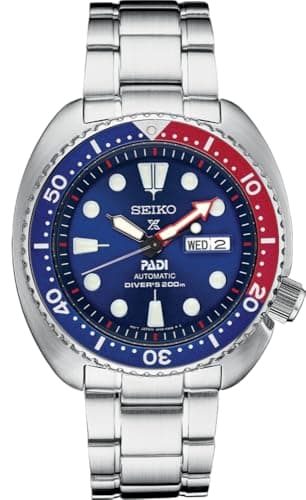
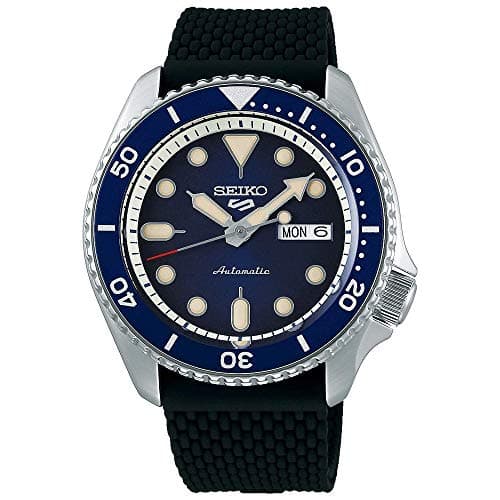
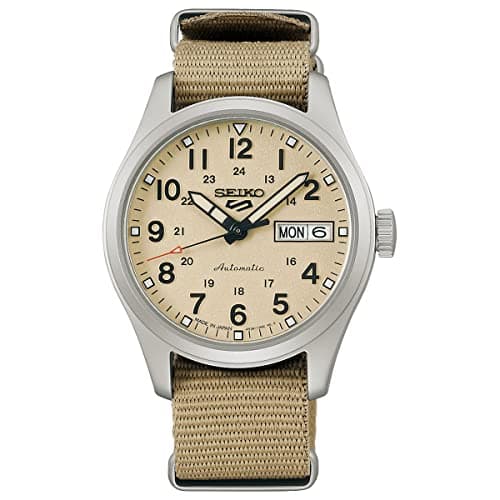
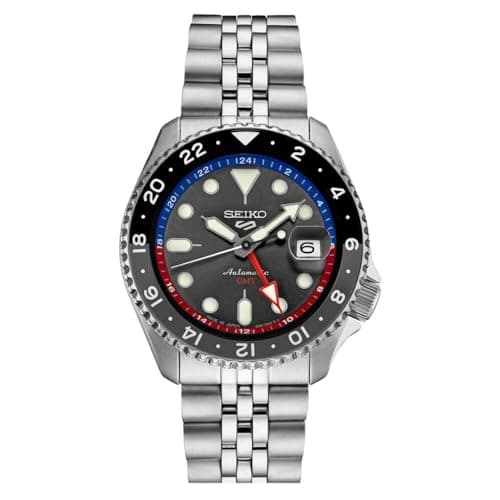
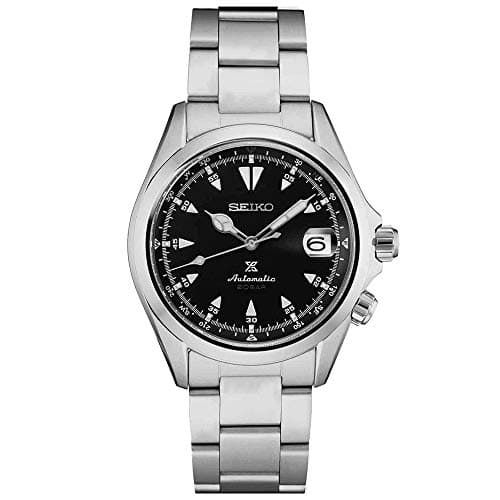
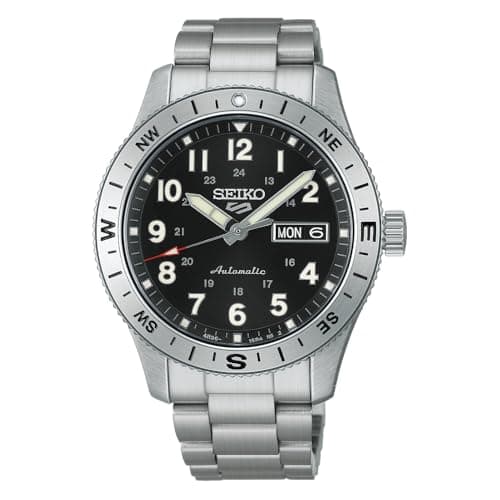
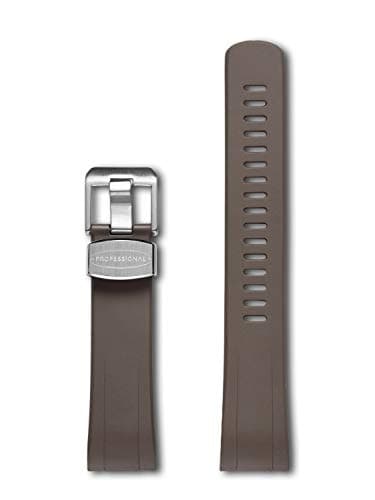
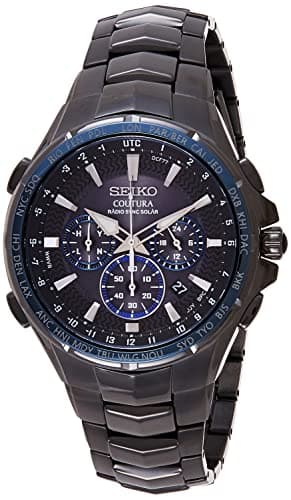
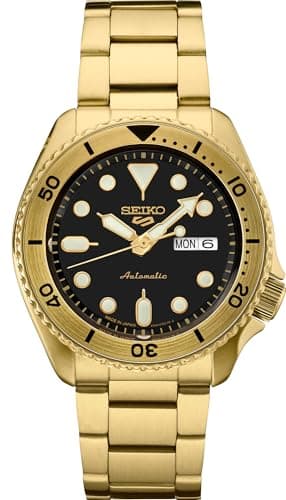
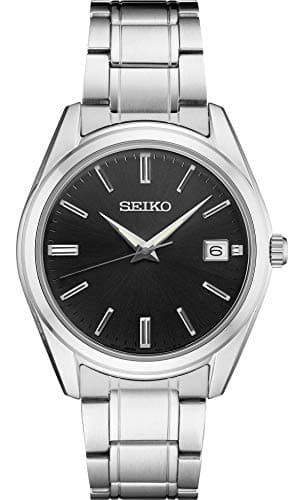
Nearly every “best Seiko” list is organized by product line — here are the Seiko 5s, here are the Prospexes, here are the Presages. That ordering is convenient for the writer and useless for the reader, because nobody walks in wanting “a Presage.” They walk in with a constraint: a number they will not go past, a wrist that certain cases fall off, a job the watch has to survive. These pages are organized around those constraints instead.
The four constraints, in the order they usually bind
Budgetis the loudest and the most elastic. The price ladder pages — under $300, under $500 — exist because the honest answer to “what is the best Seiko under X” often includes “stretch $80 and you get sapphire.” Each rung links to the rung above and below with a plain statement of what the extra money buys and what dropping down costs you. Sometimes the answer is nothing much, and we say that too.
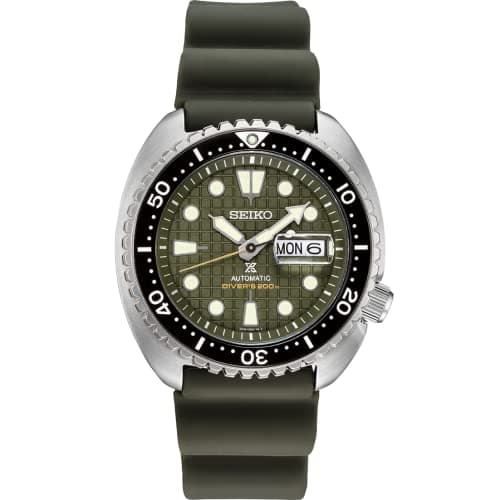
Wrist size binds harder than budget and almost nobody writes about it properly. The number that matters is not case diameter, it is lug-to-lug — the distance from the tip of one lug to the tip of the other, which is what determines whether the watch sits on your wrist or overhangs it. A 45 mm Turtle has a 47.7 mm lug-to-lug and fits wrists that a 42 mm watch with 50 mm lug-to-lug does not. That is why our small-wrist pageranks on lug-to-lug and publishes the figure for every pick, and says “not published by Seiko” where the company does not release it. The same arithmetic runs the other way on the large-wrist page, which ranks on the longest published spans rather than the shortest — and when the problem is a watch that fits across the wrist but will not go under a cuff, that is a third measurement: the thickness ladder runs the whole registry from 6.8 mm up.
Water resistanceis where the category lies to people most consistently. A 100 m rating with no screw-down crown is not a dive watch, however much the bezel says otherwise. A 200 m watch marked to ISO 6425 is — that standard requires a specific set of tests including a condensation check, a thermal shock cycle and a magnetic resistance test, which is why Seiko puts “DIVER’S 200 m” on some watches and plain “200 m” on others. We flag which is which on every pick, because the difference is the entire reason one costs more.
Movementmatters less than the forums suggest, but it is not nothing. The practical split inside Seiko’s mainstream range is between the 7S26, which neither hand-winds nor hacks, and the 4R36, which does both, for roughly the same money. Above that, the 6R35buys a 70-hour power reserve and a tighter accuracy spec. Those are real differences with real prices attached, and the caliber pages have the numbers. If the movement constraint runs the other way — you want the watch to keep better time and ask less of you — the quartz roundupseparates Seiko’s battery, solar and radio-sync ranges, which are not the same decision.
Aspiration is the constraint nobody lists, and it is the one behind a whole category of searches: the watch you actually want costs ten times the budget, and you are looking for what does its job instead. The Rolex alternatives pagemaps each famous archetype — diver, GMT, field, dress, chronograph — to the Seiko that answers it, and is equally plain about the three things no Seiko substitutes for.
Who the watch is foris the constraint most lists reduce to a photograph, and Seiko itself publishes no gender specification at all — its men’s and women’s collections differ on case diameter and lug width and nothing else. The men’s page therefore sets its entry rule as a published 38 mm case or larger and ranks one Seiko per job rather than six versions of the same diver; the women’s page does the same work at the other end of the range, where genuinely small mechanical watches have become hard to buy from anyone.
Buying for someone elseis its own constraint, and from autumn onward it is the most common one. The gift guides here re-use the same picks as the roundups above but explain them for the person purchasing rather than wearing — by budget (under $300, under $500, under $1,000) and by recipient (for him, for her, for someone who already owns a Seiko). A gift can also be set by the occasion rather than the budget: the graduation page filters on current-production calibers, a 100 m rating and whether the case back can be engraved at all, which rules out most of the automatics above. The Black Friday & Cyber Monday hub sets out what has historically discounted and what has not, and carries the deals when they go live.
Collecting rather than buying is a different question again, and it is usually answered with a price prediction nobody can support. The collector pagedoes it from the specification sheet instead — case lineage, market restriction, movement tier, collaboration series, and whether Seiko still publishes the reference at all — and sends the resale half of the question to its own guide, which carries no invented figures.
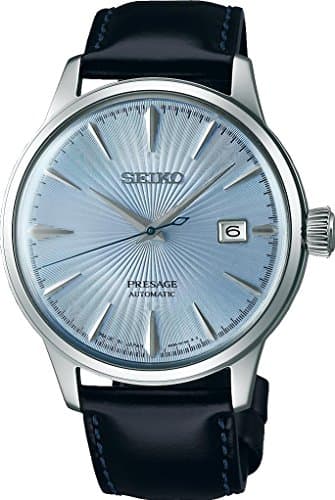
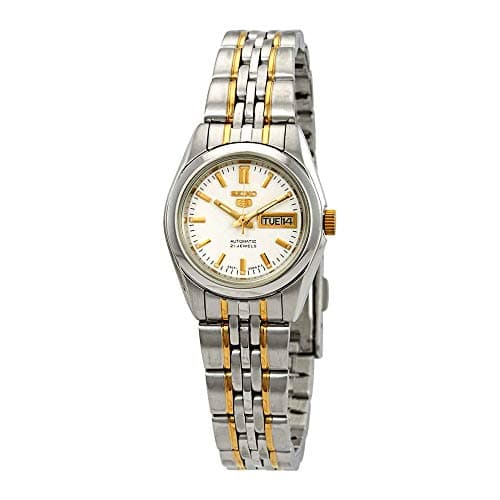
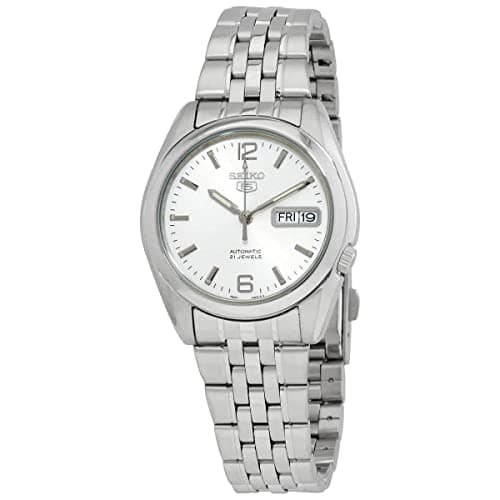
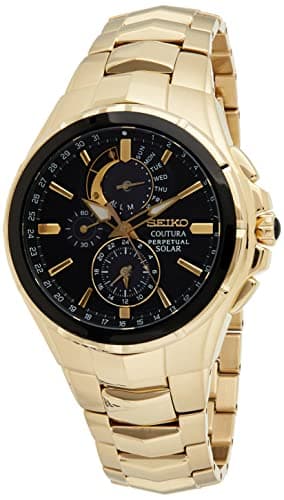
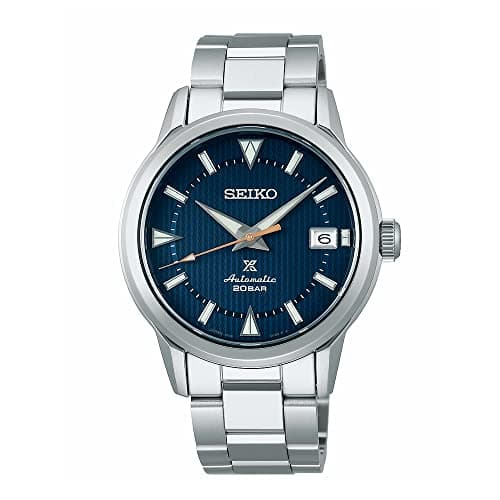
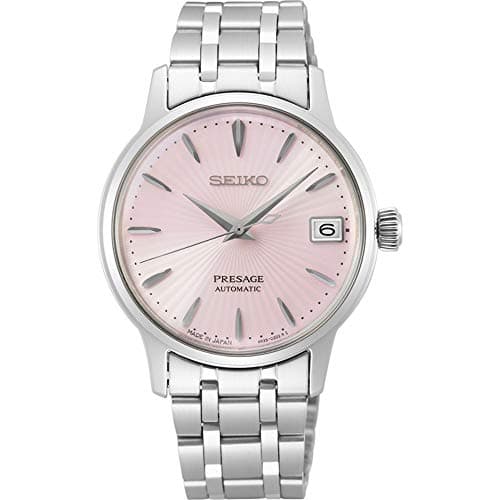
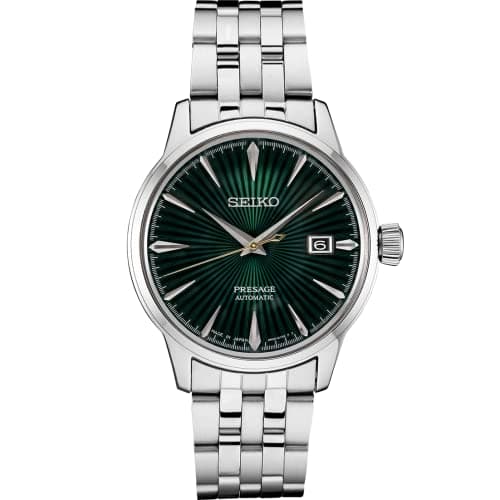
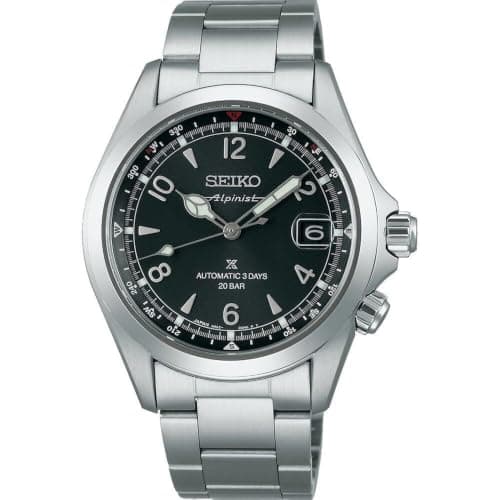
A single specification is sometimes the whole brief. If it is the crystal, the sapphire-crystal roundup ranks every Seiko that ships sapphire rather than Hardlex. If it is timekeeping, the most accurate Seiko watches are ranked on Seiko’s own published rates. If it is the dial color, the green-dial roundup covers every Seiko for which Seiko itself publishes a green dial, ranked on how much of the watch is actually green rather than on the catalog photo. And if the constraint is simply “Japanese,” the best Japanese watches under $500 ranks Seiko against Citizen, Orient and Casio on the same criteria, and the same page at $200 covers the bracket below it. If it is the finish, the gold and two-tone roundup covers the references where Seiko publishes a gold-tone finish and says plainly what it does not publish about the coating. And if it is the calendar, the day-date roundup sorts the range by which calibers show a day as well as a date. If it is the lume, the lume roundup ranks on where Seiko publishes the LumiBrite — hands, markers, bezel — because Seiko publishes no brightness figure for any reference and we will not invent one. If the constraint is how the watch is powered, the solar roundup covers the light-powered range, where a published ±15 seconds a month and a six-month reserve beat any mechanical caliber Seiko sells. And if the constraint is a single dial family rather than a specification at all, the Cocktail Time roundup ranks the Presage references that actually carry the box crystal, and names the two that are sold as Cocktail Times and are not. And where the constraint is a tool rather than a dial, the Alpinist roundup ranks the mountaineering references on their published compass bezel, case geometry and three-day reserve — and says which generations Seiko has stopped publishing specifications for at all.
What the picks are, and what they are not
Every pick on every page here is chosen from published specifications, current availability and live pricing. We have not handled these watches. We have not worn, timed or measured any of them, and we do not claim to — what we did instead was compile the documentation, do the arithmetic, and show it. That is a weaker claim than “we tested twenty divers,” and it has the advantage of being checkable. The methodology page sets out the criteria in the order they are applied.
Every pick also carries a skip-this. Not a hedge, an actual statement of who should not buy it and why. It is the part of a roundup that a page with something to hide never writes, and it is the fastest way to tell whether a recommendation was thought about.
Where the money goes as you climb
The shape of Seiko’s range is worth understanding before you pick a bracket, because the upgrades do not arrive evenly. Under about $250 you are buying the 7S26 and a 30 m rating: a real mechanical watch, no hacking, keep it dry. Around $300 the 4R36 arrives and with it hand-winding, hacking and usually 100 m. Around $400 you cross into genuine ISO 6425 divers — the Turtle and the Samurai — which is the single biggest jump in capability on the whole ladder. Between $500 and $700 you are mostly buying sapphire and better bezel materials on the same movements. Past $700 the 6R35 turns up with its 70-hour reserve and the case finishing improves noticeably.
The two brackets worth knowing about: the $400 step to a real diver buys you more than any other step on the ladder, and the $500-to-$650 stretch mostly buys you a harder crystal. Whether that is worth it depends entirely on whether your watch lives on a desk or on a toolbox, which is a question only you can answer — but it is the right question, and it is not the one most roundups ask.