Roundups
Best Seiko watches under $1,000
The upgrade bracket. Not more watch — a better one, and it pays to know which refinements you are actually paying for.
By Stephen V. · Updated Aug 8, 2026
Quick picks
| # | Watch | Key spec | Score | Price |
|---|---|---|---|---|
| 1 | 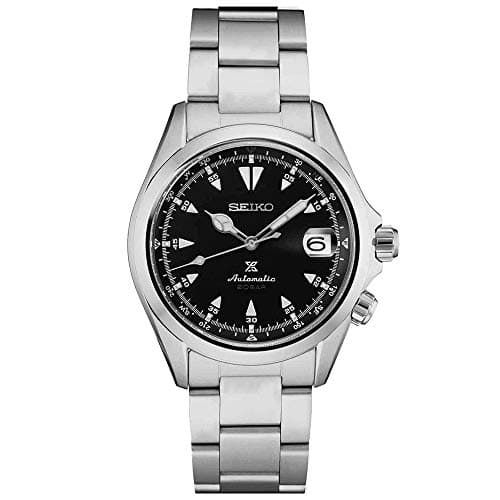 Seiko Prospex SPB117SPB117J1 The 62MAS-lineage diver: 39.5 mm, sapphire, and the 70-hour 6R35. This is where Seiko stops compromising, and the price step reflects it. | 39.5mm · 70h | 9.0out of 10, compiled from published specifications | |
| 2 | 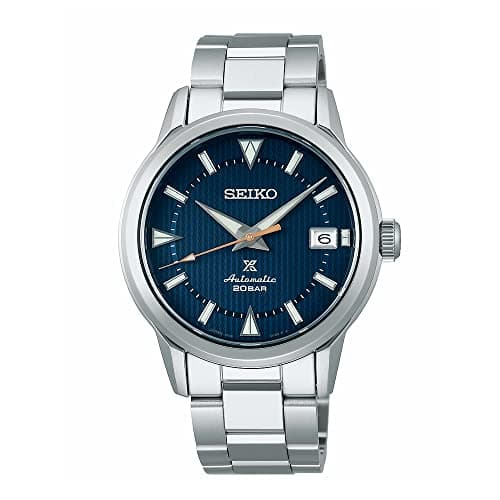 Seiko Prospex Alpinist SBDC159SBDC159 A Japan-market Alpinist built on the 1959 original rather than the compass-bezel one: 38 mm, curved sapphire, 200 m, and the 6R35's 70-hour reserve. | 38mm · 70h | 8.4out of 10, compiled from published specifications | |
| 3 | 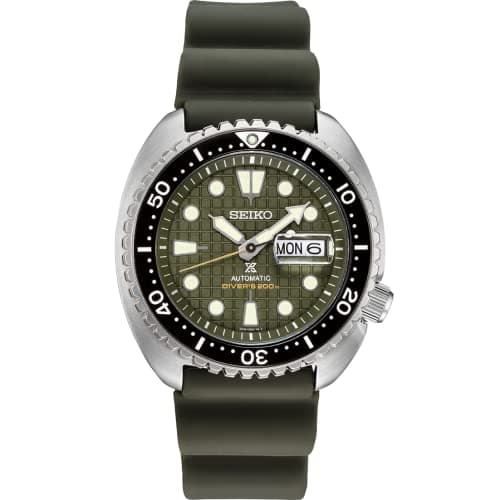 Seiko Prospex King Turtle SRPE05SRPE05 The King Turtle: the Turtle case with sapphire and a ceramic bezel insert. The upgrade that answers the standard Turtle's one real complaint. | 45mm · sapphire | 8.8out of 10, compiled from published specifications | |
| 4 | 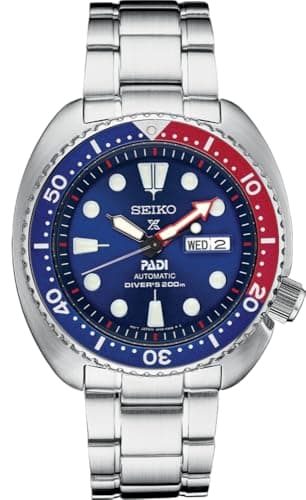 Seiko Prospex Turtle SRPE99SRPE99K1 A real 200 m ISO-rated diver with a screw-down crown, in the cushion case that wears far smaller than its 45 mm suggests. | 45mm · 200m ISO | 8.9out of 10, compiled from published specifications | |
| 5 | 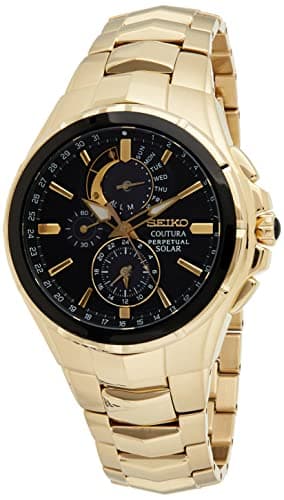 Seiko Coutura Solar Chronograph SSC700SSC700 Sapphire, 100 m, a perpetual calendar and no battery to replace, in one watch. The most complete spec sheet in Seiko's quartz range at anything like this money. | 44mm · solar chrono | 8.4out of 10, compiled from published specifications |
5 picks · Prices last verified October 23, 2026. Where no live price came back we show “Check price” rather than a number we cannot stand behind. How we pick.
Under a thousand dollars is not the bracket where you buy more watch. It is the bracket where you buy a better one. The tier below already sells a genuine ISO 6425 diver, a mechanical GMT and the best-value dress watch Seiko makes; nothing on this page adds a capability those lack. What the extra money buys is refinement — sapphire in place of Hardlex, the 70-hour 6R35 in place of the 4R family, and the case and dial finishing that Seiko reserves for its higher references.
That distinction should change how you shop. If you are chasing the single biggest improvement your money can make, it is not in this bracket at all — it is the step below, from a 100 m sports watch to a real ISO diver, and the under-$500 roundup is where that step lives. Once you are up here, the gains are real but incremental, and the honest framing is that you are paying a clear premium for a crystal you will not scratch and a movement you can leave off over a weekend. Those are worth money to some people and nothing to others, and which camp you are in is most of the decision.
What the extra money actually buys
Sapphire. The crossing into this tier is, more than anything else, the crossing from Hardlex to sapphire. Sapphire sits far higher on the hardness scale, so it shrugs off the fine scratching a mineral crystal collects from desks, doorframes and cuffs over a few years. It is not free of trade-offs — mineral crystal is more shatter-resistant for a given thickness, so the choice is scratch resistance against chip resistance, and the full comparison is here. For a watch you intend to keep, sapphire is the upgrade that shows.
Power reserve. The 6R35 in the SPB117 and the Alpinist carries a 70-hour reserve, against the roughly 41 hours of the 4R movements below it. In practice that is the difference between a watch that has stopped by Monday morning and one that is still running. It is the most genuinely useful upgrade in the bracket for anyone who rotates more than one watch, and it is close to irrelevant for someone who wears a single watch every day.
Finishing. The case bevels are cleaner, the dials are more deeply textured, and the anti-reflective coating on the sapphire references is applied where the cheaper watches have none. None of this is dramatic in a photograph and all of it is visible in the metal, which is exactly why it is hard to justify before you have seen one and easy to justify afterward. It is also the least measurable thing on this page, so this site will not pretend to have quantified it.
Availability, which cuts the other way. The refinement in this bracket sometimes comes attached to a Japan-market reference, as with the Alpinist here, and a Japan-market watch is generally harder to find, more variable in price, and covered by a warranty written for another country. That is a real cost of admission to some of the nicest watches on this page, and it belongs in the ledger next to the sapphire and the reserve rather than being discovered after the fact.
The landscape, pick by pick
The best-proportioned diver
The SPB117 is the 62MAS-lineage diver, and its proportions are the best of any Seiko diver at any price near it — a compact case with a lug-to-lug that fits essentially everybody, sapphire, and the 6R35. This is the pick that most cleanly justifies the bracket, because it is not a Turtle with a nicer crystal; it is a different, better-resolved watch. The honest cost is that it runs at roughly double a Turtle, and it still beats at 21,600 vibrations per hour, so the seconds sweep is no smoother than the watch that costs half as much.
The cult object
The Alpinist SBDC159 is the reference that turned a quiet field-diver hybrid into a collector shorthand: sapphire, the 70-hour 6R35, and an internal compass bezel worked by its own crown. It is genuinely charming and it is genuinely a Japan-market reference, which means the warranty and the documentation follow Japan-market rules rather than your country’s. It is also taller than a field watch has any need to be, and the compass bezel is decorative for almost everyone who buys it. None of that stops it being one of the most likable watches Seiko makes.
The sapphire Turtle
The King Turtle SRPE05 answers the standard Turtle’s one real complaint — the Hardlex — with sapphire and a ceramic bezel insert, on an otherwise identical 200 m ISO diver. If you want the Turtle case and you want it to still look new in ten years, this is the honest route to that, and it costs meaningfully more than the base watch for the same movement and rating. The internal day/date magnifier divides people and cannot be removed, which is worth knowing before rather than after.
The value anchor
The standard Turtle SRPE99 is on this list precisely to argue against overspending. It is the same 200 m ISO 6425 diver, the same 4R36, the same forgiving cushion case as the King Turtle, for markedly less — the difference is the crystal and the bezel insert. If you are honest that your watch lives on a desk and never meets granite, the base Turtle is the watch and the rest of this page is optional. Every roundup should contain the reason not to spend the money, and here it is.
The solar chronograph
The Coutura SSC700 is the outlier: a solar chronograph with sapphire, a perpetual calendar that is correct through 2100, and quartz accuracy that no mechanical watch here approaches. It is the pick for someone who wants a chronograph that will still work in a decade without a service bill, and it is not the pick for anyone whose interest in this bracket is the mechanical movement, because there is not one. Being clear with yourself about that is the whole decision on this reference.
What the bracket does not buy
It does not buy a smoother seconds hand. Every mechanical watch here, from the 4R36 Turtle to the 6R35 SPB, runs at 21,600 vibrations per hour, so the sweep is identical and anyone describing the pricier movement as smoother is describing something that is not there. It does not buy a dressier watch by default — most of this page is tool watches — and it does not buy dramatically better timekeeping, because the 6R family’s tighter accuracy window still lives in the same neighborhood as the 4R. What you are buying is durability of finish and freedom from winding, and if neither of those moves you, the tier below is not a compromise. It is the answer. For why any of these cost what they do, see our breakdown of Seiko pricing.
The picks in full
Specifications are transcribed from Seiko’s published documentation. Prices come from Amazon and carry the date they were verified. We have not handled these watches — here is what we did instead.
No buyable offer at the last check (October 23, 2026). We show nothing rather than a stale number.
#ad · we may earn a commission from this link to Seiko Prospex SPB117
Seiko Prospex SPB117
SPB117J1Best for: The best-proportioned Seiko diver, if the budget stretches
The 62MAS-lineage diver: 39.5 mm, sapphire, and the 70-hour 6R35. This is where Seiko stops compromising, and the price step reflects it.
- Spec completeness for the price
- 9.3
- Movement relative to bracket
- 9.2
- Case proportions
- 9.6
- Strap flexibility
- 9.2
- Availability
- 7.9
What it gets right
- 70-hour power reserve — leave it off over a weekend and it is still running
- Sapphire, and a tighter stated accuracy spec than the 4R family
- 39.5 mm with a 46.4 mm lug-to-lug is the most universally wearable diver Seiko makes
What it gets wrong
- Roughly double the price of a Turtle
- 6R35 is still a 21,600 vph movement, so the seconds sweep is no smoother
- 20 mm lugs on a diver feel narrow to some
Skip this one if: your budget is doing other work. A Turtle is the same water rating and the same 6-beat sweep for half the money; what you buy here is sapphire, the power reserve and the proportions.
| Case diameter | 39.5 mm |
|---|---|
| Lug-to-lug | 46.4 mm |
| Thickness | 12.4 mm |
| Lug width | 20 mm |
| Crystal | Sapphire with anti-reflective coating |
| Water resistance | 200 m, ISO 6425 rated |
| Crown | Screw-down |
| Caliber | Seiko 6R35 |
| Type | Automatic, hand-winding and hacking |
| Beat rate | 21,600 vph (6 beats/sec) |
| Jewels | 24 |
| Power reserve | Approx. 70 hours |
| Stated accuracy | -15 to +25 sec/day |
| Complications | Date |
No buyable offer at the last check (October 23, 2026). We show nothing rather than a stale number.
#ad · we may earn a commission from this link to Seiko Prospex Alpinist SBDC159
Seiko Prospex Alpinist SBDC159
SBDC159Best for: A small, hard-wearing field watch with a 70-hour movement
A Japan-market Alpinist built on the 1959 original rather than the compass-bezel one: 38 mm, curved sapphire, 200 m, and the 6R35's 70-hour reserve.
- Spec completeness for the price
- 9.0
- Movement relative to bracket
- 9.2
- Case proportions
- 9.3
- Strap flexibility
- 7.6
- Availability
- 7.1
What it gets right
- 38 mm with a 46.2 mm lug-to-lug — genuinely small by current standards
- 70-hour power reserve and curved sapphire
- 200 m on a field watch, with a screw-down crown and a hard-coated case
What it gets wrong
- No internal compass bezel — that is the other Alpinist
- 19 mm lugs, an awkward width with a thin aftermarket
- Japan-market warranty
Skip this one if: the compass bezel was the thing pulling you to an Alpinist. This reference does not have one, and the references that do now sit several hundred dollars higher.
| Market | Japanese domestic market (SBDC prefix) |
|---|---|
| Case diameter | 38.0 mm |
| Lug-to-lug | 46.2 mm |
| Thickness | 12.9 mm |
| Lug width | 19 mm |
| Case material | Stainless steel with a super-hard coating |
| Crystal | Curved sapphire, anti-reflective inner coating |
| Water resistance | 200 m (20 bar) |
| Crown | Screw-down |
| Bezel | Fixed — no compass bezel on this reference |
| Display back | Yes — see-through screw caseback |
| Caliber | Seiko 6R35 |
| Type | Automatic, hand-winding and hacking |
| Beat rate | 21,600 vph (6 beats/sec) |
| Jewels | 24 |
| Power reserve | Approx. 70 hours |
| Stated accuracy | -15 to +25 sec/day |
| Complications | Date |
Price as of October 23, 2026. Prices move — Amazon's is the one that counts.
#ad · we may earn a commission from this link to Seiko Prospex King Turtle SRPE05
Seiko Prospex King Turtle SRPE05
SRPE05Best for: A Turtle with sapphire instead of Hardlex
The King Turtle: the Turtle case with sapphire and a ceramic bezel insert. The upgrade that answers the standard Turtle's one real complaint.
- Spec completeness for the price
- 8.9
- Movement relative to bracket
- 8.5
- Case proportions
- 8.8
- Strap flexibility
- 9.5
- Availability
- 8.1
What it gets right
- Sapphire crystal — the single biggest upgrade over a standard Turtle
- Ceramic bezel insert resists the scuffing an aluminum insert picks up
- Same forgiving 47.7 mm lug-to-lug
What it gets wrong
- The day/date magnifier is divisive and cannot be removed
- Costs meaningfully more than a standard Turtle for the same movement
- Still a 45 mm-wide case
Skip this one if: you do not care about crystal hardness. You are paying a real premium for sapphire and ceramic on an otherwise identical watch — if your Turtle lives on a desk, Hardlex will never bother you.
| Case diameter | 45.0 mm (cushion case) |
|---|---|
| Lug-to-lug | 47.7 mm |
| Thickness | 13.22 mm |
| Lug width | 22 mm |
| Crystal | Sapphire, anti-reflective inner coating, with a magnifier over the day/date |
| Bezel insert | Black ceramic |
| Water resistance | 200 m, ISO 6425 rated |
| Crown | Screw-down, at 4 o'clock |
| Dial | Khaki green with a 3-D pressed pattern |
| Strap | Khaki green silicone |
| Caliber | Seiko 4R36 |
| Type | Automatic, hand-winding and hacking |
| Beat rate | 21,600 vph (6 beats/sec) |
| Jewels | 24 |
| Power reserve | Approx. 41 hours |
| Stated accuracy | -35 to +45 sec/day |
| Complications | Day and date |
No buyable offer at the last check (October 23, 2026). We show nothing rather than a stale number.
#ad · we may earn a commission from this link to Seiko Prospex Turtle SRPE99
Seiko Prospex Turtle SRPE99
SRPE99K1Best for: An actual dive watch you can also wear daily
A real 200 m ISO-rated diver with a screw-down crown, in the cushion case that wears far smaller than its 45 mm suggests.
- Spec completeness for the price
- 9.0
- Movement relative to bracket
- 8.5
- Case proportions
- 8.8
- Strap flexibility
- 9.5
- Availability
- 8.6
What it gets right
- Genuine ISO 6425 diver, not a diver-styled sports watch
- 47.7 mm lug-to-lug means it fits wrists that 45 mm suggests it should not
- Screw-down crown at 4 o'clock keeps it off the back of your hand
What it gets wrong
- Hardlex on a watch at this price is the recurring Seiko complaint
- The 45 mm figure scares people off before they try one
- PADI co-branding on the dial is not for everyone
Skip this one if: you have a wrist under about 6.5 inches. The lug-to-lug is forgiving but the case is still visually wide, and the smaller SRPG references exist for exactly this reason.
| Case diameter | 45.0 mm (cushion case) |
|---|---|
| Lug-to-lug | 47.7 mm |
| Thickness | 13.4 mm |
| Lug width | 22 mm |
| Crystal | Hardlex (hardened mineral) |
| Water resistance | 200 m, ISO 6425 rated for scuba diving |
| Crown | Screw-down, at 4 o'clock |
| Bezel | Unidirectional elapsed-timing bezel, PADI red and blue |
| Lume | LumiBrite on hands and markers |
| Bracelet | Steel, three-fold clasp with push-button release |
| Caliber | Seiko 4R36 |
| Type | Automatic, hand-winding and hacking |
| Beat rate | 21,600 vph (6 beats/sec) |
| Jewels | 24 |
| Power reserve | Approx. 41 hours |
| Stated accuracy | -35 to +45 sec/day |
| Complications | Day and date |
No buyable offer at the last check (October 23, 2026). We show nothing rather than a stale number.
#ad · we may earn a commission from this link to Seiko Coutura Solar Chronograph SSC700
Seiko Coutura Solar Chronograph SSC700
SSC700Best for: A quartz watch you charge with daylight and otherwise ignore
Sapphire, 100 m, a perpetual calendar and no battery to replace, in one watch. The most complete spec sheet in Seiko's quartz range at anything like this money.
- Spec completeness for the price
- 8.9
- Movement relative to bracket
- 8.6
- Case proportions
- 7.8
- Strap flexibility
- 8.0
- Availability
- 8.5
What it gets right
- Sapphire crystal at a price where Seiko normally fits Hardlex
- Solar — no battery change for the life of the capacitor
- Perpetual calendar means the date is right through February without you touching it
- Chronograph, alarm and a power-reserve indicator in one watch
What it gets wrong
- 44 mm is a large watch, and Seiko does not publish a lug-to-lug for it
- The gold-finish case is a styling commitment
Skip this one if: you want something mechanical or something small. This is a big light-powered quartz with a lot of functions, and that is the whole point of it.
| Case diameter | 44 mm |
|---|---|
| Thickness | 11.77 mm |
| Lug-to-lug | Not published by Seiko for this reference |
| Case material | Stainless steel with a gold finish |
| Crystal | Sapphire |
| Water resistance | 100 m (10 bar) |
| Caliber | Seiko V198 solar chronograph |
| Stated accuracy | ±15 sec/month |
| Power reserve | Approx. 6 months from full charge |
| Chronograph | 60 minutes, in 1/5-second increments, with split-time measurement |
| Calendar | Perpetual — leap year, month, day and date, to 2100 |
| Complications | Alarm, power reserve indicator, small seconds |
| Dial | Black |
| Bracelet | Stainless steel |
How to choose in the upgrade tier
Decide whether you are upgrading a crystal or a capability
This is the question that keeps people from overspending. If the thing pulling you up here is sapphire, understand that you are buying scratch resistance and a little finishing, not a more capable watch — a King Turtle does nothing a Turtle cannot except resist marks. If the thing pulling you up is the 70-hour reserve, that is a real behavioral difference and the SPB117 or the Alpinist is the honest buy. Name the reason first and the shortlist writes itself.
The 6R35 question
The 70-hour reserve is worth the most to people who own several watches and rotate them, and the least to people who wear one watch daily, because a watch on the wrist every day never runs down regardless of its reserve. Be honest about which you are. A single-watch owner buying the 6R35 for its reserve is paying for a feature that will almost never engage, and there is no shame in buying the SPB117 for its proportions instead and treating the reserve as a bonus.
Do not skip past the value anchor
Read the standard Turtle’s card before you commit to anything above it. It is the same rating, the same movement and the same wearability as the King Turtle for less, and the gap is a crystal. For a desk-worn watch that gap will never bother you, and the money is better spent on a bracelet or simply kept. The most common mistake in this bracket is buying the upgrade reflexively because it is the upgrade.
Match the watch to the wardrobe you actually own
Four of the five picks here are tool watches, and if you already own a sports watch, adding another one is how a collection ends up lopsided. The Alpinist leans more versatile than a diver and the Coutura covers the chronograph lane, so if what you lack is not another diver, buy the thing you do not have rather than the highest-scoring diver on the page.
Sapphire, ceramic, or neither
Sapphire matters most for a watch that meets abrasive surfaces; a ceramic bezel insert matters most for a watch that gets knocked, because an aluminum insert scuffs where ceramic does not. The King Turtle gives you both, the SPB and Alpinist give you sapphire without the ceramic bezel, and the base Turtle gives you neither. Decide how the watch will be worn before you decide how much of that hardness you are paying for.
Weigh a Japan-market warranty before you buy one
Two of the most tempting references in this bracket are Japan-market watches, and a JDM purchase through a third-party seller is not covered the way a domestic reference is. If warranty service where you live matters, price that risk in before you commit — sometimes the international reference a step down is the smarter buy precisely because you can get it serviced without shipping it overseas. This is the least glamorous line on the page and one of the most practical.
Spend the last of the budget on a strap, not a spec
Once you are in this bracket the marginal spec gains get expensive fast, and a strap or bracelet upgrade often changes how a watch feels more than the next crystal or movement step does. If you are torn between two references separated mainly by finish, buy the cheaper one and put the difference into a strap you will actually wear — it is the highest-return money left on the table up here.
Read the score components, not the total
The overall figures on the cards below bundle several axes together, and in this bracket the one that should move you is proportions and finishing, not availability or strap flexibility. A reference that scores a touch lower overall because it is harder to find may still be the better watch on your wrist. Look at what each number is measuring before you let a single total decide between two watches that are, functionally, very close.
What the numbers cannot settle
Whether the Alpinist’s height bothers you, how the SPB’s bracelet tapers on your wrist, whether the Speedtimer’s dial reads as sharp or busy in person — none of that is in a specification, and this site has not handled these watches. The published figures get you to a shortlist of two; the last step is seeing one, and in this bracket, where the differences are finish rather than function, that last step matters more than it does lower down.
Questions
Is a Seiko under $1,000 worth it over one under $500?
Only for specific reasons: sapphire instead of Hardlex, the 70-hour 6R35 instead of a 4R movement, and cleaner finishing. None of those is a new capability — the tier below already includes a real ISO 6425 diver. If you cannot name which of those three you are buying, the cheaper bracket is not a compromise.
What is the best Seiko diver under $1,000?
The SPB117. Its proportions are the best of any Seiko diver near the price, it uses sapphire and the 70-hour 6R35, and its lug-to-lug fits a very wide range of wrists. The cost is that it runs at roughly double a Turtle and beats at the same 21,600 vph, so the seconds sweep is no different.
Does the 6R35 keep noticeably better time than the 4R36?
Its stated accuracy window is tighter, but both movements run at 21,600 vph and both land in the same practical neighborhood day to day. The 6R35’s headline advantage is the 70-hour power reserve, not a dramatic accuracy gain. Buy it for the reserve and the finishing, not for timekeeping alone.
Is the King Turtle worth it over a standard Turtle?
Only if crystal hardness matters to how you wear it. The upgrade is sapphire plus a ceramic bezel insert on an otherwise identical 200 m diver — same case, same movement, same rating. For a desk-worn watch, Hardlex will never trouble you and the money is better kept or spent on a strap.
Should I buy the solar chronograph or a mechanical one?
If you want a chronograph you can use without a future service bill, the solar Coutura is the sensible answer — quartz accuracy, sapphire, and nothing to wind. If the appeal of a chronograph is the mechanism, it is the wrong buy, because a mechanical chronograph from anyone costs several times as much. Decide which you actually want first.
Sources
- Seiko Prospex collection — official specifications
- ISO 6425 — Horology, divers' watches (standard listing)
- Seiko Watch Corporation — US catalog and specifications
- Seiko instruction manuals and caliber documentation
Specifications are transcribed from manufacturer documentation and published standards. Where a manufacturer does not publish a figure, this page says so rather than estimating one.
Read next
- Best Seiko watches under $500The tier below, where the biggest single upgrade actually happens.
- Seiko 6R35 caliber referenceThe 70-hour movement that defines the top of this bracket.
- Hardlex vs sapphireThe crystal upgrade this whole bracket is built around, with the hardness figures.
- Why Seiko watches cost what they doWhat the price step between the tiers is actually paying for.
- Seiko SumoThe sapphire-and-6R diver this bracket is usually shopped against.
- Best Seiko chronographsSolar panda, solar red and budget quartz, and why none are mechanical.
- Best Seiko gifts under $1,000The statement-gift version of this bracket, with the import checks.