Roundups
Best Seiko watches to mod
Almost every aftermarket part on the market is cut for three Seiko cases. Start with one of them or the hobby fights you the whole way.
By Stephen V. · Updated Aug 19, 2026
Quick picks
| # | Watch | Key spec | Score | Price |
|---|---|---|---|---|
| 1 | 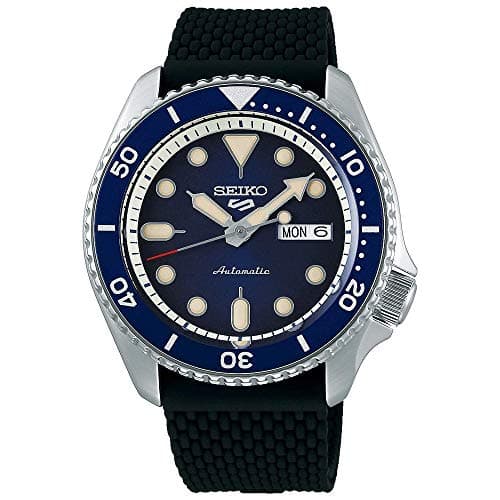 Seiko 5 Sports SRPD93SRPD93 The 5KX case with a movement that hacks and hand-winds, in blue on a silicone strap. The default answer under $350, and the one most people should stop looking after. | 42.5mm · 100m | 8.9out of 10, compiled from published specifications | |
| 2 | 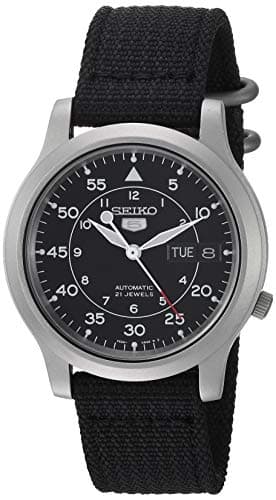 Seiko 5 SNK809SNK809K2 The classic small field Seiko: 37 mm, 7S26, canvas strap. It does not hack and it does not hand-wind. Now discontinued — the 7S26 went out of production in 2019 and Seiko's US catalog no longer lists it — so remaining stock is priced by scarcity, not by Seiko. Check the live price against a 4R36 reference before paying it. | 37mm · 30m | 7.3out of 10, compiled from published specifications | |
| 3 | 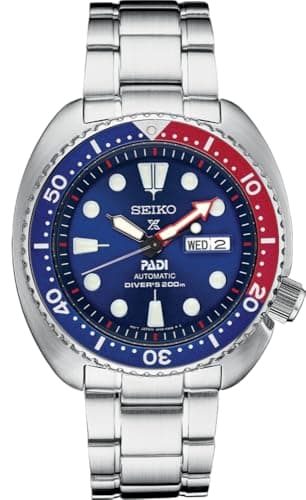 Seiko Prospex Turtle SRPE99SRPE99K1 A real 200 m ISO-rated diver with a screw-down crown, in the cushion case that wears far smaller than its 45 mm suggests. | 45mm · 200m ISO | 8.9out of 10, compiled from published specifications |
3 picks · Prices last verified October 23, 2026. Where no live price came back we show “Check price” rather than a number we cannot stand behind. How we pick.
Seiko modding exists for a reason that has nothing to do with Seiko encouraging it. The company built a small number of case shapes in enormous volume over decades, fitted them with a movement family whose dimensions barely changed, and left the aftermarket a stable target to manufacture against. Dials, hands, bezel inserts, chapter rings and crystals are cut for those specific cases and for the NH-series movement footprintunderneath them — because that is where the volume is.
The practical consequence is that a mod is easy or nearly impossible depending on which watch you started with, and no amount of enthusiasm changes that. Buy a Seiko outside the three families below and you will spend the project hunting for parts that were never made. Buy inside them and the parts are a search away. This page is about picking the right starting point, not about telling you how to hold a case knife.
Why the platform matters more than the watch
Three things have to line up before a part fits: the case, which decides the dial diameter, the crystal size and the bezel insert; the movement footprint, which decides where the dial feet sit and what the hand bores accept; and the chapter ring, the printed ring between dial and crystal, which is what makes a swapped dial look factory or look wrong.
Seiko’s 4R35 and 4R36 are the same architecture Seiko Instruments sells externally as the NH35 and NH36 — the same movement under two names. That is the single fact the entire aftermarket rests on. A dial cut for an NH35 is cut for a 4R35, which is why parts made for microbrand watches drop into Seikos and vice versa.
It is not always literally drop-in. Dial feet positions and day-date window layouts differ between the date-only and day-date versions, so a dial made for one can need a different dial or a small modification for the other. Hand bores and dial-feet positions are movement-specified dimensions — the authoritative figures come from Seiko Instruments’ own movement documentation, and we are not going to reprint numbers we have not verified against it. Buy parts listed for your exact caliber and the problem disappears.
The three platforms, and what each is for
| Platform | Case | Best for |
|---|---|---|
| 5KX — SRPD | 42.5 mm, 22 mm lugs | The default. Deepest parts supply of anything current |
| SNK — SNK809 | 37.0 mm, 18 mm lugs | The small platform, and the simplest movement to work around |
| Turtle — SRPE | 45.0 mm cushion, 22 mm lugs | Bezel and crystal work on a certified diver |
The 5KX, and why it inherited the crown
For two decades the default mod base was the SKX007, and it is discontinued. Prices for clean examples rose accordingly, and the aftermarket did the sensible thing: it retooled around the case Seiko still sells. The 5KX— the SRPD-series Seiko 5 Sports — carries the case profile people wanted from the SKX, at 42.5 mm with a 46.0 mm lug-to-lug and 22 mm lugs, and it runs the 4R36, which hacks and hand-winds where the SKX’s 7S26 did neither.
That combination is why the SRPD93 is the recommendation here. It is current, so you are not bidding against collectors for a donor; its parts supply is the deepest of anything in production; and it is a watch worth wearing unmodified, which means a project you abandon halfway leaves you with a good watch rather than a drawer full of components.
One honest caveat about what you are starting with. The SRPD93 is rated 100 m and has no screw-down crown — it is a dive-styled sports watch, not an ISO 6425 diver, whatever the bezel implies. Modding does not improve that, and as the next section explains, it makes it worse.
The SNK809, and the case for a separate donor
The first case you open you will scratch. This is close to universal, and the sensible response is to make that case one you are not precious about. The SNK809 is 37 mm with a 42.0 mm lug-to-lug and 18 mm lugs, runs the older 7S26, and carries an exhibition caseback — which means you can actually see what you did.
It is a genuinely different platform, not a smaller SRPD, and its parts market is correspondingly narrower. What it teaches is the part that transfers: getting a caseback off without marking it, handling a dial without fingerprinting it, setting hands without bending them. Those skills transfer to any platform, and the 7S26 underneath is the simplest of the three movements here to work around.
Two limits worth knowing before you commit. The 7S26 does not hack or hand-wind, so a finished SNK mod still has the setting behavior of a 1990s Seiko 5 — the full comparison covers what that actually changes. And its 30 m rating means hand-washing only even before you have opened it, so this is a watch that was never going near water.
The Turtle, for bezel and crystal work
The Turtle SRPE99 is the third platform, and it suits a narrower project: bezel inserts, chapter rings and crystals rather than full dial-and-hand rebuilds. The cushion case is distinctive enough that people mod it to change its character rather than to make it look like something else, and its 47.7 mm lug-to-lug makes it a far more wearable 45 mm than the number suggests.
It is also the only one of the three that is a real ISO 6425 diverto begin with, at 200 m with a screw-down crown at 4 o’clock — which is precisely why it is the platform where opening the case costs you the most. If the certification is why you bought it, the honest advice is to buy the King Turtle instead and get the sapphire and ceramic from the factory with the rating intact.
What a mod actually costs you
Two things, and both are permanent. Neither is a reason not to mod a watch; both are reasons to know what you are doing before you start.
The warranty ends.Seiko’s warranty covers a watch as Seiko assembled it. Opening the case ends that, and no amount of careful work restores it. On a watch bought new this is a real cost that people discover after the fact.
The water rating is no longer a rating.This is the one that gets watches killed. A water-resistance figure is the result of a test performed on a sealed case at the factory. Once you have opened it, the number on the dial describes a watch that no longer exists — gaskets have been disturbed, the caseback torque is whatever you applied, and nothing has been re-tested. A modded SRPD93 is not a 100 m watch; it is a watch that used to be one. Treat it as splash-resistant at best unless you have had it pressure-tested, and read what the ratings mean before deciding that is acceptable.
There is a third, smaller cost worth naming: resale. A modded watch sells for less than an unmodified one, because the buyer has to trust your workmanship as well as Seiko’s. Keep the original parts in the box. They are worth more there than anywhere else.
What genuinely swaps, and what does not
- Bezel insert— the easiest meaningful change, and often the only one a watch needs. No movement work, no dial handling.
- Chapter ring— cheap, and the part that decides whether a dial swap reads as deliberate or as a mistake.
- Crystal— the sapphire upgrade the whole hobby starts with. It is also where the water rating is most obviously compromised.
- Dial and hands— the real project. Buy both listed for your exact caliber; a dial cut for a date-only movement is not a dial cut for a day-date one.
- Strap or bracelet— not a mod at all, and the reason to check lug width first. 22 mm on the SRPD and the Turtle, 18 mm on the SNK. See the strap page.
What does not swap is the case itself and, in general, the movement family. A part cut for a Seiko case is cut for that case; there is no universal fitment. This is also why the modding ecosystem is a genuine reason to buy Seiko over Orient, whose cases the aftermarket has largely never tooled for.
If the build is going somewhere the stock movement cannot, two NH-series relatives come up constantly: the no-date, open-heart NH38 and the skeletonized NH70. Their published hand sizes, dial fittings and casing differences are on NH38 vs NH35 and NH70 vs NH35, from the manufacturer’s own spec sheets.
Once the platform is chosen, the work itself has an order, and doing it out of order is how people lose a warranty over a strap change. How to mod a Seikoruns through the four levels — strap, bezel insert, crystal, then dial and hands — with the movement dimensions that decide which parts fit.
The picks in full
Specifications are transcribed from Seiko’s published documentation. Prices come from Amazon and carry the date they were verified. We have not handled these watches — here is what we did instead.
No buyable offer at the last check (October 23, 2026). We show nothing rather than a stale number.
#ad · we may earn a commission from this link to Seiko 5 Sports SRPD93
Seiko 5 Sports SRPD93
SRPD93Best for: A first mechanical watch you will not outgrow
The 5KX case with a movement that hacks and hand-winds, in blue on a silicone strap. The default answer under $350, and the one most people should stop looking after.
- Spec completeness for the price
- 8.8
- Movement relative to bracket
- 8.5
- Case proportions
- 8.9
- Strap flexibility
- 9.5
- Availability
- 8.8
What it gets right
- Hacks and hand-winds — the SKX's biggest omission, fixed
- 22 mm lugs put the entire aftermarket strap catalog in play
- Day-date in a genuinely legible layout
- Case shape is the SKX profile people actually want
What it gets wrong
- Hardlex, not sapphire — it will scratch
- 100 m and no screw-down crown, so it is not an ISO 6425 diver despite the looks
- 13.4 mm thick under a shirt cuff
- Ships on a silicone strap rather than a bracelet
Skip this one if: you want an actual dive watch. The 100 m rating and the absence of a screw-down crown mean this is a dive-styled sports watch, not an ISO 6425 diver. The Turtle is the real one.
| Case diameter | 42.5 mm |
|---|---|
| Lug-to-lug | 46.0 mm |
| Thickness | 13.4 mm |
| Lug width | 22 mm |
| Crystal | Hardlex (hardened mineral) |
| Water resistance | 100 m — splash and swim, not scuba |
| Bezel | Blue unidirectional rotating |
| Dial | Blue sunray |
| Strap | Black silicone |
| Case back | See-through |
| Lume | LumiBrite |
| Caliber | Seiko 4R36 |
| Type | Automatic, hand-winding and hacking |
| Beat rate | 21,600 vph (6 beats/sec) |
| Jewels | 24 |
| Power reserve | Approx. 41 hours |
| Stated accuracy | -35 to +45 sec/day |
| Complications | Day and date |
$359.009% off
Price as of October 23, 2026. Prices move — Amazon's is the one that counts.
#ad · we may earn a commission from this link to Seiko 5 SNK809
Seiko 5 SNK809
SNK809K2Best for: A genuinely small mechanical watch, if the remaining-stock price is still sensible
The classic small field Seiko: 37 mm, 7S26, canvas strap. It does not hack and it does not hand-wind. Now discontinued — the 7S26 went out of production in 2019 and Seiko's US catalog no longer lists it — so remaining stock is priced by scarcity, not by Seiko. Check the live price against a 4R36 reference before paying it.
- Spec completeness for the price
- 8.0
- Movement relative to bracket
- 7.4
- Case proportions
- 9.2
- Strap flexibility
- 7.8
- Availability
- 4.0
What it gets right
- 42 mm lug-to-lug fits genuinely small wrists
- Exhibition back on a watch at this price
- Legible 24-hour inner track
What it gets wrong
- 7S26 will not hand-wind and will not hack — you cannot set it to the second
- 30 m rating means keep it out of the shower
- 18 mm lugs are a narrower strap market than 20 or 22 mm
- Discontinued and sold from remaining stock — the price is whatever the seller asks, and it no longer tracks the bracket this watch defined
Skip this one if: the live price is at or above a 4R36 Seiko 5 Sports. This was the value pick of its bracket when Seiko still made it; sold from remaining stock it frequently is not, and the SRPD93 or the 36.4 mm SBSA199 give you hacking and hand-winding for the same money or less. Skip it too if setting the watch precisely matters to you — without hacking you cannot stop the seconds hand to sync it.
| Case diameter | 37.0 mm |
|---|---|
| Lug-to-lug | 42.0 mm |
| Thickness | 11.1 mm |
| Lug width | 18 mm |
| Crystal | Hardlex (hardened mineral) |
| Water resistance | 30 m — hand-washing only, not swimming |
| Display back | Yes — exhibition caseback |
| Caliber | Seiko 7S26 |
| Type | Automatic. No hand-winding, no hacking |
| Beat rate | 21,600 vph (6 beats/sec) |
| Jewels | 21 |
| Power reserve | Approx. 41 hours |
| Stated accuracy | -20 to +40 sec/day |
| Complications | Day and date |
No buyable offer at the last check (October 23, 2026). We show nothing rather than a stale number.
#ad · we may earn a commission from this link to Seiko Prospex Turtle SRPE99
Seiko Prospex Turtle SRPE99
SRPE99K1Best for: An actual dive watch you can also wear daily
A real 200 m ISO-rated diver with a screw-down crown, in the cushion case that wears far smaller than its 45 mm suggests.
- Spec completeness for the price
- 9.0
- Movement relative to bracket
- 8.5
- Case proportions
- 8.8
- Strap flexibility
- 9.5
- Availability
- 8.6
What it gets right
- Genuine ISO 6425 diver, not a diver-styled sports watch
- 47.7 mm lug-to-lug means it fits wrists that 45 mm suggests it should not
- Screw-down crown at 4 o'clock keeps it off the back of your hand
What it gets wrong
- Hardlex on a watch at this price is the recurring Seiko complaint
- The 45 mm figure scares people off before they try one
- PADI co-branding on the dial is not for everyone
Skip this one if: you have a wrist under about 6.5 inches. The lug-to-lug is forgiving but the case is still visually wide, and the smaller SRPG references exist for exactly this reason.
| Case diameter | 45.0 mm (cushion case) |
|---|---|
| Lug-to-lug | 47.7 mm |
| Thickness | 13.4 mm |
| Lug width | 22 mm |
| Crystal | Hardlex (hardened mineral) |
| Water resistance | 200 m, ISO 6425 rated for scuba diving |
| Crown | Screw-down, at 4 o'clock |
| Bezel | Unidirectional elapsed-timing bezel, PADI red and blue |
| Lume | LumiBrite on hands and markers |
| Bracelet | Steel, three-fold clasp with push-button release |
| Caliber | Seiko 4R36 |
| Type | Automatic, hand-winding and hacking |
| Beat rate | 21,600 vph (6 beats/sec) |
| Jewels | 24 |
| Power reserve | Approx. 41 hours |
| Stated accuracy | -35 to +45 sec/day |
| Complications | Day and date |
Choosing your starting point
Pick the platform before you pick the look
The temptation is to find a dial you love and then work out what it fits. Do it the other way around. Choose one of the three case families above, then shop parts listed for it, and the project stays a weekend rather than a search. A part that fits nothing you own is money gone, and the listings that say “fits Seiko” without naming a case are the ones that cause it.
Buy the donor you would wear anyway
The most common outcome of a first mod project is that it does not get finished. If the donor is a watch you would happily wear as it came — and all three here are — that outcome costs you nothing. If the donor was bought purely to be taken apart, an abandoned project is a dead watch.
Match the caliber, not the brand
Parts are listed by movement as often as by case, and the naming is genuinely confusing because the same movement carries two names. If your watch has a 4R35, parts listed for an NH35 are cut for it. If it has a 4R36, look for NH36. Getting this right removes most of the fitment problems people report.
Decide about water before you open anything
If the watch needs to survive swimming, do not mod it, or budget for a pressure test afterwards from someone who can do one. This is the single most common way a modded Seiko dies, and it dies months later when the owner has forgotten the connection.
Do the reversible things first
A bezel insert and a strap change the character of a watch enormously and neither requires opening the case. A great many people who think they want a full mod actually want a different bezel insert, and finding that out for the price of an insert is a good outcome.
Keep every original part
The stock dial, hands, insert and bracelet are worth keeping in the box, both because you may want the watch back and because an unmodified watch sells for more than a modded one. The parts are only worth something as a set.
Questions
What is the best Seiko to mod?
The 5KX — the SRPD-series Seiko 5 Sports, such as the SRPD93. It is current, its case has the deepest parts supply of anything in production, and it runs the 4R36, which hacks and hand-winds. It is also a watch worth wearing unmodified if the project stalls.
Why do people mod the SKX007 instead?
They did, for two decades. The SKX is discontinued and clean examples now cost more than the current alternatives, so the aftermarket retooled around the 5KX case Seiko still sells. Starting an SKX project today means paying collector prices for a donor.
Does modding a Seiko void the warranty?
Yes. Seiko’s warranty covers the watch as Seiko assembled it, and opening the case ends it permanently. That is a real cost on a watch bought new.
Is a modded Seiko still water resistant?
Not to its stated rating. A water-resistance figure is the result of a factory test on a sealed case; once the case has been opened the gaskets have been disturbed and nothing has been re-tested. Treat a modded watch as splash-resistant unless you have had it pressure-tested.
Will NH35 parts fit a Seiko 4R35?
Generally yes — they are the same movement architecture from the same manufacturer under two names. Match date-only to date-only and day-date to day-date, because dial feet positions and window layouts differ between the two.
Which Seiko is the best one to learn modding on?
The SNK809, if you want a donor separate from the watch you intend to keep. It is 37 mm on 18 mm lugs with an exhibition caseback, and the 7S26 inside it is the simplest of these movements to work around. Its parts market is narrower than the SRPD’s, but the handling skills transfer to any platform.
Does modding hurt resale value?
Yes. A modded watch sells for less than an unmodified one because the buyer is trusting your work as well as Seiko’s. Keeping the original dial, hands, insert and bracelet recovers most of the gap.
Sources
- Seiko Instruments — movement division (NH-series manufacturer)
- Seiko Watch Corporation — US catalog and specifications
- Seiko 5 Sports collection — official specifications
- Seiko customer service — warranty and servicing
- ISO 6425 — Horology, divers' watches (standard listing)
Specifications are transcribed from manufacturer documentation and published standards. Where a manufacturer does not publish a figure, this page says so rather than estimating one.
Read next
- NH35 movement referenceThe movement footprint the entire aftermarket is built around.
- Seiko SRPD93 referenceFull published dimensions for the default mod platform.
- Seiko SKX007: what to buy nowThe discontinued original, and why the aftermarket moved on.
- Seiko water resistance explainedWhat a rating certifies, and why opening a case ends it.
- Best Seiko strapsThe reversible change most people actually want.
- NH35 vs NH36Date-only against day-date, and why dials are not interchangeable between them.