Roundups
Best Seiko automatic watches
One pick per lane — daily, dive, GMT, dress, upgrade — judged on movement quality relative to price and how the case wears.
By Stephen V. · Updated Aug 25, 2026 · Published Aug 8, 2026
Quick picks
| # | Watch | Key spec | Score | Price |
|---|---|---|---|---|
| 1 | 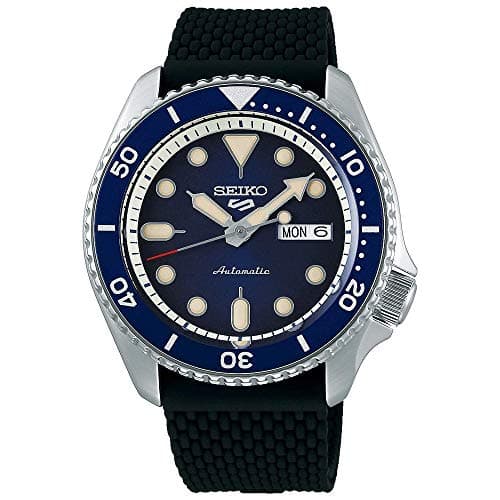 Seiko 5 Sports SRPD93SRPD93 The 5KX case with a movement that hacks and hand-winds, in blue on a silicone strap. The default answer under $350, and the one most people should stop looking after. | 42.5mm · 100m | 8.9out of 10, compiled from published specifications | |
| 2 | 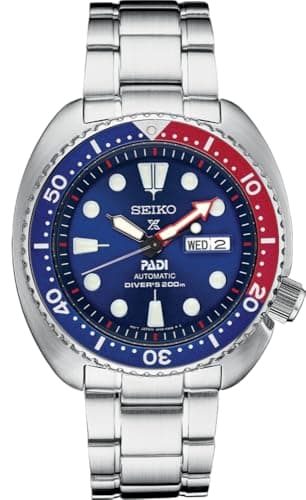 Seiko Prospex Turtle SRPE99SRPE99K1 A real 200 m ISO-rated diver with a screw-down crown, in the cushion case that wears far smaller than its 45 mm suggests. | 45mm · 200m ISO | 8.9out of 10, compiled from published specifications | |
| 3 | 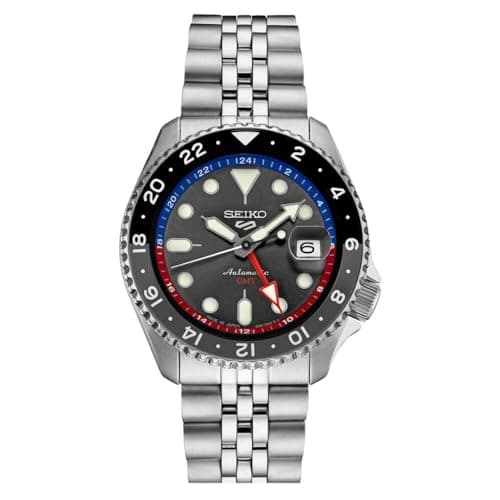 Seiko 5 Sports SKX GMT SSK019SSK019 The watch that made mechanical GMT affordable, in charcoal on a five-row bracelet. A caller GMT in the 5KX case for a fraction of what the complication used to cost. | 42.5mm · GMT | 9.1out of 10, compiled from published specifications | |
| 4 | 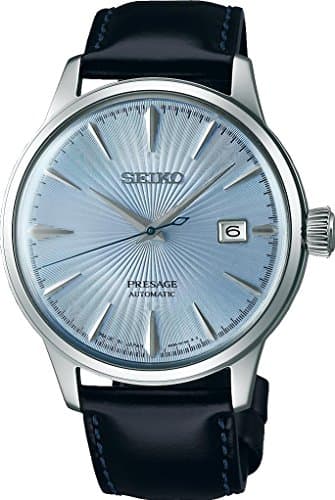 Seiko Presage Cocktail Time SRPB43SRPB43J1 The blue Cocktail Time. A box-shaped crystal over a deeply textured dial — the most expensive-looking watch Seiko sells at this price by a wide margin. | 40.5mm · dress | 8.6out of 10, compiled from published specifications | |
| 5 | 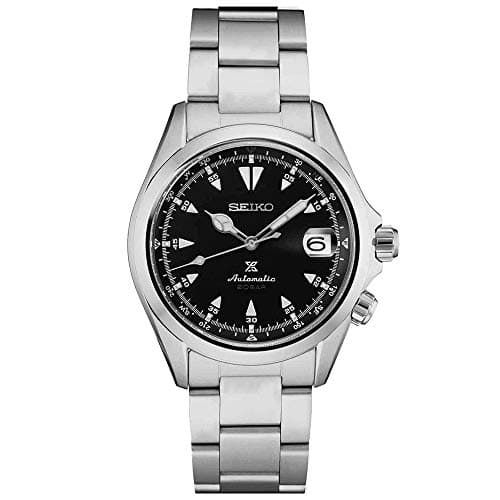 Seiko Prospex SPB117SPB117J1 The 62MAS-lineage diver: 39.5 mm, sapphire, and the 70-hour 6R35. This is where Seiko stops compromising, and the price step reflects it. | 39.5mm · 70h | 9.0out of 10, compiled from published specifications |
5 picks · Prices last verified October 23, 2026. Where no live price came back we show “Check price” rather than a number we cannot stand behind. How we pick.
Seiko is the reason a mechanical watch is affordable at all. It manufactures its own movements at a scale nobody else matches at the entry level, which is why a few hundred dollars buys a genuine in-house automatic rather than a bought-in module in a fashion case. This page is not about the single best Seiko automatic in the abstract — that question has no answer, because a diver and a dress watch are not competing. It is about the best automatic in each lane, so you can find the one that fits how you actually live.
The criteria are consistent across the lanes: the quality of the movement relative to what the watch costs, how versatile the watch is within its lane, and whether the case wears the way its numbers suggest. Every pick here is a genuine automatic — no quartz, no solar — and every one carries honest compromises that the cards below spell out. First, though, it is worth being precise about what a mechanical movement does and does not buy you, because the answer is smaller than the enthusiasm around it implies.
Why Seiko owns the affordable-automatic conversation
It is hard to overstate how unusual Seiko’s position is. Most watches at the entry level use bought-in movements from a handful of third-party suppliers; Seiko designs and builds its own, in volume, from the 7S and 4R workhorses up through the 6R and far beyond. That vertical integration is why a genuine in-house automatic starts at a price no other manufacturer with its own movements can match, and it is the reason a first mechanical watch conversation so often begins and ends with this brand. The picks on this page all inherit that advantage.
It also sets the honest ceiling. These are workhorse movements built for durability and value, not for the tight regulation or the finishing of a watch several times the price, and a buyer who understands that gets a machine that will run for years and shrug off servicing intervals. A buyer expecting chronometer accuracy from an entry automatic is measuring it against the wrong yardstick.
What an automatic actually buys you over quartz
Not accuracy — a cheap quartz watch keeps far better time than any mechanical Seiko on this page, by two orders of magnitude. Not lower maintenance, either; an automatic wants periodic servicing where a quartz wants an occasional battery. What a mechanical movement buys is a self-contained machine on your wrist that runs on the motion of your arm, an exhibition caseback that is worth looking through, and a sweeping seconds hand instead of a tick. Those are aesthetic and emotional rewards, not practical ones, and that is a perfectly good reason to want one — as long as you are buying it for that reason rather than expecting it to keep better time than it can.
If you cannot articulate why you want mechanical, that is a sign a quartz would serve you better — the quartz roundup ranks that side of the range on the same criteria. If you can, buy the automatic without any guilt. Drifting into a mechanical watch by default and then being irritated that it gains fifteen seconds a day is the one outcome to avoid, and it is entirely avoidable by being honest with yourself first. The same-money pair set side by side, row by row, is on Seiko quartz vs automatic.
The 4R and 6R tiers
Almost every affordable Seiko automatic runs one of two movement families, and knowing the split keeps you from overpaying. The 4R family — the 4R36 with day-date, the 4R35 with date only, the 4R34 with the GMT complication — is the workhorse: it hacks, it hand-winds, and it carries a roughly 41-hour reserve. The 6R35 that sits above it adds a 70-hour reserve and a tighter stated accuracy window, at a clear price step. What neither tier changes is the beat rate: both run at 21,600 vibrations per hour, so the seconds sweep is identical and nobody is buying a smoother one by moving up.
| Lane | Pick | Movement |
|---|---|---|
| Daily / sports | SRPD93 | 4R36 |
| Dive (ISO 6425) | SRPE99 Turtle | 4R36 |
| GMT | SSK019 | 4R34 |
| Dress | SRPB43 Cocktail Time | 4R35 |
| Upgrade | SPB117 | 6R35 |
One more note on the tiers: the 4R34 in the GMT pick shares the same architecture and the same stated accuracy window as the 4R35 and 4R36, so the added complication does not cost you timekeeping. Across the whole 4R family you are choosing complications and water ratings, not fundamentally different movements, which is exactly why the line is so easy to shop once you know the lanes. That consistency is a genuine convenience: learn to set one 4R Seiko and you have effectively learned to set them all.
The lanes, and the honest compromise in each
The daily pick, the SRPD93, is the default first automatic and the one most people should stop looking after — a versatile case, the hacking 4R36, and lugs that fit the entire aftermarket strap catalog; the compromises are Hardlex and a case that sits tall under a cuff. The dive pick, the Turtle, is a real 200 m ISO 6425 diver in a cushion case that wears smaller than its diameter, giving up only its crystal to the price. The GMTpick, the SSK019, put mechanical GMT within reach for the first time, with the honest caveat that it is a caller GMT, not a traveler’s. The dress pick, the Cocktail Time, is the most expensive-looking watch here and the least water-capable at 50 m. And the upgrade pick, the SPB117, is the best-proportioned diver Seiko makes, with sapphire and the 70-hour reserve, at roughly double the Turtle. One watch, one lane; the winner leads because the daily lane is the one most buyers are actually shopping.
What owning one actually asks of you
A mechanical watch is a small commitment a quartz is not, and it is fairer to say so up front. It will run fast or slow within its specification and that is normal, not a fault; it will stop if you leave it off past its reserve and need winding and resetting; and it wants servicing every several years to keep the water rating and the movement healthy, where a quartz simply wants a battery. For most owners none of this is a burden — it is part of the appeal — but it is real, and the difference between enjoying a mechanical watch and being frustrated by one is usually just knowing what to expect. The winding guide covers the basics of keeping one running.
The picks in full
Specifications are transcribed from Seiko’s published documentation. Prices come from Amazon and carry the date they were verified. We have not handled these watches — here is what we did instead.
No buyable offer at the last check (October 23, 2026). We show nothing rather than a stale number.
#ad · we may earn a commission from this link to Seiko 5 Sports SRPD93
Seiko 5 Sports SRPD93
SRPD93Best for: A first mechanical watch you will not outgrow
The 5KX case with a movement that hacks and hand-winds, in blue on a silicone strap. The default answer under $350, and the one most people should stop looking after.
- Spec completeness for the price
- 8.8
- Movement relative to bracket
- 8.5
- Case proportions
- 8.9
- Strap flexibility
- 9.5
- Availability
- 8.8
What it gets right
- Hacks and hand-winds — the SKX's biggest omission, fixed
- 22 mm lugs put the entire aftermarket strap catalog in play
- Day-date in a genuinely legible layout
- Case shape is the SKX profile people actually want
What it gets wrong
- Hardlex, not sapphire — it will scratch
- 100 m and no screw-down crown, so it is not an ISO 6425 diver despite the looks
- 13.4 mm thick under a shirt cuff
- Ships on a silicone strap rather than a bracelet
Skip this one if: you want an actual dive watch. The 100 m rating and the absence of a screw-down crown mean this is a dive-styled sports watch, not an ISO 6425 diver. The Turtle is the real one.
| Case diameter | 42.5 mm |
|---|---|
| Lug-to-lug | 46.0 mm |
| Thickness | 13.4 mm |
| Lug width | 22 mm |
| Crystal | Hardlex (hardened mineral) |
| Water resistance | 100 m — splash and swim, not scuba |
| Bezel | Blue unidirectional rotating |
| Dial | Blue sunray |
| Strap | Black silicone |
| Case back | See-through |
| Lume | LumiBrite |
| Caliber | Seiko 4R36 |
| Type | Automatic, hand-winding and hacking |
| Beat rate | 21,600 vph (6 beats/sec) |
| Jewels | 24 |
| Power reserve | Approx. 41 hours |
| Stated accuracy | -35 to +45 sec/day |
| Complications | Day and date |
No buyable offer at the last check (October 23, 2026). We show nothing rather than a stale number.
#ad · we may earn a commission from this link to Seiko Prospex Turtle SRPE99
Seiko Prospex Turtle SRPE99
SRPE99K1Best for: An actual dive watch you can also wear daily
A real 200 m ISO-rated diver with a screw-down crown, in the cushion case that wears far smaller than its 45 mm suggests.
- Spec completeness for the price
- 9.0
- Movement relative to bracket
- 8.5
- Case proportions
- 8.8
- Strap flexibility
- 9.5
- Availability
- 8.6
What it gets right
- Genuine ISO 6425 diver, not a diver-styled sports watch
- 47.7 mm lug-to-lug means it fits wrists that 45 mm suggests it should not
- Screw-down crown at 4 o'clock keeps it off the back of your hand
What it gets wrong
- Hardlex on a watch at this price is the recurring Seiko complaint
- The 45 mm figure scares people off before they try one
- PADI co-branding on the dial is not for everyone
Skip this one if: you have a wrist under about 6.5 inches. The lug-to-lug is forgiving but the case is still visually wide, and the smaller SRPG references exist for exactly this reason.
| Case diameter | 45.0 mm (cushion case) |
|---|---|
| Lug-to-lug | 47.7 mm |
| Thickness | 13.4 mm |
| Lug width | 22 mm |
| Crystal | Hardlex (hardened mineral) |
| Water resistance | 200 m, ISO 6425 rated for scuba diving |
| Crown | Screw-down, at 4 o'clock |
| Bezel | Unidirectional elapsed-timing bezel, PADI red and blue |
| Lume | LumiBrite on hands and markers |
| Bracelet | Steel, three-fold clasp with push-button release |
| Caliber | Seiko 4R36 |
| Type | Automatic, hand-winding and hacking |
| Beat rate | 21,600 vph (6 beats/sec) |
| Jewels | 24 |
| Power reserve | Approx. 41 hours |
| Stated accuracy | -35 to +45 sec/day |
| Complications | Day and date |
No buyable offer at the last check (October 23, 2026). We show nothing rather than a stale number.
#ad · we may earn a commission from this link to Seiko 5 Sports SKX GMT SSK019
Seiko 5 Sports SKX GMT SSK019
SSK019Best for: A second time zone on a mechanical movement, cheaply
The watch that made mechanical GMT affordable, in charcoal on a five-row bracelet. A caller GMT in the 5KX case for a fraction of what the complication used to cost.
- Spec completeness for the price
- 9.2
- Movement relative to bracket
- 9.4
- Case proportions
- 8.5
- Strap flexibility
- 9.5
- Availability
- 8.7
What it gets right
- Genuine mechanical GMT at a price nothing else matches
- Same 22 mm lugs and case footprint as the rest of the 5KX family
- Rotating 24-hour bezel adds a third zone
What it gets wrong
- Caller GMT, not a traveler GMT — the local hour hand does not jump
- Hardlex
- 13.6 mm thick
Skip this one if: you actually fly. A caller GMT is designed for tracking home from your desk; changing your local time zone on it means resetting the whole watch. Frequent travelers want a traveler (flyer) GMT, which Seiko sells only much higher up.
| Case diameter | 42.5 mm |
|---|---|
| Lug-to-lug | 46.0 mm |
| Thickness | 13.6 mm |
| Lug width | 22 mm |
| Crystal | Hardlex (hardened mineral) |
| Water resistance | 100 m (10 bar) |
| Bezel | Bi-color 24-hour GMT bezel |
| Dial | Charcoal |
| Bracelet | Stainless steel five-row, tri-fold push-button clasp |
| Case back | Screw-down, see-through |
| Caliber | Seiko 4R34 |
| Type | Automatic GMT, hand-winding and hacking |
| Beat rate | 21,600 vph (6 beats/sec) |
| Jewels | 24 |
| Power reserve | Approx. 41 hours |
| Stated accuracy | -35 to +45 sec/day |
| GMT type | Caller (office) GMT — the 24-hour hand is independent |
No buyable offer at the last check (October 23, 2026). We show nothing rather than a stale number.
#ad · we may earn a commission from this link to Seiko Presage Cocktail Time SRPB43
Seiko Presage Cocktail Time SRPB43
SRPB43J1Best for: A dress watch that looks like it cost three times the money
The blue Cocktail Time. A box-shaped crystal over a deeply textured dial — the most expensive-looking watch Seiko sells at this price by a wide margin.
- Spec completeness for the price
- 8.6
- Movement relative to bracket
- 8.4
- Case proportions
- 8.5
- Strap flexibility
- 9.2
- Availability
- 8.4
What it gets right
- The box crystal distorts light at the edges the way vintage acrylic did
- Sunburst dial texture that photographs badly and looks superb in person
- Exhibition back
What it gets wrong
- 50 m, so it is not a swim watch
- 47.6 mm lug-to-lug is long for a 40.5 mm dress case
- Hardlex on a curved crystal is harder to polish than a flat one
Skip this one if: you need one watch for everything. At 50 m and on a leather strap this is a shirt-cuff watch — pair it with a diver rather than asking it to be one.
| Case diameter | 40.5 mm |
|---|---|
| Lug-to-lug | 47.6 mm |
| Thickness | 11.8 mm |
| Lug width | 20 mm |
| Crystal | Box-shaped Hardlex |
| Water resistance | 50 m — splash resistant, not for swimming |
| Display back | Yes — exhibition caseback |
| Caliber | Seiko 4R35 |
| Type | Automatic, hand-winding and hacking |
| Beat rate | 21,600 vph (6 beats/sec) |
| Jewels | 23 |
| Power reserve | Approx. 41 hours |
| Stated accuracy | -35 to +45 sec/day |
| Complications | Date |
No buyable offer at the last check (October 23, 2026). We show nothing rather than a stale number.
#ad · we may earn a commission from this link to Seiko Prospex SPB117
Seiko Prospex SPB117
SPB117J1Best for: The best-proportioned Seiko diver, if the budget stretches
The 62MAS-lineage diver: 39.5 mm, sapphire, and the 70-hour 6R35. This is where Seiko stops compromising, and the price step reflects it.
- Spec completeness for the price
- 9.3
- Movement relative to bracket
- 9.2
- Case proportions
- 9.6
- Strap flexibility
- 9.2
- Availability
- 7.9
What it gets right
- 70-hour power reserve — leave it off over a weekend and it is still running
- Sapphire, and a tighter stated accuracy spec than the 4R family
- 39.5 mm with a 46.4 mm lug-to-lug is the most universally wearable diver Seiko makes
What it gets wrong
- Roughly double the price of a Turtle
- 6R35 is still a 21,600 vph movement, so the seconds sweep is no smoother
- 20 mm lugs on a diver feel narrow to some
Skip this one if: your budget is doing other work. A Turtle is the same water rating and the same 6-beat sweep for half the money; what you buy here is sapphire, the power reserve and the proportions.
| Case diameter | 39.5 mm |
|---|---|
| Lug-to-lug | 46.4 mm |
| Thickness | 12.4 mm |
| Lug width | 20 mm |
| Crystal | Sapphire with anti-reflective coating |
| Water resistance | 200 m, ISO 6425 rated |
| Crown | Screw-down |
| Caliber | Seiko 6R35 |
| Type | Automatic, hand-winding and hacking |
| Beat rate | 21,600 vph (6 beats/sec) |
| Jewels | 24 |
| Power reserve | Approx. 70 hours |
| Stated accuracy | -15 to +25 sec/day |
| Complications | Date |
How to choose a Seiko automatic
Pick the lane before the watch
The single most common mistake is comparing a diver to a dress watch on a spec sheet, as if they were rivals. They are not. Decide first what the watch is for — daily wear, water, a second time zone, formal occasions, or a long-term keeper — and only then compare within that lane. A page like this is most useful read as five separate shortlists of one, not as a single ranking, and the numeric order exists mainly to answer the buyer who genuinely has no lane in mind and just wants a good automatic.
Decide whether you actually need the 6R tier
The step from the 4R family to the 6R35 buys a 70-hour reserve and a tighter accuracy window, and it is worth the most to people who rotate several watches and the least to a single-watch owner who wears the same piece daily. Neither tier sweeps more smoothly, since both beat at the same rate, so if a smoother seconds hand is what you are picturing, the upgrade will not deliver it. Buy the 6R for the reserve and the finishing, or do not buy it at all.
Size the case honestly for the lane
Each lane has its own sizing logic: a diver can carry a larger case because the cushion or tool geometry earns it, while a dress watch should sit smaller and flatter. Across all of them, lug-to-lug decides fit more than diameter does, so measure across your wrist and compare that to the lug-to-lug figure on each card rather than trusting the headline diameter. A watch that fits is worn; a watch that overhangs sits in a drawer regardless of how good its movement is.
Respect the water ratings across the lanes
These are not interchangeable. The Turtle’s 200 m ISO rating covers scuba; the SRPD93 and SSK019 at 100 m cover swimming but are not dive watches; the Cocktail Time at 50 m covers splashes only. Buying the dress watch as an only watch and then swimming in it is how a gasket fails, so match the rating to the life the watch will lead — and if it will lead all of them, the diver is the honest single-watch answer.
Learn to live with a mechanical watch before you upgrade it
A new automatic that gains or loses a handful of seconds a day is inside specification, not faulty, and a watchmaker can regulate it closer if it bothers you. Wear the first one for a few months before buying a winder, a second watch or a sapphire upgrade — you will learn what actually irritates you, which is a far better basis for the next purchase than a forum thread. Our winding guide covers starting a stopped watch correctly.
Do not compare across lanes on a single number
The scores on the cards are calibrated within a watch’s purpose, so a dress watch and a diver that post similar totals are not therefore interchangeable — they are good at different jobs. Read the component that matters for your lane rather than the headline figure, and never let a diver’s total talk you out of the dress watch your wardrobe actually needs. The ranking on this page is a convenience for the undecided, not a verdict that a diver beats a dress watch.
Weigh the exhibition caseback honestly
Part of what you buy with an automatic is the pleasure of watching the movement work through a display back, and several picks here have one. If that pleasure is real to you, treat it as a legitimate tiebreaker; if you never turn a watch over, it should not sway the decision, and the functional differences between the lanes matter far more. Aesthetic reasons are good reasons, as long as you are honest that they are aesthetic.
Buy for the lane you are missing
If you already own a sports watch, the highest-value purchase is rarely another one, however well it scores — it is the lane your collection lacks. A first automatic should be the versatile daily pick; a second should usually be whatever the first is not, whether that is a diver, a GMT or a dress watch. Let the gap in what you own, not the top of the ranking, choose your next one.
What the numbers cannot settle
How a bracelet tapers on your wrist, whether a dial reads sharp or busy in person, how the lume performs after a few hours in the dark — none of it is on a spec sheet, and this site has not handled these watches. The published figures narrow each lane to a shortlist; the last step is your own eyes, and it is worth taking where you can.
Questions
What is the best Seiko automatic watch?
There is no single answer, because a diver and a dress watch are not competing. For daily wear, the SRPD93; for diving, the Turtle SRPE99; for a second time zone, the SSK019; for formal wear, the Cocktail Time; and for a long-term upgrade, the SPB117. Pick the lane first, then the watch — the SRPD93 leads only because the daily lane is what most buyers are shopping.
Is a Seiko automatic more accurate than a quartz watch?
No — a quartz watch keeps far better time, by roughly two orders of magnitude. A mechanical Seiko is specified to drift by tens of seconds a day, which is normal for the technology. You buy an automatic for the self-winding mechanism, the sweeping seconds hand and the exhibition caseback, not for accuracy.
What is the difference between the 4R and 6R movements?
The 6R35 carries a 70-hour power reserve and a tighter stated accuracy window; the 4R family carries roughly 41 hours. Both hack and hand-wind, and both beat at 21,600 vph, so neither sweeps more smoothly. The 6R is a refinement worth paying for if you rotate watches, and close to irrelevant if you wear one daily.
Do I have to wind a Seiko automatic every day?
No, if you wear it daily — ordinary wrist motion keeps it wound. If it has sat unworn past its reserve, roughly 41 hours on a 4R movement or 70 on the 6R35, it stops, and you wind it from the crown before setting the time. The older 7S26 in some models does not hand-wind at all; you shake it to start.
Are Seiko automatics good for a first mechanical watch?
Yes, and they are close to the obvious choice, because Seiko builds its own movements at a scale that makes a genuine in-house automatic affordable. The SRPD93 in particular runs the hacking, hand-winding 4R36 and has no feature you will outgrow in a year — see the beginner roundup for the fuller case.
Sources
- Seiko 5 Sports collection — official specifications
- Seiko Prospex collection — official specifications
- Seiko Watch Corporation — US catalog and specifications
- Seiko instruction manuals and caliber documentation
Specifications are transcribed from manufacturer documentation and published standards. Where a manufacturer does not publish a figure, this page says so rather than estimating one.
Read next
- Seiko 4R36 caliber referenceThe workhorse behind most of the picks here, with its full published spec.
- Seiko 6R35 caliber referenceThe 70-hour upgrade movement in the SPB117.
- Winding a Seiko automaticHow to start a stopped watch and what the power reserve actually means.
- Best first SeikoIf this is your first automatic, the two decisions that matter most.
- Best Seiko watches for everyday wearThe same watches judged on legibility, size and strap changes.