Roundups
The most accurate Seiko watches
Ranked on the rate Seiko itself publishes, not on anyone's timing app. The gap between the top of this list and the bottom is two orders of magnitude.
By Stephen V. · Updated Sep 17, 2026
Quick picks
| # | Watch | Key spec | Score | Price |
|---|---|---|---|---|
| 1 | 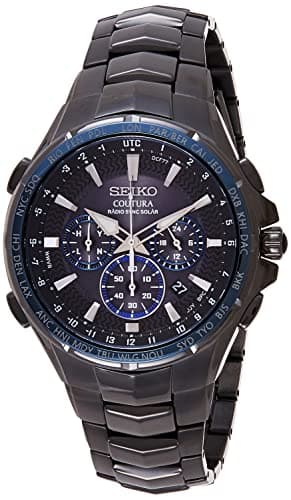 Seiko Coutura Radio Sync Solar SSG021SSG021 It sets itself from a radio time signal and charges itself from daylight. Nothing else Seiko sells at this price asks less of its owner. | 44.5mm · radio sync | 8.2out of 10, compiled from published specifications | |
| 2 | 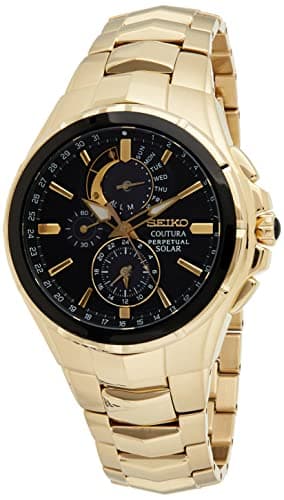 Seiko Coutura Solar Chronograph SSC700SSC700 Sapphire, 100 m, a perpetual calendar and no battery to replace, in one watch. The most complete spec sheet in Seiko's quartz range at anything like this money. | 44mm · solar chrono | 8.4out of 10, compiled from published specifications | |
| 3 | 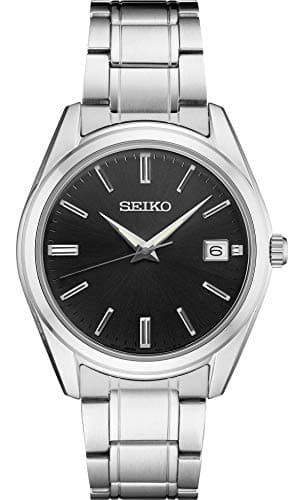 Seiko Essentials SUR311SUR311 A plain steel quartz watch that does exactly what it says. The cheapest sensible Seiko on this list and the right answer more often than people admit. | 40.2mm · quartz | 8.8out of 10, compiled from published specifications | |
| 4 | 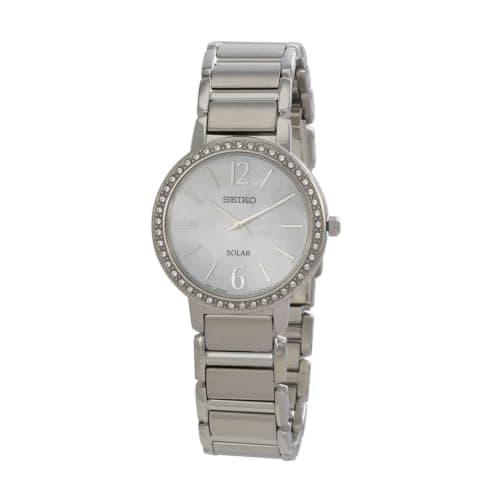 Seiko Women's Solar SUP467SUP467 A 30.5 mm solar dress watch that runs about a year on a full charge. No battery changes, no winding, quartz accuracy — the lowest-maintenance watch on this list. | 30.5mm · solar | 8.1out of 10, compiled from published specifications | |
| 5 | 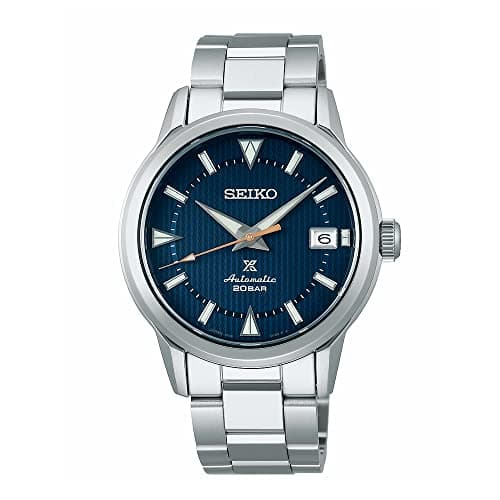 Seiko Prospex Alpinist SBDC159SBDC159 A Japan-market Alpinist built on the 1959 original rather than the compass-bezel one: 38 mm, curved sapphire, 200 m, and the 6R35's 70-hour reserve. | 38mm · 70h | 8.4out of 10, compiled from published specifications |
5 picks · Prices last verified Sep 18, 2026. Where no live price came back we show “Check price” rather than a number we cannot stand behind. How we pick.
“What is the most accurate Seiko watch?” has two honest answers, and the one most people want is the second. The first: the most accurate watches the Seiko group makes are Grand Seiko’s 9F quartz, rated to ±10 seconds per year, and the Astron GPS Solar, which sets itself from GPS satellites. Neither is in our product registry, so neither is ranked here — more on both at the end.
The second answer is the one this page ranks: of the Seiko watches you can order today at ordinary Seiko prices, which keeps the best time? The order below comes from the rate Seiko publishes for each caliber, with the conditions Seiko attaches to it. Nothing here was timed by us, and no owner’s anecdote moved a watch up or down.
The ladder, in Seiko’s own figures
| Pick | Caliber | Seiko's stated rate | Roughly, per day |
|---|---|---|---|
| SSG021 | 8B92 radio sync solar | Reset by radio signal; ±15 s/month free-running | Corrected nightly in range |
| SSC700 | V198 solar | ±15 s/month | About ±0.5 s |
| SUR311 | 6N52 quartz | ±15 s/month | About ±0.5 s |
| SUP467 | V115 solar | ±15 s/month | About ±0.5 s |
| SBDC159 | 6R35 automatic | +25 to −15 s/day | +25 to −15 s |
| For reference: 4R36 | Seiko 5 Sports, Turtle | +45 to −35 s/day | +45 to −35 s |
The last column is our arithmetic, not Seiko’s: a monthly figure divided by thirty, to put quartz and mechanical on the same scale. It makes the point better than any sentence can. A quartz watch at the edge of its tolerance drifts about half a second a day; the most tightly rated mechanical watch here is allowed 25.
Why the SSG021 is first
The SSG021’s 8B92 caliber does not have to keep good time on its own, because it is told the time. Its instruction manual lists four time-signal stations it can receive — WWVB in the United States, JJY in Japan, DCF77 in Germany and BPC in China — and says it attempts automatic reception in the small hours of the morning. The US station, WWVB, transmits from Fort Collins, Colorado, and Seiko gives its reception range as approximately 3,000 km.
Inside that range the watch is corrected every night, so its accuracy is the accuracy of the broadcast. Outside it, or on a night it cannot pick up the signal, it runs as a normal solar quartz: Seiko’s manual gives ±15 seconds a month without radio correction, the same as everything below it. (Seiko’s US product page for the SSG021 prints the same figure in a line that mentions a GPS signal this watch does not use; we have gone with the manual.) So first place is conditional, and the condition is geography.
The ±15 seconds a month group
Three watches here carry an identical stated rate, from three different kinds of quartz: the SSC700 on the V198 solar chronograph caliber, the SUR311 on the battery-powered 6N52, and the SUP467 on the V115 solar. On paper they keep identical time, so they are ordered on what else keeps them right:
- SSC700, second. Its perpetual calendar runs to 2100, so the date is correct through short months and leap years without you touching it. For a watch you want to stop adjusting, that is accuracy of a kind the rate does not capture.
- SUR311, third. A 40.2 mm, 8.36 mm-thin steel three-hander with sapphire and 100 m. It needs a battery, which Seiko rates at approximately three years, and you correct the date at the end of each short month.
- SUP467, fourth. The V115 runs approximately twelve months on a full charge, the longest reserve on this page. It ranks last in the group only because it is a 30.5 mm dress watch that Seiko rates as splash resistant rather than to a depth — a narrower watch, not a less accurate one.
Every one of those figures carries the same condition in Seiko’s manuals: worn on the wrist, between 5 and 35 °C. That is not boilerplate. Grand Seiko’s own explanation is that quartz oscillators “are susceptible to temperature changes”, which is why a watch left on a cold windowsill runs outside the number it was sold on.
The most accurate mechanical Seiko on this page
The Alpinist SBDC159 runs the 6R35, which Seiko rates at +25 to −15 seconds a day in its 6R3 instruction manual — a 40-second window against the 80-second window of the 4R36 and 4R35 that run most Seiko 5 Sports references and the Turtle and Samurai divers. Both figures are, in Seiko’s words, factory-adjusted, and both apply worn between 5 and 35 °C. Seiko also notes that a mechanical watch’s rate is judged over a week or so rather than a single day, and that mechanical watches tend to lose time in heat and gain it in cold. The full comparison of the two calibers is on 4R36 vs 6R35.
We include one mechanical pick because many people asking this question want a mechanical watch and want to know which one to trust. The honest framing is that you do not buy a mechanical Seiko for accuracy. You buy it for the machine, and the 6R35 is the most tightly specified machine we can point you to at Alpinist money.
The most accurate watches Seiko makes, which are not ranked here
Grand Seiko 9F quartz is rated to ±10 seconds a year — against ±15 seconds a month for everything quartz on this page — with a thermal compensation system Grand Seiko says measures the temperature inside the watch 540 times a day. Spring Drive, also a Grand Seiko movement, is rated at ±15 or ±10 seconds a month for most calibers, and is explained on Spring Drive vs quartz. Astron GPS Solar goes a different way: Seiko says it connects with GPS satellites and resets the time when it detects sunlight, and falls back to ±15 seconds a month without a fix.
None of the three has a verified listing in our registry, so none carries a buy button here, and we will not rank a watch we cannot show you a live price for. Where Grand Seiko sits against the Seiko range is on Grand Seiko vs Seiko.
The picks in full
Specifications are transcribed from Seiko’s published documentation. Prices come from Amazon and carry the date they were verified. We have not handled these watches — here is what we did instead.
Price as of Sep 18, 2026. Prices move — Amazon's is the one that counts.
#ad · we may earn a commission from this link to Seiko Coutura Radio Sync Solar SSG021
Seiko Coutura Radio Sync Solar SSG021
SSG021Best for: A watch that is never wrong and never needs setting
It sets itself from a radio time signal and charges itself from daylight. Nothing else Seiko sells at this price asks less of its owner.
- Spec completeness for the price
- 8.6
- Movement relative to bracket
- 9.4
- Case proportions
- 7.2
- Strap flexibility
- 7.4
- Availability
- 8.5
What it gets right
- Radio sync means the time and date set themselves, including the daylight-saving change
- Solar as well, so it needs neither a battery nor setting
- Sapphire and a screw-down crown at a price where neither is guaranteed
- 25-zone world time on the bezel, which is genuinely usable rather than a dial marking
What it gets wrong
- 44.5 mm and busy — this is not a discreet watch
- Radio sync only works in range of a transmitter; outside coverage it is an ordinary quartz watch
- Seiko does not publish a free-running monthly rate for this reference
- The most expensive watch on this page by a wide margin
Skip this one if: you want something quiet on the wrist. The Coutura case is 44.5 mm with an ion-finished bezel and applied markings, and no amount of movement cleverness makes it subtle — the SSC376 is the same solar idea without the radio receiver.
| Case diameter | 44.5 mm |
|---|---|
| Thickness | 11.5 mm |
| Lug-to-lug | Not published by Seiko for this reference |
| Case material | Stainless steel, black ion finish |
| Crystal | Sapphire |
| Water resistance | 100 m (10 bar) |
| Caliber | Seiko 8B92 radio sync solar |
| Timekeeping | Radio-controlled — receives an official standard-frequency signal |
| Stated accuracy | Free-running rate not published by Seiko for this reference |
| Power reserve | Approx. 6 months from full charge |
| Chronograph | 60 minutes in 1/5-second increments, with split time |
| World time | 25 time zones, set from the bezel |
| Crown | Screw-down |
| Complications | Chronograph, world time, 24-hour indicator, date |
Price as of Sep 18, 2026. Prices move — Amazon's is the one that counts.
#ad · we may earn a commission from this link to Seiko Coutura Solar Chronograph SSC700
Seiko Coutura Solar Chronograph SSC700
SSC700Best for: A quartz watch you charge with daylight and otherwise ignore
Sapphire, 100 m, a perpetual calendar and no battery to replace, in one watch. The most complete spec sheet in Seiko's quartz range at anything like this money.
- Spec completeness for the price
- 8.9
- Movement relative to bracket
- 8.6
- Case proportions
- 7.8
- Strap flexibility
- 8.0
- Availability
- 8.5
What it gets right
- Sapphire crystal at a price where Seiko normally fits Hardlex
- Solar — no battery change for the life of the capacitor
- Perpetual calendar means the date is right through February without you touching it
- Chronograph, alarm and a power-reserve indicator in one watch
What it gets wrong
- 44 mm is a large watch, and Seiko does not publish a lug-to-lug for it
- The gold-finish case is a styling commitment
Skip this one if: you want something mechanical or something small. This is a big light-powered quartz with a lot of functions, and that is the whole point of it.
| Case diameter | 44 mm |
|---|---|
| Thickness | 11.77 mm |
| Lug-to-lug | Not published by Seiko for this reference |
| Case material | Stainless steel with a gold finish |
| Crystal | Sapphire |
| Water resistance | 100 m (10 bar) |
| Caliber | Seiko V198 solar chronograph |
| Stated accuracy | ±15 sec/month |
| Power reserve | Approx. 6 months from full charge |
| Chronograph | 60 minutes, in 1/5-second increments, with split-time measurement |
| Calendar | Perpetual — leap year, month, day and date, to 2100 |
| Complications | Alarm, power reserve indicator, small seconds |
| Dial | Black |
| Bracelet | Stainless steel |
$265.0039% off
Price as of Sep 18, 2026. Prices move — Amazon's is the one that counts.
#ad · we may earn a commission from this link to Seiko Essentials SUR311
Seiko Essentials SUR311
SUR311Best for: A no-fuss everyday watch under $200
A plain steel quartz watch that does exactly what it says. The cheapest sensible Seiko on this list and the right answer more often than people admit.
- Spec completeness for the price
- 8.7
- Movement relative to bracket
- 8.0
- Case proportions
- 9.2
- Strap flexibility
- 9.2
- Availability
- 8.9
What it gets right
- 8.36 mm thick — it disappears under a cuff
- 100 m on a dress-adjacent watch is unusually generous
- Sapphire at a price where Seiko normally fits Hardlex
What it gets wrong
- Battery replacement every few years
- No exhibition back and nothing mechanical to look at
Skip this one if: you want a mechanical watch. That is a legitimate reason to spend more, but be honest that it is the reason — this keeps better time than anything else on this list.
| Case diameter | 40.2 mm |
|---|---|
| Lug-to-lug | Not published by Seiko for this reference |
| Thickness | 8.36 mm |
| Lug width | 20 mm |
| Crystal | Sapphire |
| Water resistance | 100 m (10 bar) |
| Caliber | Seiko 6N52 quartz, battery-powered |
| Stated accuracy | ±15 sec/month |
| Battery life | Approx. 3 years |
| Dial | Black |
| Complications | Date |
Price as of Sep 18, 2026. Prices move — Amazon's is the one that counts.
#ad · we may earn a commission from this link to Seiko Women's Solar SUP467
Seiko Women's Solar SUP467
SUP467Best for: A dress watch that never needs winding or a battery
A 30.5 mm solar dress watch that runs about a year on a full charge. No battery changes, no winding, quartz accuracy — the lowest-maintenance watch on this list.
- Spec completeness for the price
- 8.0
- Movement relative to bracket
- 8.2
- Case proportions
- 8.4
- Strap flexibility
- 7.5
- Availability
- 8.4
What it gets right
- Solar — no battery replacement for the life of the capacitor
- About 12 months of running from one full charge
- 6.8 mm thick and 30.5 mm across, so it sits flat under a cuff
What it gets wrong
- Seiko rates it splash resistant only, not 30 m or 50 m
- Quartz, so nothing mechanical to look at
- The capacitor is a wear item eventually, even though the watch never needs a battery
Skip this one if: the watch needs to go anywhere near water. Seiko rates this one splash resistant rather than to a depth, so it is a dress watch in the strict sense.
| Case diameter | 30.5 mm |
|---|---|
| Lug-to-lug | 37.7 mm |
| Thickness | 6.8 mm |
| Lug width | 12 mm |
| Case material | Stainless steel |
| Crystal | Curved Hardlex |
| Water resistance | Splash resistant, per Seiko — not rated for swimming |
| Caliber | Seiko V115 solar quartz |
| Stated accuracy | ±15 sec/month |
| Power reserve | Approx. 12 months from full charge |
| Magnetic resistance | 4,800 A/m |
| Weight | 75.0 g |
Price as of Sep 18, 2026. Prices move — Amazon's is the one that counts.
#ad · we may earn a commission from this link to Seiko Prospex Alpinist SBDC159
Seiko Prospex Alpinist SBDC159
SBDC159Best for: A small, hard-wearing field watch with a 70-hour movement
A Japan-market Alpinist built on the 1959 original rather than the compass-bezel one: 38 mm, curved sapphire, 200 m, and the 6R35's 70-hour reserve.
- Spec completeness for the price
- 9.0
- Movement relative to bracket
- 9.2
- Case proportions
- 9.3
- Strap flexibility
- 7.6
- Availability
- 7.1
What it gets right
- 38 mm with a 46.2 mm lug-to-lug — genuinely small by current standards
- 70-hour power reserve and curved sapphire
- 200 m on a field watch, with a screw-down crown and a hard-coated case
What it gets wrong
- No internal compass bezel — that is the other Alpinist
- 19 mm lugs, an awkward width with a thin aftermarket
- Japan-market warranty
Skip this one if: the compass bezel was the thing pulling you to an Alpinist. This reference does not have one, and the references that do now sit several hundred dollars higher.
| Market | Japanese domestic market (SBDC prefix) |
|---|---|
| Case diameter | 38.0 mm |
| Lug-to-lug | 46.2 mm |
| Thickness | 12.9 mm |
| Lug width | 19 mm |
| Case material | Stainless steel with a super-hard coating |
| Crystal | Curved sapphire, anti-reflective inner coating |
| Water resistance | 200 m (20 bar) |
| Crown | Screw-down |
| Bezel | Fixed — no compass bezel on this reference |
| Display back | Yes — see-through screw caseback |
| Caliber | Seiko 6R35 |
| Type | Automatic, hand-winding and hacking |
| Beat rate | 21,600 vph (6 beats/sec) |
| Jewels | 24 |
| Power reserve | Approx. 70 hours |
| Stated accuracy | -15 to +25 sec/day |
| Complications | Date |
How much accuracy do you actually need?
If you set your watch by your phone anyway
Then the difference between a quartz and a 6R35 is a weekly nudge of the crown versus a yearly one. That is a real difference in convenience and a trivial one in daily life. Choose on everything else.
If you want to never set it at all
The SSG021, provided you live within reach of one of its four stations. Check that before you buy; it is the entire premise of the watch.
If the date is what annoys you
The SSC700’s perpetual calendar or the SSG021’s radio-set calendar. Every other watch here, quartz or mechanical, needs its date corrected after a short month.
If it has to be mechanical
Pay for the 6R35 over the 4R36 if the tighter window and the 70-hour reserve matter to you, and know that neither will approach quartz. If you are torn between the two technologies entirely, Seiko quartz vs automatic sets out the rest of the trade.
If it spends time in a drawer
A solar watch keeps running through months unworn: approximately twelve for the SUP467, six for the two Couturas. A battery quartz does too. An automatic stops after its reserve and has to be reset. Seiko Solar vs Eco-Drive has the charging figures.
Questions
What is the most accurate Seiko watch?
Of the watches Seiko makes, Grand Seiko’s 9F quartz at ±10 seconds a year and the Astron GPS Solar, which sets itself from GPS satellites. Of the Seikos ranked here, the radio-sync SSG021, which resets itself nightly from a time signal in range and is rated ±15 seconds a month without one.
How accurate is a Seiko automatic?
Seiko rates the 4R35 and 4R36 — the calibers in most Seiko 5 Sports, Turtle and Samurai references — at +45 to −35 seconds a day, and the 6R35 at +25 to −15, both worn between 5 and 35 °C. Individual watches can run well inside or outside those figures; the figures are what Seiko states as factory-adjusted.
How accurate is Seiko quartz?
The Seiko quartz and solar calibers on this page — the 6N52, V115 and V198 — are each rated at ±15 seconds a month, worn between 5 and 35 °C. That is roughly half a second a day.
Is a radio-controlled Seiko more accurate than a solar one?
Within range of a time-signal station, yes, because it is corrected every night. Out of range, no: the SSG021’s 8B92 is rated ±15 seconds a month free-running, the same as the solar calibers on this page.
Why does my Seiko automatic run fast or slow?
Because a mechanical rate varies with position, state of wind and temperature. Seiko notes that mechanical watches tend to lose time at high temperatures and gain at low ones, and that a mechanical watch’s rate should be judged over a week or so. If it runs well outside the stated window over a week, that is a service question.
Sources
- Seiko — Cal. 8B92 instruction manual (specifications and reception)
- Seiko — Coutura SSC700 published specifications
- Seiko — Coutura SSG021 published specifications
- Seiko — Essentials SUR311 published specifications
- Seiko — SUP467 published specifications
- Seiko — Cal. V115 instruction manual
- Seiko — Cal. 6R31/6R35/6R38 instruction manual
- Seiko — Cal. 4R35/4R36 instruction manual
- Seiko — Cal. 6R15 instruction manual (daily rate and temperature notes)
- Grand Seiko — quartz movements (9F)
- Grand Seiko — Spring Drive movements
- Seiko — Astron GPS Solar features
- Seiko — Astron Cal. 5X53 instruction manual (rate without GPS)
Specifications are transcribed from manufacturer documentation and published standards. Where a manufacturer does not publish a figure, this page says so rather than estimating one.
Read next
- Best Seiko quartz watchesBattery, solar and radio sync, ranked on more than the rate.
- 4R36 vs 6R35What the tighter mechanical window costs and buys.
- Seiko quartz vs automaticThe decision behind the accuracy question.
- Spring Drive vs quartzSeiko's answer to mechanical-versus-quartz.
- Seiko Solar vs Citizen Eco-DriveTwo brands, one stated rate.
- Best Seiko watches with a sapphire crystalThree of these picks again, ranked on the crystal instead.