Roundups
Best Seiko watches for lume
Seiko tells you which parts of the watch carry LumiBrite. It tells you nothing about brightness or duration. This page ranks on the part that is actually published.
By Stephen V. · Updated Oct 8, 2026
Quick picks
| # | Watch | Key spec | Score | Price |
|---|---|---|---|---|
| 1 |  Seiko Prospex Sumo SPB103J1SPB103J1 The Sumo you can actually order: 45 mm, sapphire and the 70-hour 6R35 on 20 mm lugs. The upgrades are real, and so is the 52.6 mm lug-to-lug that pays for them. | 45mm · 70h | 8.0out of 10, compiled from published specifications | |
| 2 | 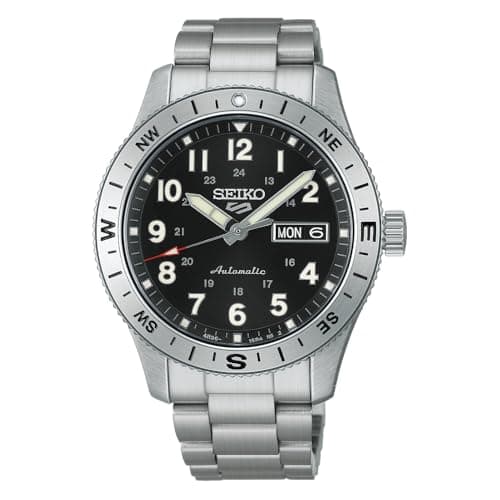 Seiko 5 Sports Field HDB006HDB006 Seiko's current 5 Sports Field: a 41 mm case with a lumed rotating bezel on the familiar 4R36. The field reference the line had been missing. | 41mm · 100m | 8.7out of 10, compiled from published specifications | |
| 3 | 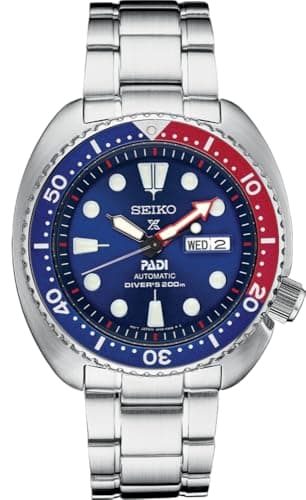 Seiko Prospex Turtle SRPE99SRPE99K1 A real 200 m ISO-rated diver with a screw-down crown, in the cushion case that wears far smaller than its 45 mm suggests. | 45mm · 200m ISO | 8.9out of 10, compiled from published specifications | |
| 4 | 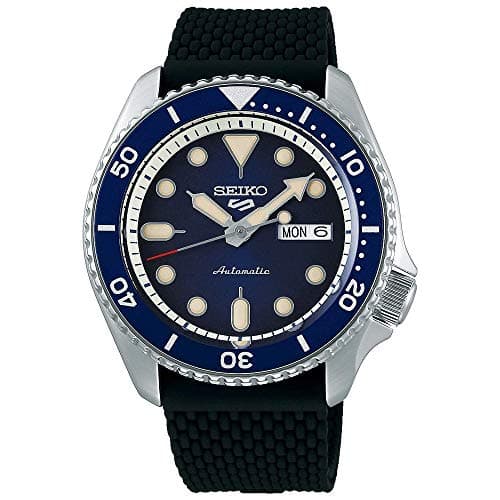 Seiko 5 Sports SRPD93SRPD93 The 5KX case with a movement that hacks and hand-winds, in blue on a silicone strap. The default answer under $350, and the one most people should stop looking after. | 42.5mm · 100m | 8.9out of 10, compiled from published specifications | |
| 5 | 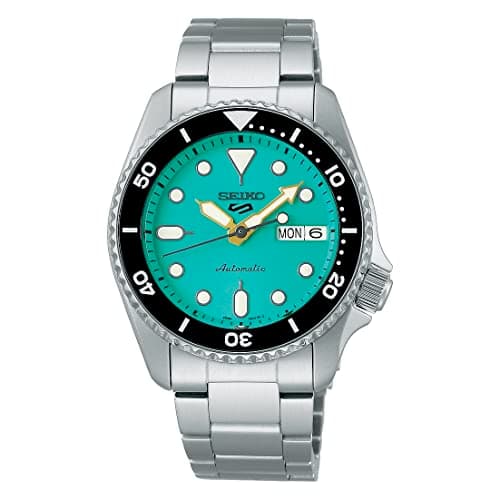 Seiko 5 Sports SRPK33SRPK33K1 The mid-size SKX: 38 mm across, 44.2 mm lug-to-lug and 12.1 mm thick, with a green dial and the 4R36. The best-fitting green Seiko in the range, and the cheapest. | 38mm · 100m | 8.7out of 10, compiled from published specifications |
5 picks · Prices last verified October 9, 2026. Where no live price came back we show “Check price” rather than a number we cannot stand behind. How we pick.
The best Seiko for lume is the Prospex Sumo SPB103J1: it is the only watch on this page for which Seiko publishes LumiBrite on the hands, the indexes and the bezel, and its applied markers are among the largest in the range. If the Sumo is more than you want to spend, the 5 Sports Field HDB006 is the cheapest Seiko here with a published lumed bezel, and the 5 Sports SRPD93 is the cheapest with legible, serious lume at all.
Lume is the one specification watch buyers talk about constantly and manufacturers document almost never. Search for the best Seiko lume and you will find videos of glowing dials shot in a dark room at an exposure the photographer chose, forum threads comparing two watches nobody photographed side by side, and a great deal of confident language about one reference being “brighter” than another. None of that is a specification.
Here is what Seiko actually publishes, reference by reference, in the specification block on its own product pages: which parts of the watch carry LumiBrite. Hands. Hands and markers. Hands, indexes and bezel. That is it. There is no candela figure, no millicandela-per-square-meter reading, no stated glow duration, no charge time, and no comparison between references. Of the Seiko watches this site tracks, 9carry a published LumiBrite row — a count computed from our product registry rather than typed — and not one of them comes with a brightness number attached.
So this page ranks on what exists. Published lume coverage first, then the physical facts that decide how much of that lume you can see: marker area, dial contrast, and whether the crystal in front of it is doing the glow any favors. Where a judgment is ours rather than Seiko’s, the page says so. We have not timed these watches in a dark room, and our methodology page says that in its first sixty words.
What LumiBrite is, in one paragraph
LumiBrite is Seiko’s own brand of photoluminescent pigment — a strontium-aluminate phosphor, the same class of material sold elsewhere as Super-LumiNova. It is a light sponge. Expose it to light and it fills up; take the light away and it releases that light slowly as a visible glow. Nothing is consumed in the process, so it never needs replacing and it never runs out. It is also not radioactive: unlike the tritium tubes used by some military-style brands, LumiBrite has no internal energy source and no half-life, which is why it has to be charged and why it fades over a night. The chemistry, the charge curve and the fade behavior are set out in full in LumiBrite explained. This page is the shopping half of that one.
The four things that decide how a Seiko glows
Two watches can carry the identical LumiBrite row and be wildly different to read at 3 am. These are the reasons, in the order they matter:
- How much surface the lume is painted on. This is the dominant factor and it is entirely a function of dial design. Big applied markers hold more pigment than printed hairlines, and more pigment means a bigger, longer-lasting glow. A dive watch dial exists to be read underwater, so dive dials win this on purpose.
- Whether the bezel is lumed too. A lumed pip or a fully lumed bezel is the difference between knowing the time and knowing how long you have been doing something. Seiko publishes this per reference, which makes it the one lume upgrade you can actually shop for.
- Dial contrast. Lume is only useful against the dark, and a dial that is already dark gives the glow somewhere to stand out. A sunray blue or a gradient dial looks better by day and reads slightly worse by night than flat black does.
- The crystal. An anti-reflective coating is specified to cut reflections, and the side effect is that more of the light your lume emits reaches your eye instead of bouncing around inside the crystal. Seiko publishes crystal type and coating per reference, so this is checkable. It is a small effect next to marker area, which is why it is last on this list.
Notice what is not on that list: price. Lume coverage does not scale with cost inside Seiko’s range. A $279 Seiko 5 and a $1,025 Prospex both get LumiBrite, and the cheaper one is not fobbed off with a thinner grade — Seiko does not sell a budget LumiBrite. What the money buys is case, crystal and movement, which is the subject of every other roundup on this site.
How we ranked them
Each pick had to clear a stated bar before it was considered, and then the order was decided in a fixed sequence:
- Entry rule: Seiko itself must publish LumiBrite for the reference. No Amazon listing copy, no third-party description, no inference from a photograph. If the specification block does not say it, the watch is not on this page.
- Then published coverage. Hands, indexes andbezel beats hands and bezel, which beats hands and markers, which beats a bare “LumiBrite.”
- Then marker area. A dive dial with large applied markers holds more pigment than a field dial with printed numerals, for the same published row.
- Then the rest of the watch. A watch you would not otherwise buy is not a good recommendation because it glows. Every pick here is a watch this site already recommends on other pages.
- Then price, and only then. Lume is cheap to specify. There is no reason to pay a premium for it, and the two cheapest picks on this page are here precisely because they do not ask you to.
What Seiko publishes for each pick
| Reference | Published lume | Dial | Crystal |
|---|---|---|---|
| Sumo SPB103J1 | Hands, indexes and bezel | Black | Sapphire |
| 5 Sports Field HDB006 | Bezel as well as the hands | Glossy black | Curved Hardlex |
| Turtle SRPE99 | Hands and markers | Blue | Hardlex |
| 5 Sports SRPD93 | LumiBrite | Blue sunray | Hardlex |
| 5 Sports SRPK33 | Hands and markers | Green | Hardlex |
The SRPD93 row is worth a sentence on its own, because it looks like a downgrade and is not quite one. Seiko publishes the bare word LumiBrite for that reference without naming the parts it is applied to. That is a documentation gap, not a thinner application: the SRPD93 shares its dial furniture with the rest of the 5KX family, whose specification pages do name hands and markers. We have ranked it below the references where Seiko spells the coverage out, which is the conservative reading, and said why rather than quietly assuming the better case.
The picks, and why they are in this order
1. Prospex Sumo SPB103J1 — the only one with all three
The Sumo is the lume answer on published specification alone. Seiko lists LumiBrite on the hands, the indexes and the bezel — the only reference in this registry with all three — and the Sumo’s applied markers are physically enormous: wide trapezoids at the even hours, a broad arrow at twelve. More painted area is more stored light, and this watch has the most painted area on the page. The sapphire crystal is a second, smaller advantage for the same reason an anti-reflective coating is.
It is also the most expensive watch here by a wide margin, and the honest reason to buy it is the 70-hour 6R35and the sapphire rather than the lume. The 52.6 mm lug-to-lug is the real constraint — 4.9 mm longer than a Turtle, which is a lot of overhang on a flat wrist. If that number rules it out, nothing about the lume argument should talk you into it.
2. 5 Sports Field HDB006 — the cheap lumed bezel
Seiko’s published row for the HDB006 is unusual and useful: LumiBrite on the bezel as well as the hands. Field Seikos have historically not had that. A lumed rotating bezel turns a watch from a clock into a timer you can use in the dark, which is the single most practical lume feature Seiko sells, and this is the cheapest reference here that has it. The glossy black dial also gives the glow the best background on the page.
The costs are real and worth stating: Hardlex rather than sapphire, 13.2 mm of thickness on a 41 mm field watch, and a 48.5 mm lug-to-lug that is longer than the 39.4 mm field references this one replaced. It is a bigger watch than “field watch” implies.
3. Prospex Turtle SRPE99 — the biggest markers for the money
The Turtle gets “LumiBrite hands and markers” and then wins on geometry. The cushion case gives the dial an unusually wide opening, and the markers Seiko fits into it are big. It is also a genuine ISO 6425 diver at 200 m with a screw-down crown, which is the context lume was designed for in the first place.
Two honest marks against it. The crystal is Hardlex, which is the recurring Seiko complaint at this price and costs you a little legibility next to the Sumo’s coated sapphire. And the blue dial, pretty as it is, is a slightly worse background for a glow than flat black. The King Turtle comparison covers what the sapphire version changes and what it costs.
4. 5 Sports SRPD93 — the cheapest serious lume
At the bottom of the mechanical range the SRPD93 still gets real LumiBrite on real applied markers, in the 42.5 mm 5KX case on the 4R36. This is the watch to buy if lume matters to you and nothing else about the Sumo or the Turtle does. The sunray blue dial is the compromise: it is the reason the watch looks expensive by day and the reason it reads marginally worse by night than a flat black dial would.
It is a 100 m watch, not a diver, and the difference is not cosmetic — no ISO rating, no condensation or thermal-shock testing. For a watch that lives on dry land with the lights off, that changes nothing.
5. 5 Sports SRPK33 — lume on a 38 mm case
The mid-size SKX is the only pick here under 40 mm, and it exists on this page for one reason: everything else with Seiko’s best-documented lume is 41 mm or wider. Seiko publishes LumiBrite on hands and markers, a 38.0 mm case, a 44.2 mm lug-to-lug and 12.1 mm of thickness. A smaller dial holds less pigment, so this is genuinely the dimmest watch on the page — but it is the only one that fits a wrist the others overhang, and a glow you can see beats a brighter one you refuse to wear. It is also the cheapest watch here.
Seikos with published lume that we did not rank
Three more tracked references carry a published LumiBrite row and are not on this page, and the reasons matter more than the picks do:
- 5 Sports SRPD63 — the same 5KX case, the same 4R36 and the same published “hands and markers” row as its siblings, at a higher price than the SRPD93 for a difference that is entirely dial color. Ranking two identical cases on a lume page would be padding. It is covered on the green-dial roundup instead, where the dial is the point.
- 5 Sports SKX GMT SSK036 — LumiBrite on hands and indexes, and a watch we like, but at the price check this page ships with the Amazon listing reported only one unit left. A lead recommendation that goes out of stock the week it publishes is not a recommendation. It is ranked on the diver-versus-GMT comparison where the second time zone is the reason to buy it.
- Prospex PADI Diver SRPL53 — published LumiBrite on hands and markers, and no live price at the refresh this page carries. We do not rank a watch we cannot quote a price for.
And one reference that people expect here and will not find: no Seiko on this site is listed with tritium tubes, because Seiko does not make one. If self-powered glow with no charging at all is the requirement, LumiBrite is the wrong technology and no amount of shopping inside Seiko’s range fixes that.
Charging it so it actually works
Most complaints about weak Seiko lume are complaints about charging. LumiBrite needs light it has actually seen, and an office ceiling is not a meaningful charge. Two minutes of direct sunlight, or a few minutes under a bright lamp held close, fills the pigment far more than an afternoon of ambient indoor light. A watch worn under a long sleeve all day has effectively not been charged at all, which is why the same watch can seem brilliant one night and dead the next.
The fade is steep at the start and then long and shallow. The first minutes after charging are dramatically brighter than the rest of the night, which is also why side-by-side photographs are so misleading — the result depends almost entirely on when the shutter opened relative to the charge. A fully charged LumiBrite dial is readable when your eyes have adjusted to a dark room hours later; it is not readable in a lit room at midnight, and no watch at any price is.
Nothing degrades. The pigment is not consumed, there is no half-life, and a thirty-year-old LumiBrite dial charges exactly as it did new unless the paint itself has been physically damaged. If an old Seiko no longer glows, the explanation is a damaged or re-lumed dial, not an expired one — worth knowing if you are buying pre-owned.
The picks in full
Specifications are transcribed from Seiko’s published documentation. Prices come from Amazon and carry the date they were verified. We have not handled these watches — here is what we did instead.
Price as of October 9, 2026. Prices move — Amazon's is the one that counts.
#ad · we may earn a commission from this link to Seiko Prospex Sumo SPB103J1
Seiko Prospex Sumo SPB103J1
SPB103J1Best for: Sapphire and a 70-hour reserve in a big 200 m ISO diver
The Sumo you can actually order: 45 mm, sapphire and the 70-hour 6R35 on 20 mm lugs. The upgrades are real, and so is the 52.6 mm lug-to-lug that pays for them.
- Spec completeness for the price
- 8.4
- Movement relative to bracket
- 8.6
- Case proportions
- 7.2
- Strap flexibility
- 8.8
- Availability
- 7.2
What it gets right
- Sapphire crystal where the Samurai and Turtle use Hardlex
- 70-hour 6R35 — off on Friday evening, still running on Monday morning
- 12.9 mm thick, only 0.6 mm taller than the far smaller 2024 Samurai
What it gets wrong
- 52.6 mm lug-to-lug — 4.9 mm longer than a Turtle, and the number that decides fit
- The 2019 reference: the 2022 SPB321/SPB323 add a ceramic insert and hard coating this one lacks
- 20 mm lugs read narrow against a 45 mm case
- Priced near the $1,000 line, a full bracket above the Samurai
Skip this one if: the flat top of your wrist measures less than 52.6 mm across. Lugs that overhang the wrist are the one thing no strap change fixes, and on this case the length, not the 12.9 mm height, is the constraint.
| Case diameter | 45.0 mm |
|---|---|
| Lug-to-lug | 52.6 mm |
| Thickness | 12.9 mm |
| Lug width | 20 mm |
| Crystal | Sapphire |
| Water resistance | 200 m, ISO 6425 rated |
| Crown | Screw-down |
| Case back | Screw-down |
| Bezel | Unidirectional rotating |
| Lume | LumiBrite on hands, indexes and bezel |
| Clasp | Three-fold, secure lock, push-button release, extender |
| Weight | 188.0 g |
| Caliber | Seiko 6R35 |
| Type | Automatic, hand-winding and hacking |
| Beat rate | 21,600 vph (6 beats/sec) |
| Jewels | 24 |
| Power reserve | Approx. 70 hours |
| Stated accuracy | -15 to +25 sec/day |
| Complications | Date |
Price as of October 9, 2026. Prices move — Amazon's is the one that counts.
#ad · we may earn a commission from this link to Seiko 5 Sports Field HDB006
Seiko 5 Sports Field HDB006
HDB006Best for: A field watch with a rotating bezel and a mechanical movement
Seiko's current 5 Sports Field: a 41 mm case with a lumed rotating bezel on the familiar 4R36. The field reference the line had been missing.
- Spec completeness for the price
- 8.6
- Movement relative to bracket
- 8.5
- Case proportions
- 8.4
- Strap flexibility
- 9.3
- Availability
- 8.6
What it gets right
- Rotating bezel with its own LumiBrite, which the older field references did not have
- 20 mm lugs, the most common aftermarket size
- The 4R36 hacks and hand-winds
What it gets wrong
- 41 mm with a 48.5 mm lug-to-lug — bigger than the 39.4 mm field references it follows
- Hardlex, not sapphire
- 13.2 mm thick for a field watch
Skip this one if: you wanted the small field Seiko. This is the 41 mm replacement for that idea, and its 48.5 mm lug-to-lug is a different proposition from the 39.4 mm SRPG references, which Seiko has now sold out of.
| Case diameter | 41.0 mm |
|---|---|
| Lug-to-lug | 48.5 mm |
| Thickness | 13.2 mm |
| Lug width | 20 mm |
| Crystal | Curved Hardlex |
| Water resistance | 100 m (10 bar) |
| Bezel | Rotating, with LumiBrite on the bezel as well as the hands |
| Dial | Glossy black |
| Magnetic resistance | 4,800 A/m |
| Case back | See-through, screw case back |
| Clasp | Three-fold with push-button release |
| Caliber | Seiko 4R36 |
| Type | Automatic, hand-winding and hacking |
| Beat rate | 21,600 vph (6 beats/sec) |
| Jewels | 24 |
| Power reserve | Approx. 41 hours |
| Stated accuracy | -35 to +45 sec/day |
| Complications | Day and date |
$575.005% off
Price as of October 9, 2026. Prices move — Amazon's is the one that counts.
#ad · we may earn a commission from this link to Seiko Prospex Turtle SRPE99
Seiko Prospex Turtle SRPE99
SRPE99K1Best for: An actual dive watch you can also wear daily
A real 200 m ISO-rated diver with a screw-down crown, in the cushion case that wears far smaller than its 45 mm suggests.
- Spec completeness for the price
- 9.0
- Movement relative to bracket
- 8.5
- Case proportions
- 8.8
- Strap flexibility
- 9.5
- Availability
- 8.6
What it gets right
- Genuine ISO 6425 diver, not a diver-styled sports watch
- 47.7 mm lug-to-lug means it fits wrists that 45 mm suggests it should not
- Screw-down crown at 4 o'clock keeps it off the back of your hand
What it gets wrong
- Hardlex on a watch at this price is the recurring Seiko complaint
- The 45 mm figure scares people off before they try one
- PADI co-branding on the dial is not for everyone
Skip this one if: you have a wrist under about 6.5 inches. The lug-to-lug is forgiving but the case is still visually wide, and the smaller SRPG references exist for exactly this reason.
| Case diameter | 45.0 mm (cushion case) |
|---|---|
| Lug-to-lug | 47.7 mm |
| Thickness | 13.4 mm |
| Lug width | 22 mm |
| Crystal | Hardlex (hardened mineral) |
| Water resistance | 200 m, ISO 6425 rated for scuba diving |
| Crown | Screw-down, at 4 o'clock |
| Bezel | Unidirectional elapsed-timing bezel, PADI red and blue |
| Lume | LumiBrite on hands and markers |
| Bracelet | Steel, three-fold clasp with push-button release |
| Caliber | Seiko 4R36 |
| Type | Automatic, hand-winding and hacking |
| Beat rate | 21,600 vph (6 beats/sec) |
| Jewels | 24 |
| Power reserve | Approx. 41 hours |
| Stated accuracy | -35 to +45 sec/day |
| Complications | Day and date |
Price as of October 9, 2026. Prices move — Amazon's is the one that counts.
#ad · we may earn a commission from this link to Seiko 5 Sports SRPD93
Seiko 5 Sports SRPD93
SRPD93Best for: A first mechanical watch you will not outgrow
The 5KX case with a movement that hacks and hand-winds, in blue on a silicone strap. The default answer under $350, and the one most people should stop looking after.
- Spec completeness for the price
- 8.8
- Movement relative to bracket
- 8.5
- Case proportions
- 8.9
- Strap flexibility
- 9.5
- Availability
- 8.8
What it gets right
- Hacks and hand-winds — the SKX's biggest omission, fixed
- 22 mm lugs put the entire aftermarket strap catalog in play
- Day-date in a genuinely legible layout
- Case shape is the SKX profile people actually want
What it gets wrong
- Hardlex, not sapphire — it will scratch
- 100 m and no screw-down crown, so it is not an ISO 6425 diver despite the looks
- 13.4 mm thick under a shirt cuff
- Ships on a silicone strap rather than a bracelet
Skip this one if: you want an actual dive watch. The 100 m rating and the absence of a screw-down crown mean this is a dive-styled sports watch, not an ISO 6425 diver. The Turtle is the real one.
| Case diameter | 42.5 mm |
|---|---|
| Lug-to-lug | 46.0 mm |
| Thickness | 13.4 mm |
| Lug width | 22 mm |
| Crystal | Hardlex (hardened mineral) |
| Water resistance | 100 m — splash and swim, not scuba |
| Bezel | Blue unidirectional rotating |
| Dial | Blue sunray |
| Strap | Black silicone |
| Case back | See-through |
| Lume | LumiBrite |
| Caliber | Seiko 4R36 |
| Type | Automatic, hand-winding and hacking |
| Beat rate | 21,600 vph (6 beats/sec) |
| Jewels | 24 |
| Power reserve | Approx. 41 hours |
| Stated accuracy | -35 to +45 sec/day |
| Complications | Day and date |
Price as of October 9, 2026. Prices move — Amazon's is the one that counts.
#ad · we may earn a commission from this link to Seiko 5 Sports SRPK33
Seiko 5 Sports SRPK33
SRPK33K1Best for: A green dial on a case that fits a smaller wrist
The mid-size SKX: 38 mm across, 44.2 mm lug-to-lug and 12.1 mm thick, with a green dial and the 4R36. The best-fitting green Seiko in the range, and the cheapest.
- Spec completeness for the price
- 8.5
- Movement relative to bracket
- 8.5
- Case proportions
- 9.3
- Strap flexibility
- 8.8
- Availability
- 8.4
What it gets right
- 38.0 mm and 44.2 mm lug-to-lug — the smallest and best-proportioned case in the 5 Sports range
- 12.1 mm thick, 1.3 mm slimmer than the 5KX references
- Three-row steel bracelet with a locking clasp, included
- 4R36 hacks and hand-winds, with a day-date
What it gets wrong
- Hardlex, not sapphire
- Black bezel, so the dial is the only green on the watch
- 100 m and no screw-down crown — not an ISO 6425 diver despite the bezel
- 20 mm lugs rather than the 5KX's 22 mm, which thins out the strap aftermarket slightly
Skip this one if: you want the green to actually read green day to day. Seiko's darker greens go near-black under office light, and the black bezel here means there is no second patch of color to carry it — check a photo taken indoors before you commit.
| Case diameter | 38.0 mm |
|---|---|
| Lug-to-lug | 44.2 mm |
| Thickness | 12.1 mm |
| Lug width | 20 mm |
| Crystal | Hardlex (hardened mineral) |
| Water resistance | 100 m — splash and swim, not scuba |
| Bezel | Black uni-directional rotating elapsed-timing bezel |
| Dial | Green |
| Band | Three-row stainless steel bracelet, locking tri-fold clasp with push-button release |
| Case back | Screw-down, see-through |
| Lume | LumiBrite on hands and markers |
| Caliber | Seiko 4R36 |
| Type | Automatic, hand-winding and hacking |
| Beat rate | 21,600 vph (6 beats/sec) |
| Jewels | 24 |
| Power reserve | Approx. 41 hours |
| Stated accuracy | -35 to +45 sec/day |
| Complications | Day and date |
Work the decision in this order and the page collapses to one watch quickly.
- Do you need to time something in the dark? If yes, you need a lumed bezel and the list is two watches long: the Sumo SPB103J1 or the HDB006. Everything else here tells you the time and nothing else.
- What is your lug-to-lug limit? Measure the flat top of your wrist across. The Sumo needs 52.6 mm, the HDB006 48.5 mm, the Turtle 47.7 mm, the SRPD93 46.0 mm and the SRPK33 44.2 mm. This number rules watches out faster than any other, and how to measure it takes a minute.
- Is the watch going in water? Only the Sumo and the Turtle are ISO 6425 divers. The other three are 100 m water-resistant sports watches, which is a different claim and a different test regime.
- How much do you care about the crystal? Only the Sumo has sapphire. If scratch resistance matters as much as glow, the sapphire roundup is the page to cross-reference, and Hardlex versus sapphire explains what you are actually trading.
- Then take the cheapest one left. Lume coverage is the criterion this page ranks on, and the differences between adjacent picks are small enough that fit and price should break the tie. There is no prestige grade of LumiBrite to pay up for.
Questions
Which Seiko has the brightest lume?
Nobody can answer that from published data, including us. Seiko does not publish a brightness figure, a charge time or a glow duration for any reference, so every “brightest” claim online is either a measurement someone took with equipment they rarely describe or a photograph taken at a chosen exposure. What can be answered is which reference has the most published lume coverage, and on this site’s registry that is the Prospex Sumo SPB103J1 — hands, indexes and bezel.
How long does Seiko LumiBrite last at night?
Seiko publishes no duration, so we will not print one. The behavior is well understood even without a figure: the glow is brightest in the first minutes after charging, drops steeply, then fades slowly for hours. A fully charged dial is readable to dark-adapted eyes well into the night. The pigment itself does not wear out — see LumiBrite explained for the charge and fade mechanism.
Is LumiBrite as good as Super-LumiNova?
They are the same class of material — strontium-aluminate phosphors — made by different companies, and neither firm publishes figures in a form that allows a like-for-like comparison of a finished watch. In practice the application matters more than the brand of pigment: how much is painted on, over how much surface. That is why a Seiko dive dial out-glows plenty of watches using the better-known name.
Does a sapphire crystal make the lume look brighter?
Slightly, and indirectly. Sapphire itself does nothing for glow; an anti-reflective coating does, by letting more emitted light out of the crystal instead of reflecting it internally. Seiko publishes crystal type and coating per reference, so it is checkable rather than a matter of opinion. The effect is small next to how much lume is painted on the dial in the first place.
Does Seiko use tritium anywhere?
Not on any reference this site tracks. LumiBrite is photoluminescent — it has to be charged with light and has no internal energy source. Tritium tubes are self-luminous and need no charging, and watches that use them carry regulatory markings Seiko’s do not. If permanent, charge-free glow is a hard requirement, this is the wrong brand rather than the wrong reference.
Will the lume on an old Seiko have faded?
The pigment does not expire, so a genuinely original LumiBrite dial from the 1990s charges the way it always did. If an older watch does not glow, suspect a damaged dial, a relume by a previous owner, or a pre-LumiBrite material — all of which are things to check when buying a used Seiko or a vintage one.
Sources
- Seiko — Prospex Sumo SPB103J1 published specifications
- Seiko USA — 5 Sports Field HDB006 published specifications
- Seiko USA — Prospex Diver SRPE99 published specifications
- Seiko USA — 5 Sports SRPD93 published specifications
- Seiko USA — 5 Sports SRPK33 published specifications
- Seiko Watch Corporation — US catalog and specifications
- Seiko instruction manuals and caliber documentation
- ISO 6425 — Horology, divers' watches (standard listing)
Specifications are transcribed from manufacturer documentation and published standards. Where a manufacturer does not publish a figure, this page says so rather than estimating one.
Read next
- Seiko LumiBrite explainedThe chemistry, the charge curve and why it never needs replacing.
- Best Seiko dive watchesThe same watches judged on the dive rating rather than the glow.
- Seiko Turtle vs King TurtleWhat sapphire and a ceramic bezel change on the pick at number three.
- Best Seiko watches with a sapphire crystalOnly one pick here has sapphire. These are the ones that do.
- Best Seiko watches for menOne Seiko per job, if lume is not the only thing you are buying for.
- Will a Seiko fit my wrist?The lug-to-lug method that rules most of this page in or out.