Head-to-head
Seiko Turtle vs King Turtle
Three differences, one of which you will notice every day and one of which you may not want. The case, the caliber and the dive rating are identical.
By Stephen V. · Updated Oct 8, 2026
Quick picks
| # | Watch | Key spec | Score | Price |
|---|---|---|---|---|
| 1 | 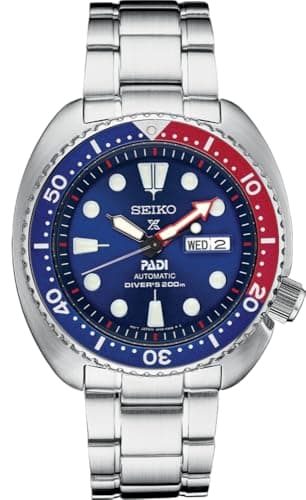 Seiko Prospex Turtle SRPE99SRPE99K1 A real 200 m ISO-rated diver with a screw-down crown, in the cushion case that wears far smaller than its 45 mm suggests. | 45mm · 200m ISO | 8.9out of 10, compiled from published specifications | |
| 2 | 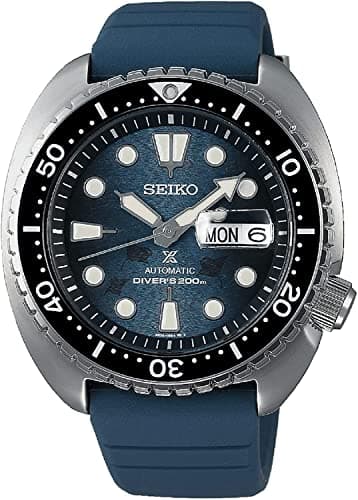 Seiko Prospex King Turtle SRPF77SRPF77K1 The King Turtle that is actually orderable: the Turtle cushion case with sapphire, a black ceramic insert and a magnified day/date, on a Manta Ray dial. | 45mm · sapphire | 8.6out of 10, compiled from published specifications |
2 watches on this page · Prices last verified October 9, 2026. Where no live price came back we show “Check price” rather than a number we cannot stand behind. How we pick.
The King Turtle is the better watch on paper: it adds a sapphire crystal and a ceramic bezel insert to the identical 45 mm cushion case, the identical 4R36 caliber and the identical 200 m ISO 6425 rating. The standard Turtle wins on two things that are not specifications — it has no day/date magnifier, which many people actively dislike, and it ships on a steel bracelet rather than silicone. If the magnifier does not bother you, buy whichever is cheaper on the day.
First, the naming, because it causes half the confusion. “King Turtle” is not a Seiko name.Seiko calls both of these watches “Prospex Automatic Diver” and identifies them only by reference number. The nickname comes from collectors and it means something specific: a Turtle-cased diver that Seiko has fitted with a sapphire crystal, a ceramic bezel insert and a magnifier over the day/date. Those three features are the definition, and Seiko publishes all three per reference, so the label is checkable rather than a matter of opinion.
The two references compared here are the ones you can actually order. The SRPE99 is the PADI-dial Turtle, and the SRPF77is the Save the Ocean Manta Ray King Turtle. Both are special editions, which is worth saying plainly: Seiko’s plain-dial Turtles come and go from the US market, and at the price check this page carries the special editions are what is in stock. See the note at the end of this page for the references we tried and could not use.
Published specifications, side by side
| Turtle SRPE99 | King Turtle SRPF77 | |
|---|---|---|
| Case diameter | 45.0 mm (cushion) | 45.0 mm (cushion) |
| Lug-to-lug | 47.7 mm | 47.7 mm |
| Thickness | 13.4 mm | 13.22 mm |
| Lug width | 22 mm | 22 mm |
| Crystal | Hardlex | Sapphire, with day/date magnifier |
| Bezel insert | Aluminum, PADI red and blue | Black ceramic |
| Water resistance | 200 m, ISO 6425 | 200 m, ISO 6425 |
| Crown | Screw-down, 4 o'clock | Screw-down, 4 o'clock |
| Caliber | Seiko 4R36 | Seiko 4R36 |
| Power reserve | Approx. 41 hours | Approx. 41 hours |
| Complications | Day and date | Day and date, magnified |
| Lume | Hands and markers | Hands and markers |
| Supplied on | Steel bracelet | Blue silicone strap |
Read that table and the decision is narrower than the forums make it sound. Nine of the thirteen rows are identical. The case is the same case, the movement is the same movement, the dive rating is the same rating tested to the same standard. What changes is the crystal, the bezel insert, the presence of a magnifier and what the watch arrives on.
Difference one: Hardlex against sapphire
This is the only difference that will matter to you in five years. Hardlex is Seiko’s hardened mineral glass; sapphire is synthetic corundum. On the Mohs scale mineral glass sits around 6 to 7 and sapphire sits at 9, and the practical consequence is that sand, keys, door frames and granite countertops scratch Hardlex and do not scratch sapphire. Almost everything a watch rubs against in daily life falls in the gap between those two numbers.
Hardlex has one genuine advantage and it is not nothing: it is more forgiving of a sharp impact. Sapphire is harder and more brittle, so a strike that leaves a scuff on Hardlex can chip or crack sapphire outright. For a watch worn on a worksite rather than in an office, that trade is real. The full argument, with the hardness figures, is in Hardlex versus sapphire.
It is also the difference that decides the resale conversation, and the reason the standard Turtle’s crystal is the most common single complaint about it anywhere. A scratched crystal is replaceable — Seiko service will fit a new one — but the cost of doing that once is a meaningful fraction of the price gap between these two watches. Seiko’s own published service prices put that in context.
Difference two: aluminum against ceramic
The bezel insert is the ring of numbers around the dial, and on a dive watch it is the part that takes the most abuse because it sticks out furthest. The SRPE99’s is anodized aluminum in PADI red and blue; the SRPF77’s is black ceramic.
Aluminum scuffs. Not dramatically and not immediately, but a two-year-old aluminum insert has silver marks on the high points of its edge and a faint overall dulling, and that is simply what the material does. Ceramic does not — it stays glossy and keeps its color, and the printed or recessed numbers stay crisp. Ceramic is also brittle in the same way sapphire is: a hard knock on the edge can chip it, and a chipped ceramic insert looks far worse than a scuffed aluminum one.
There is an aesthetic fork buried in this that specifications cannot settle. The faded aluminum insert is, to a lot of people, the entire charm of a vintage-styled Seiko diver. Ceramic stays looking new, which is either the point or the problem depending on who you are.
Difference three: the magnifier, which is not an upgrade
Seiko machines a cyclops lens into the underside of the King Turtle’s sapphire, directly over the day/date window at three o’clock. It magnifies the calendar and it cannot be removed, because it is part of the crystal rather than a fitting on top of it.
Whether this is a feature depends entirely on you, and it is the one row in the table where the more expensive watch may be the worse buy. The magnifier genuinely helps if you read the date often or wear reading glasses. It also distorts the dial around it, catches light at angles the rest of the crystal does not, and visually unbalances a dial that was designed without it. People who dislike it tend to dislike it permanently.
This is the single most common reason a buyer who has compared both ends up with the standard Turtle. It is not a compromise or a budget decision — it is a preference, and the specification sheet cannot tell you which side of it you are on. Look at a photograph of the dial at an angle before you decide.
The two things the table will not tell you
What it arrives on. The SRPE99 comes on Seiko’s steel bracelet with a three-fold clasp; the SRPF77 comes on blue silicone. On paper the bracelet is worth more. In practice the silicone means nothing to size — no link removal, no tool, no trip to a jeweler — and the Turtle’s bracelet is one of the less loved ones Seiko fits. Both watches take any 22 mm strap, which is the most common size there is, so this difference costs about $30 to erase in either direction. The strap roundup and the bracelet page cover what fits.
Which dial you can live with. Neither of these is a plain black diver. The SRPE99 carries PADI’s red-and-blue scheme and its logo on the dial; the SRPF77 carries a gradient blue Manta Ray dial with a stamped wave pattern and a Save the Ocean case back. Both are deliberate design statements, and “I just wanted a black Turtle” is a legitimate reaction to both.
About the price
There is a reason this page does not print a price gap, and it is not caution for its own sake. Special editions do not price in a straight line: at some checks the King Turtle has sold for less than the standard Turtle beside it, which inverts the usual “pay more for sapphire” framing entirely. The live figures in the table at the top of this page come from Amazon’s API and are timestamped; the numbers in your head from last month are not.
The practical rule: check both before you decide, every time. If the King Turtle is within about $50 of the Turtle, the sapphire and ceramic make it the better buy for most people, and if it is cheaper the question answers itself. If the gap is wide and the magnifier bothers you, the Turtle is a genuinely good watch that this site recommends on the dive roundup and the one-per-job page.
Buy the Turtle SRPE99 if
- The day/date magnifier puts you off. This is the main reason, and it is a good one.
- You want it on a steel bracelet out of the box without buying anything else.
- You like an aluminum insert that ages, or you knock watches against things often enough that brittle materials are a liability.
- It is clearly cheaper on the day, and a Hardlex crystal you may eventually replace is an acceptable trade for that.
Buy the King Turtle SRPF77 if
- You want this watch to look the same in five years. Sapphire and ceramic are the two materials that make that happen.
- The magnifier is useful to you, or you are indifferent to it.
- You prefer a silicone strap, or you were going to change the strap anyway and would rather not pay for a bracelet you remove.
- The price is close to the Turtle’s. The upgrade is cheap when the gap is small and poor value when it is not.
The references we tried and could not use
Two things readers will search for and not find here, with the reasons, because a comparison page that hides its gaps is not worth much:
- The green King Turtle SRPE05 — the reference this site’s King Turtle reference page is built on. Its Amazon listing has returned “Currently unavailable.” with no price at every check since late September, so it could not carry a buy row on a new page. The SRPF77 is the same specification with a different dial and strap.
- The plain black Turtle SRPE93 — the reference most people picture when they say “Turtle,” and not currently in this site’s product registry. Adding it is a separate change from building this page, and we will not put a buy row on a watch that has not been through the resolution and price pipeline every other product here has.
If you are weighing either of these against something outside the Turtle family, two other pages do that work: Sumo versus Samurai compares the other two Prospex cushion-and-angular divers on power reserve and lug-to-lug, and Seiko 5 versus Prospex explains why the ISO rating these two share costs what it costs.
The watches on this page
Specifications are transcribed from Seiko’s published documentation. Prices come from Amazon and carry the date they were verified. We have not handled these watches — here is what we did instead.
$575.005% off
Price as of October 9, 2026. Prices move — Amazon's is the one that counts.
#ad · we may earn a commission from this link to Seiko Prospex Turtle SRPE99
Seiko Prospex Turtle SRPE99
SRPE99K1Best for: An actual dive watch you can also wear daily
A real 200 m ISO-rated diver with a screw-down crown, in the cushion case that wears far smaller than its 45 mm suggests.
- Spec completeness for the price
- 9.0
- Movement relative to bracket
- 8.5
- Case proportions
- 8.8
- Strap flexibility
- 9.5
- Availability
- 8.6
What it gets right
- Genuine ISO 6425 diver, not a diver-styled sports watch
- 47.7 mm lug-to-lug means it fits wrists that 45 mm suggests it should not
- Screw-down crown at 4 o'clock keeps it off the back of your hand
What it gets wrong
- Hardlex on a watch at this price is the recurring Seiko complaint
- The 45 mm figure scares people off before they try one
- PADI co-branding on the dial is not for everyone
Skip this one if: you have a wrist under about 6.5 inches. The lug-to-lug is forgiving but the case is still visually wide, and the smaller SRPG references exist for exactly this reason.
| Case diameter | 45.0 mm (cushion case) |
|---|---|
| Lug-to-lug | 47.7 mm |
| Thickness | 13.4 mm |
| Lug width | 22 mm |
| Crystal | Hardlex (hardened mineral) |
| Water resistance | 200 m, ISO 6425 rated for scuba diving |
| Crown | Screw-down, at 4 o'clock |
| Bezel | Unidirectional elapsed-timing bezel, PADI red and blue |
| Lume | LumiBrite on hands and markers |
| Bracelet | Steel, three-fold clasp with push-button release |
| Caliber | Seiko 4R36 |
| Type | Automatic, hand-winding and hacking |
| Beat rate | 21,600 vph (6 beats/sec) |
| Jewels | 24 |
| Power reserve | Approx. 41 hours |
| Stated accuracy | -35 to +45 sec/day |
| Complications | Day and date |
$625.0020% off
Price as of October 9, 2026. Prices move — Amazon's is the one that counts.
#ad · we may earn a commission from this link to Seiko Prospex King Turtle SRPF77
Seiko Prospex King Turtle SRPF77
SRPF77K1Best for: A Turtle with sapphire and ceramic rather than Hardlex and aluminum
The King Turtle that is actually orderable: the Turtle cushion case with sapphire, a black ceramic insert and a magnified day/date, on a Manta Ray dial.
- Spec completeness for the price
- 9.2
- Movement relative to bracket
- 8.5
- Case proportions
- 8.8
- Strap flexibility
- 9.0
- Availability
- 7.6
What it gets right
- Sapphire and a ceramic bezel insert on the forgiving 47.7 mm Turtle case
- 0.2 mm thinner than the Hardlex Turtle despite the harder crystal
- Silicone strap out of the box, so there is no bracelet to size
What it gets wrong
- The day/date magnifier is permanent and divides opinion
- A Save the Ocean special edition, so the dial is a design statement rather than a plain diver
- Silicone rather than the steel bracelet the standard Turtle ships on
- Special-edition stock is finite in a way the core references are not
Skip this one if: you want a watch you can wear without explaining it. The Manta Ray dial and the date magnifier are both deliberate, and the plain black Turtle exists for people who want neither.
| Case diameter | 45.0 mm (cushion case) |
|---|---|
| Lug-to-lug | 47.7 mm |
| Thickness | 13.22 mm |
| Lug width | 22 mm |
| Crystal | Sapphire, with a magnifier over the day/date |
| Bezel | Black ceramic uni-directional rotating elapsed-timing bezel |
| Water resistance | 200 m, ISO 6425 rated for scuba diving |
| Crown | Screw-down, at 4 o'clock |
| Dial | Manta Ray themed gradient blue with a stamped wave pattern |
| Lume | LumiBrite on hands and markers |
| Strap | Deep blue silicone |
| Case back | Special Edition case back |
| Caliber | Seiko 4R36 |
| Type | Automatic, hand-winding and hacking |
| Beat rate | 21,600 vph (6 beats/sec) |
| Jewels | 24 |
| Power reserve | Approx. 41 hours |
| Stated accuracy | -35 to +45 sec/day |
| Complications | Day and date |
Three questions settle it, and none of them is about money until the third.
- Does the magnifier bother you? Find a photograph of the SRPF77 dial taken at an angle. If the cyclops looks wrong to you there, it will look wrong on your wrist, and the Turtle is your watch regardless of everything below.
- Where does this watch live? Desk, city, travel — sapphire and ceramic are worth it, because the damage those environments do is abrasion. Tools, worksites, climbing — Hardlex and aluminum take impacts better and scuff gracefully instead of chipping.
- What is the gap today? Use the live table at the top of this page, not a remembered price. Inside $50, take the King Turtle. Wide, and the Turtle is still an ISO 6425 diver on the same movement for less.
One thing that is not on that list: the movement. Both watches run the same 4R36, with the same 41-hour reserve and the same published -35 to +45 seconds a day. Nobody is buying a better movement here, in either direction.
Questions
What is the difference between the Seiko Turtle and King Turtle?
Three published differences: the King Turtle has a sapphire crystal instead of Hardlex, a ceramic bezel insert instead of aluminum, and a magnifier over the day/date window. The case, the lug-to-lug, the 4R36 caliber, the 41-hour power reserve and the 200 m ISO 6425 dive rating are identical. “King Turtle” is a collector name for that specification, not a Seiko designation.
Is the King Turtle worth the extra money?
If the gap is small, yes — sapphire and ceramic are the two upgrades that keep a watch looking new, and they are expensive to retrofit. If the gap is large, the standard Turtle is the same watch underneath with a crystal you may never scratch. Check the live prices in the table above rather than assuming a gap: special-edition pricing moves, and the King Turtle has at times been the cheaper of the two.
Can you remove the date magnifier on a King Turtle?
Not without replacing the crystal. The cyclops is machined into the underside of the sapphire rather than glued on top, so removing it means fitting a different crystal entirely — possible, but it is a service job and it costs real money. If the magnifier is a dealbreaker, buy the standard Turtle instead.
Do the Turtle and King Turtle use the same movement?
Yes. Both run Seiko’s 4R36: 24 jewels, 21,600 vibrations per hour, approximately 41 hours of reserve, hand-winding and hacking, and a day-and-date display. Seiko specifies it at -35 to +45 seconds a day in both watches. The price difference between these two references buys materials, not mechanics.
Which one is the better dive watch?
Neither, measurably. Both are rated 200 m and tested to ISO 6425, which requires condensation, thermal shock and magnetic resistance checks on top of pressure testing, and both have a screw-down crown at 4 o’clock. The ceramic insert on the King Turtle holds its markings longer in salt water and sand, which is a durability edge rather than a capability one. What the rating actually certifies is set out in water resistance explained.
Will a 45 mm Turtle fit a smaller wrist?
More often than the number suggests. Both of these have a 47.7 mm lug-to-lug, which is shorter than plenty of 42 mm watches, and the cushion case has no protruding lugs to overhang the wrist. Measure the flat top of your wrist across; if it is 48 mm or more these will sit flat. The method is in will a Seiko fit my wrist.
Sources
- Seiko USA — Prospex Diver SRPE99 published specifications
- Seiko USA — Prospex Diver SRPF77 published specifications
- Seiko Prospex collection — official specifications
- Seiko Watch Corporation — US catalog and specifications
- ISO 6425 — Horology, divers' watches (standard listing)
- Seiko customer service — warranty and servicing
Specifications are transcribed from manufacturer documentation and published standards. Where a manufacturer does not publish a figure, this page says so rather than estimating one.
Read next
- Seiko Turtle SRPE99 referenceThe standard Turtle in full: case, crystal, bracelet and history.
- Seiko King Turtle referenceThe sapphire-and-ceramic specification in detail.
- Hardlex vs sapphireThe hardness figures behind the single difference that matters most.
- Seiko Sumo vs SamuraiThe same decision one bracket up, on power reserve and lug-to-lug.
- Best Seiko watches for lumeBoth of these carry the same published LumiBrite row. Here is what beats it.
- Best Seiko dive watchesWhere both of these sit against every other ISO-rated Seiko.