Roundups
Best Seiko dive watches under $500
Every pick here carries the ISO 6425 marking. That is the filter, and the difference between a diver and a watch that only looks like one.
By Stephen V. · Updated Aug 8, 2026
Quick picks
| # | Watch | Key spec | Score | Price |
|---|---|---|---|---|
| 1 | 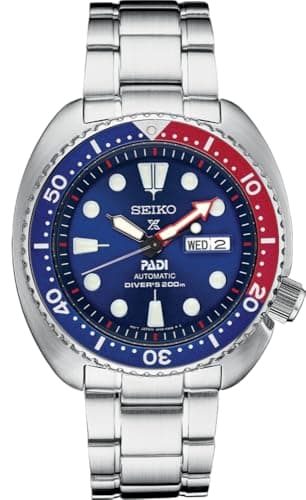 Seiko Prospex Turtle SRPE99SRPE99K1 A real 200 m ISO-rated diver with a screw-down crown, in the cushion case that wears far smaller than its 45 mm suggests. | 45mm · 200m ISO | 8.9out of 10, compiled from published specifications | |
| 2 | 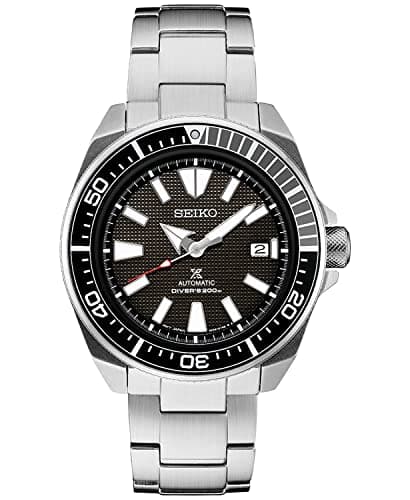 Seiko Prospex Samurai SRPF03SRPF03K1 The angular one. A 200 m ISO diver with hard-cut case facets — the Seiko diver you buy when the Turtle is too round. | 43.8mm · 200m ISO | 8.7out of 10, compiled from published specifications | |
| 3 | 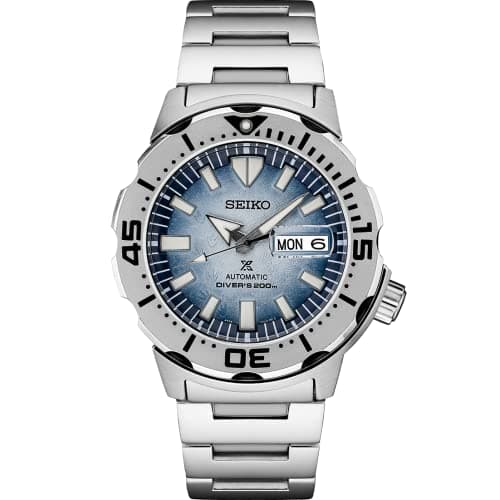 Seiko Prospex Diver SRPG57SRPG57K1 A 200 m Prospex automatic in the modern compact diver case. The one to look at if the Turtle and Samurai both feel too wide. | 42.4mm · 200m ISO | 8.6out of 10, compiled from published specifications | |
| 4 | 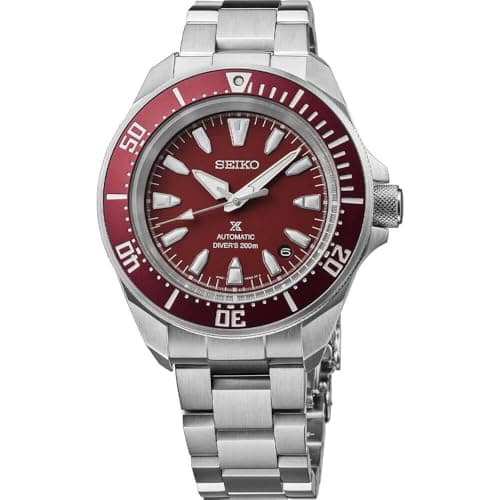 Seiko Prospex Samurai SRPL11SRPL11K1 The 2024 Samurai, redesigned smaller. A 200 m ISO diver at 41.7 mm with a screw-down crown and a red dial — the compact end of Seiko's mechanical diver range. | 41.7mm · 200m ISO | 8.5out of 10, compiled from published specifications |
4 picks · Prices last verified October 23, 2026. Where no live price came back we show “Check price” rather than a number we cannot stand behind. How we pick.
Under $500 is where Seiko stops selling watches that look like divers and starts selling watches that are certified as divers. The distinction is not marketing. Every pick on this page carries the ISO 6425 DIVER’S marking, which means the reference was tested against a written standard covering water resistance under overpressure, condensation after thermal shock, magnetic resistance, bezel operation and the strength of the strap attachment. A 100 m Seiko 5 with a rotating bezel and the same movement has passed none of that, and this bracket is where the difference finally shows up in the price.
What you are choosing between, once the marking is a given, is case geometry and crystal — and one genuinely different answer that runs on light instead of a mainspring. Get the geometry right for your wrist and any of these is a watch you can wear for a decade; get it wrong and the best-specified diver here sits in a drawer because it overhangs.
One geometry note before the picks, because it decides more returns than any other number in this bracket: the ISO-rated Seikos cluster at 45 mm, and the exception is the SRPG57, at 42.4 mm and 12.3 mm on 20 mm lugs. Its full published specification — including the lug-to-lug figure Seiko does not publish — is on its own reference page.
What ISO 6425 actually certifies
The standard is specific, which is exactly why it is worth insisting on. To carry the marking, a diver must, among other requirements:
- survive an overpressure test above its rated depth
- show no condensation after being cycled between hot and cold
- carry a unidirectional bezel with a clear minute scale, legible in the dark
- remain readable at 25 cm in total darkness
- resist a defined magnetic field
- keep its strap or bracelet attached under a defined tensile load
Every reference here meets that, with a screw-down crown and a 200 m rating. That is the floor for inclusion. Dive-styledwatches — the 100 m 5 Sports references that look almost identical at arm’s length — are covered on the under-$500 roundup instead, because they are a different object sold for a different job. Our water resistance guide works through what each number permits.
The case families
The Turtle — cushion case
45 mm wide but 47.7 mm lug-to-lug, 13.4 mm thick, crown at 4 o’clock. The cushion shape is the trick: the case is widest at the middle and the lugs turn down hard, so the footprint on the wrist is far smaller than the diameter threatens. It is the most forgiving large diver anyone sells, and the reason people with modest wrists wear a 45 mm watch happily. Seiko also builds the same 200 m ISO rating into a smaller 42.4 mm Prospex case on 20 mm lugs — the PADI SRPE27 — though its listing currently sits above this page’s cap.
The Samurai — faceted case
43.8 mm, 47 mm lug-to-lug, 12.8 mm thick. Slimmer than the Turtle, with hard-cut facets that catch light where the rounder cases stay matte. It runs the 4R35rather than the 4R36, so it carries a date and no day. The sharp lug edges sit less kindly on a small wrist than the Turtle’s curves, which is the trade for the sharper look.
The compact 200 m — SRPG57
42.4 mm and 12.3 mm thick on 20 mm lugs, which is the slimmest and narrowest-lugged of the mechanical picks here. It is the one to look at when both the Turtle and the Samurai feel too wide. The honest limitation is that Seiko does not publish a lug-to-lug figure for it, so if your fit is tight, that missing number matters and we will not invent one.
The compact outlier
The SRPL11 is the 2024 redesign of the Samurai, and it is here because it is the smallest real ISO diver Seiko sells at this money: 41.7 mm across and 12.3 mm thick, against 45 mm and 13.4 mm for the Turtle. If every diver you have tried has felt like too much watch, this is the one to look at first.
Read the lug-to-lug before you get excited, though. Seiko publishes 49.5 mm for it — longer than the 47.7 mm Turtle despite the much smaller diameter, because the Samurai case runs its lugs straight out rather than curling them down. That is the number that decides whether a watch fits, and on this reference it does not follow the diameter. It is a 200 m ISO 6425 diver with a screw-down crown and a unidirectional bezel, on the 4R35 — date only, no day.
The Hardlex question
Every pick on this page uses Hardlex — there is no sapphire under $500 in Seiko’s current diver range. Hardlex is Seiko’s hardened mineral crystal, and it scratches more readily than sapphire and chips less readily under a sharp impact — a real engineering trade rather than pure cost-cutting. On a desk-worn watch you will never trouble it. On a watch that goes near granite, brick or a workshop it collects marks within months. If a scratch-resistant crystal is non-negotiable, that decision takes you off this page: the King Turtle and the SPB references in the full dive roundup are the route to sapphire, and both cost more.
The PADI edition
The Seiko-PADI reference on this page is a 200 m ISO diver like the rest, and the co-branding is the only thing separating it from its plain sibling. The SRPE99 is the full 45 mm Turtle case — 47.7 mm lug-to-lug, 22 mm lugs — with the blue-and-red PADI bezel over a blue dial, on a steel bracelet. If the co-branding does not bother you, a PADI edition is often the cheapest way into a real Seiko diver; if a logo on the dial does bother you, the non-PADI references cost a small premium to avoid it. Seiko’s smaller PADI diver, the 42.4 mm SRPE27, is the other way in, but at the last check its listing had climbed past the $500 line this page draws.
What you are not paying for yet
It is worth being clear about the ceiling of this bracket, because the next step up is real. Nothing here has the 6R35 movement with its 70-hour reserve, none has the slim, universally wearable proportions of the 62MAS-lineage SPB divers, and none of them has sapphire. Those upgrades exist a bracket up and they are genuine, but they roughly double the price. What under $500 buys is the certification and the core capability — a watch that is a real diver, tested to the standard, with a screw-down crown and 200 m — and that is most of what matters. The refinements above it are refinements, not the difference between a diver and a pretender.
The picks in full
Specifications are transcribed from Seiko’s published documentation. Prices come from Amazon and carry the date they were verified. We have not handled these watches — here is what we did instead.
No buyable offer at the last check (October 23, 2026). We show nothing rather than a stale number.
#ad · we may earn a commission from this link to Seiko Prospex Turtle SRPE99
Seiko Prospex Turtle SRPE99
SRPE99K1Best for: An actual dive watch you can also wear daily
A real 200 m ISO-rated diver with a screw-down crown, in the cushion case that wears far smaller than its 45 mm suggests.
- Spec completeness for the price
- 9.0
- Movement relative to bracket
- 8.5
- Case proportions
- 8.8
- Strap flexibility
- 9.5
- Availability
- 8.6
What it gets right
- Genuine ISO 6425 diver, not a diver-styled sports watch
- 47.7 mm lug-to-lug means it fits wrists that 45 mm suggests it should not
- Screw-down crown at 4 o'clock keeps it off the back of your hand
What it gets wrong
- Hardlex on a watch at this price is the recurring Seiko complaint
- The 45 mm figure scares people off before they try one
- PADI co-branding on the dial is not for everyone
Skip this one if: you have a wrist under about 6.5 inches. The lug-to-lug is forgiving but the case is still visually wide, and the smaller SRPG references exist for exactly this reason.
| Case diameter | 45.0 mm (cushion case) |
|---|---|
| Lug-to-lug | 47.7 mm |
| Thickness | 13.4 mm |
| Lug width | 22 mm |
| Crystal | Hardlex (hardened mineral) |
| Water resistance | 200 m, ISO 6425 rated for scuba diving |
| Crown | Screw-down, at 4 o'clock |
| Bezel | Unidirectional elapsed-timing bezel, PADI red and blue |
| Lume | LumiBrite on hands and markers |
| Bracelet | Steel, three-fold clasp with push-button release |
| Caliber | Seiko 4R36 |
| Type | Automatic, hand-winding and hacking |
| Beat rate | 21,600 vph (6 beats/sec) |
| Jewels | 24 |
| Power reserve | Approx. 41 hours |
| Stated accuracy | -35 to +45 sec/day |
| Complications | Day and date |
No buyable offer at the last check (October 23, 2026). We show nothing rather than a stale number.
#ad · we may earn a commission from this link to Seiko Prospex Samurai SRPF03
Seiko Prospex Samurai SRPF03
SRPF03K1Best for: A 200 m diver with sharp, faceted case geometry
The angular one. A 200 m ISO diver with hard-cut case facets — the Seiko diver you buy when the Turtle is too round.
- Spec completeness for the price
- 8.8
- Movement relative to bracket
- 8.4
- Case proportions
- 8.6
- Strap flexibility
- 9.5
- Availability
- 8.3
What it gets right
- Slimmer than the Turtle at 12.8 mm
- Faceted case catches light in a way the rounder Seikos do not
- Full ISO 6425 diver rating
What it gets wrong
- Date only — no day, unlike the 4R36 references
- Hardlex
- Sharp lug edges are less forgiving on a small wrist
Skip this one if: you want the day complication. The Samurai runs the 4R35, which is the same movement as the 4R36 minus the day wheel.
| Case diameter | 43.8 mm |
|---|---|
| Lug-to-lug | 47.0 mm |
| Thickness | 12.8 mm |
| Lug width | 22 mm |
| Crystal | Hardlex (hardened mineral) |
| Water resistance | 200 m, ISO 6425 rated |
| Crown | Screw-down |
| Caliber | Seiko 4R35 |
| Type | Automatic, hand-winding and hacking |
| Beat rate | 21,600 vph (6 beats/sec) |
| Jewels | 23 |
| Power reserve | Approx. 41 hours |
| Stated accuracy | -35 to +45 sec/day |
| Complications | Date |
$550.009% off
Price as of October 23, 2026. Prices move — Amazon's is the one that counts.
#ad · we may earn a commission from this link to Seiko Prospex Diver SRPG57
Seiko Prospex Diver SRPG57
SRPG57K1Best for: A 200 m Seiko diver in a smaller case
A 200 m Prospex automatic in the modern compact diver case. The one to look at if the Turtle and Samurai both feel too wide.
- Spec completeness for the price
- 8.4
- Movement relative to bracket
- 8.4
- Case proportions
- 8.8
- Strap flexibility
- 9.2
- Availability
- 8.2
What it gets right
- 12.3 mm is slim for a 200 m Seiko diver
- 20 mm lugs open up a wider strap market than 22 mm
- Full ISO 6425 rating
What it gets wrong
- Hardlex
- Date only
- Seiko does not publish a lug-to-lug figure for this reference
Skip this one if: lug-to-lug is your buying constraint. Seiko does not publish it here, and we are not going to invent a number for you — measure one in person or start with a reference where the figure is documented.
| Case diameter | 42.4 mm |
|---|---|
| Lug-to-lug | Not published by Seiko for this reference |
| Thickness | 12.3 mm |
| Lug width | 20 mm |
| Crystal | Hardlex (hardened mineral) |
| Water resistance | 200 m, ISO 6425 rated |
| Crown | Screw-down |
| Caliber | Seiko 4R35 |
| Type | Automatic, hand-winding and hacking |
| Beat rate | 21,600 vph (6 beats/sec) |
| Jewels | 23 |
| Power reserve | Approx. 41 hours |
| Stated accuracy | -35 to +45 sec/day |
| Complications | Date |
No buyable offer at the last check (October 23, 2026). We show nothing rather than a stale number.
#ad · we may earn a commission from this link to Seiko Prospex Samurai SRPL11
Seiko Prospex Samurai SRPL11
SRPL11K1Best for: A real ISO diver for a wrist that the Turtle overwhelms
The 2024 Samurai, redesigned smaller. A 200 m ISO diver at 41.7 mm with a screw-down crown and a red dial — the compact end of Seiko's mechanical diver range.
- Spec completeness for the price
- 8.5
- Movement relative to bracket
- 8.4
- Case proportions
- 8.2
- Strap flexibility
- 9.0
- Availability
- 8.6
What it gets right
- 41.7 mm and 12.3 mm — the slimmest, smallest case in Seiko's ISO diver range
- Genuine ISO 6425 diver with a screw-down crown, not a diver-styled sports watch
- Bracelet ships with a diving extension
What it gets wrong
- Hardlex, on a diver at this price
- 49.5 mm lug-to-lug is long relative to the 41.7 mm case — it wears larger than the diameter suggests
- 4R35 drops the day, so it is date-only
Skip this one if: your wrist is under about 6.5 inches. The diameter looks modest but the 49.5 mm lug-to-lug is longer than the 45 mm Turtle's, and that is the number that decides fit.
| Case diameter | 41.7 mm |
|---|---|
| Lug-to-lug | 49.5 mm |
| Thickness | 12.3 mm |
| Lug width | 20 mm |
| Crystal | Hardlex (hardened mineral) |
| Water resistance | 200 m, ISO 6425 rated for scuba diving |
| Crown | Screw-down |
| Bezel | Unidirectional rotating |
| Caliber | Seiko 4R35 |
| Type | Automatic, hand-winding and hacking |
| Beat rate | 21,600 vph (6 beats/sec) |
| Jewels | 23 |
| Power reserve | Approx. 41 hours |
| Stated accuracy | -35 to +45 sec/day |
| Complications | Date |
How to choose a diver under $500
Lug-to-lug first, then thickness, then diameter
In that order, and the order is the whole point. The Turtle’s 45 mm diameter scares people away from the watch that would have fitted them best, because its 47.7 mm lug-to-lug is shorter than plenty of 42 mm watches with long lugs. Measure across the top of your wrist and compare that number to the lug-to-lug, not the diameter. Where a reference has no published lug-to-lug — the SRPG57 — treat that as a real gap and see one in person if fit is tight.
Decide about sapphire before anything cosmetic
Crystal is the one specification this bracket cannot give you. Every pick here is Hardlex, so if the watch is going to live around abrasive surfaces, that decision is made before you reach this page — and it takes you to the King Turtle or an SPB reference in the full dive roundup, at roughly double the money. Dial color is secondary to it either way.
Decide between day-date and date
The picks here split on movement in one visible way. The Turtles and the SRPF03 run the 4R36, which carries a day and a date; the SRPL11 runs the 4R35, which is date only. Mechanically they are the same family — same beat rate, same roughly 41-hour reserve, same stated accuracy — so this is a question about what you want on the dial rather than about quality. A day window is genuinely useful or visual clutter depending entirely on the person. The wider bracket page has the non-diver alternatives if neither quite fits.
Understand what the bezel is for
A unidirectional dive bezel times an elapsed interval: you line the pip up with the minute hand at the start, and because it rotates one way only, an accidental knock can only make the interval read longer, never shorter. That failure direction is the entire safety logic. It is also genuinely useful above water for anything you time, and no Seiko diver has ever needed a manual to explain it.
Budget for the strap, not against it
Seiko’s factory bracelets in this bracket are adequate rather than good — folded links in places and clasps that rattle — and the watches were designed around rubber as much as steel. A Turtle on a good curved-end rubber strap is transformed, and the outlay is small against the watch. Treat the strap as part of the purchase rather than an afterthought.
Do not confuse a rating with a diving qualification
The ISO 6425 marking means the watch was tested to the standard written for recreational diving. Whether you should dive with any watch as your only timing device is a separate question, and modern practice puts a dive computer first with the watch as a backup. The rating earns the watch a place in the water; it does not make the watch your life-support plan.
Day-date or date only
The Turtles run the 4R36 and carry a day and a date; the Samurai and the compact SRPG57 run the 4R35, which is the same movement without the day wheel. It is a smaller decision than it sounds. If you never read the day, the 4R35 references give you a cleaner dial and often a slightly lower price for the same mechanical behavior. If you like a day window, the Turtles are the only picks here that have one.
Factor in the strap the watch ships on
The PADI Turtle and some references arrive on rubber or silicone rather than steel, and that changes the value calculation. A watch on a good strap needs no immediate upgrade; a watch on an adequate folded bracelet effectively costs a strap more than its sticker if you intend to fix it. Factor the included strap into the comparison rather than treating every reference as if it arrived bare, because it can flip which pick is actually cheaper to live with.
Expect it to stop over a quiet weekend
All the mechanical picks here carry roughly a 41-hour reserve, which means a watch taken off on Friday evening is usually stopped by Sunday. That is not a fault; it is the 4R family. If leaving a watch dormant over a weekend and finding it stopped would irritate you, that is one more argument for a watch winder, or for wearing whichever pick you choose often enough to keep it wound.
What the numbers will not settle
How the bezel action feels under the thumb, how the lume holds after a few hours, whether the caseback catches your wrist bone. We have not handled these and are not going to guess at any of it. The specification narrows the field to two or three; the last step, if you can take it, is putting one on. At this price the geometry figures do most of the work, and the rest is preference you can only confirm in person.
Questions
What is the best Seiko dive watch under $500?
The Turtle SRPE99 for most people — a 200 m ISO 6425 diver with a screw-down crown and a cushion case whose 47.7 mm lug-to-lug fits a wider range of wrists than the 45 mm diameter suggests. If you want the most accurate and lowest-maintenance option, no pick in this bracket delivers it — that starts with the solar and 6R35 references a bracket up.
What makes these different from a Seiko 5 Sports diver?
The ISO 6425 marking and everything required to earn it — a screw-down crown, a 200 m rather than 100 m rating, and case construction tested for condensation, thermal shock and magnetic resistance. Both may share a movement; the difference is the case and the certification, not the engine.
What happened to the Seiko SNE591?
It is discontinued. The SNE591 was the 200 m solar diver with a sapphire crystal that used to sit on this page as the accuracy-and-low-maintenance option, and as of our August 2026 price check it no longer has a live listing. Seiko currently has no solar diver under $500 we can point you at — the nearest one costs more and ships on a months-long lead time — so every pick here is now mechanical and Hardlex. If solar was the reason you were interested, that requirement now means spending above this bracket.
Is the Turtle too big for a smaller wrist?
Usually not, down to about 6.5 inches. The number that matters is the 47.7 mm lug-to-lug, not the 45 mm diameter, and the cushion case turns down sharply at the lugs. Below about 6.25 inches, the compact SRPG57 or a smaller diver in the full dive roundup is the better route.
Why does Seiko still use Hardlex on 200 m divers?
Cost, and a real engineering argument: mineral crystal resists shattering better than sapphire for a given thickness, so under a sharp impact Hardlex chips where sapphire can crack. Whether that trade is worth the easier scratching depends on how you wear the watch. No pick on this page ships with sapphire.
Sources
- Seiko Prospex collection — official specifications
- ISO 6425 — Horology, divers' watches (standard listing)
- Seiko instruction manuals and caliber documentation
- Seiko customer service — warranty and servicing
Specifications are transcribed from manufacturer documentation and published standards. Where a manufacturer does not publish a figure, this page says so rather than estimating one.
Read next
- Best Seiko dive watchesEvery Seiko diver we cover, ranked, with the ISO markings called out.
- Seiko Turtle SRPE99 referenceFull published specifications for the winner above.
- Seiko water resistance explainedWhat 100 m, 200 m and the ISO marking each actually permit.
- Best Seiko watches under $500The wider bracket, including the dive-styled watches that are not ISO divers.