Roundups
Best Japanese watches under $1,000
This is the bracket where you stop buying capability and start buying materials. Which of those two things your money should go to, and the picks that do each best.
By Stephen V. · Updated Nov 5, 2026
Quick picks
| # | Watch | Key spec | Score | Price |
|---|---|---|---|---|
| 1 | 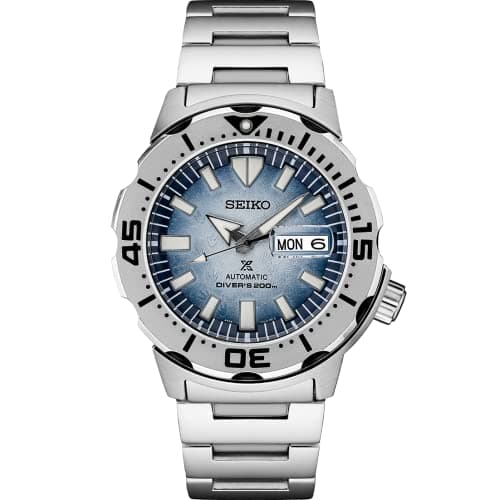 Seiko Prospex Diver SRPG57SRPG57K1 A 200 m Prospex automatic in the modern compact diver case. The one to look at if the Turtle and Samurai both feel too wide. | 42.4mm · 200m ISO | 8.6out of 10, compiled from published specifications | |
| 2 | 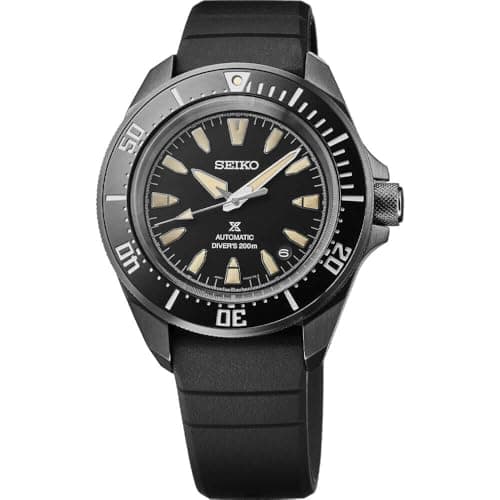 Seiko Prospex Samurai SRPL15SRPL15K1 The 2024 Samurai in black hard-coated steel on a silicone strap. The same 41.7 mm case and 4R35 as the SRPL11 — not the larger SRPF03 case. | 41.7mm · 200m ISO | 8.5out of 10, compiled from published specifications | |
| 3 | 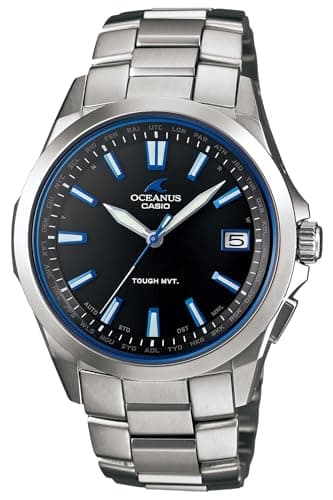 Casio Oceanus OCW-S100OCW-S100-1AJF The JDM Casio nobody outside Japan knows about: a solar, radio-synced Oceanus, finished to a standard Casio never applies to G-Shock. | solar · radio | 7.6out of 10, compiled from published specifications | |
| 4 | 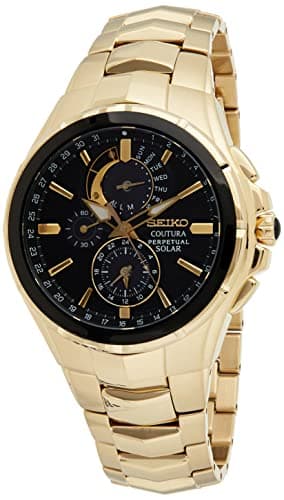 Seiko Coutura Solar Chronograph SSC700SSC700 Sapphire, 100 m, a perpetual calendar and no battery to replace, in one watch. The most complete spec sheet in Seiko's quartz range at anything like this money. | 44mm · solar chrono | 8.4out of 10, compiled from published specifications | |
| 5 | 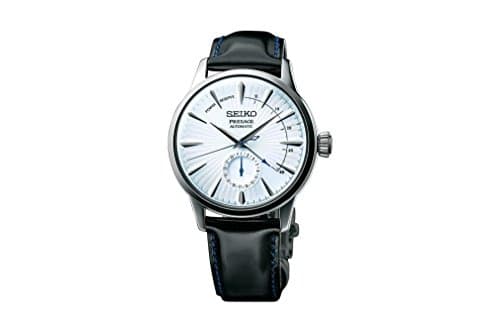 Seiko Presage Cocktail Time SSA343SSA343J1 The Cocktail Time with the power reserve hand: the 'Sky Diving' ice-blue dial, a 4R57 instead of a 4R35, and 14.4 mm of case to pay for it. | 40.5mm · 4R57 | 8.3out of 10, compiled from published specifications | |
| 6 | 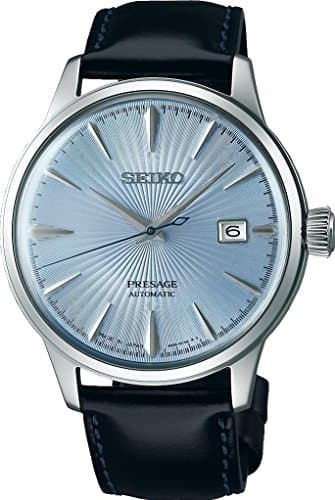 Seiko Presage Cocktail Time SRPB43SRPB43J1 The blue Cocktail Time. A box-shaped crystal over a deeply textured dial — the most expensive-looking watch Seiko sells at this price by a wide margin. | 40.5mm · dress | 8.6out of 10, compiled from published specifications |
6 picks · Prices last verified November 23, 2026. Where no live price came back we show “Check price” rather than a number we cannot stand behind. How we pick.
Under $1,000 the best Japanese watch for most buyers is the Seiko Prospex SRPG57: a 200 m ISO 6425 diver at 42.4 mm and 12.3 mm, on 20 mm lugs, with a screw-down crown and a 4R35 automatic. Take the Samurai SRPL15 if you want the same rating with a published lug-to-lug, the Casio Oceanus if accuracy is the point, the Coutura SSC700 if you want a sapphire crystal and a chronograph, and the Presage SSA343 if it has to go under a cuff.
Something unhelpful happens to watch roundups at this price. The $1,000 ceiling is where Swiss brands start showing up, so most lists quietly become Swiss lists with one Seiko in them. This one does not: every pick is from one of the 4 Japanese makers this site tracks, and they are ranked against each other on the same criteria rather than brand by brand.
There is now a rung above this one. Best Seiko watches under $2,000 is where the 6R calibers start: approximately 70 to 72 hours of reserve against the 4R family’s 41, a stated -15 to +25 seconds a day against -35 to +45, and sapphire as the norm rather than the exception.
It is also the top rung of a ladder. We publish the under-$200 list and the under-$500 list, and the useful thing to know before spending more is what the extra money actually buys. It is not capability. Japanese makers give you a certified dive rating and a real automatic movement for well under $500. What the $500-to-$1,000 band buys is materials and precision: sapphire instead of hardened mineral glass, a radio time signal instead of a free-running quartz crystal, dress-case finishing instead of tool-case finishing, and complications that need more than three hands.
The criteria, before the picks
Every pick on this page had to clear all five of these. They are the same criteria the rest of the site uses, in the same order, and they are deliberately about what the maker publishes rather than about how a watch looks.
- 1. A live listing, checked before writing. Every reference here was queried through Amazon’s Creators API on the day this page was written and came back in stock with a price. This matters more than it sounds: six of the Prospex diver references we track returned no live price at that same check, including both King Turtles, and a roundup whose lead pick cannot be bought is worthless.
- 2. A published specification. If the maker does not publish a figure, this page does not state it. One pick here — the Oceanus — has a deliberately short spec table for that reason, and its entry says so rather than filling the gaps from a reseller listing.
- 3. What it is rated to do. ISO 6425 is the line between “water resistant” and “certified for diving,” and only 12 of the 69 references in our registry carry it. Two of them are on this page.
- 4. What the money buys that a cheaper watch does not. A $700 watch with the specification of a $350 watch is not a pick, however good it looks. Each entry below names the upgrade explicitly.
- 5. An honest skip-this. Every pick carries a statement of who should not buy it. It is the part of a roundup a page with something to hide never writes.
| Pick | Maker | Movement | Crystal | Water resistance |
|---|---|---|---|---|
| Prospex SRPG57 | Seiko | 4R35 automatic | Hardlex | 200 m, ISO 6425 |
| Prospex Samurai SRPL15 | Seiko | 4R35 automatic | Hardlex | 200 m, ISO 6425 |
| Oceanus OCW-S100 | Casio | Solar, radio-controlled | Not published | Not published |
| Coutura SSC700 | Seiko | V198 solar chronograph | Sapphire | 100 m |
| Presage SSA343 | Seiko | 4R57 automatic | Box Hardlex | 50 m |
| Presage SRPB43 | Seiko | 4R35 automatic | Box Hardlex | 50 m |
Read that table before the rankings, because it contains the page’s real argument. Only 15references in our whole registry publish a sapphire crystal, and exactly one of them is on this page — which tells you that in the Japanese sub-$1,000 bracket, sapphire is still something you have to go looking for rather than something the price band includes.
Ranked, and why
1. Seiko Prospex SRPG57 — the most watch for the money in the bracket
Who it is for: anyone who wants one watch that can do everything and does not want to think about it again. Seiko publishes 42.4 mm across, 12.3 mm thick, a 20 mm lug width, a screw-down crown, Hardlex and a full 200 m ISO 6425 rating, driven by a 4R35automatic that hacks and hand-winds. That combination of a certified dive rating with a sub-13 mm case is unusual; most of Seiko’s ISO divers are thicker, and the 20 mm lugs open up a far wider strap market than the 22 mm the older cases use.
The upgrade over the cheaper brackets:honestly, not much, and that is worth saying out loud. You can buy an ISO 6425 Seiko or Citizen diver for less. What you get here is the proportions — a real diver that is narrow and slim enough to wear as a daily watch rather than as a tool.
Honest cons:Hardlex rather than sapphire at this money. Date only, no day. And Seiko publishes no lug-to-lug for this reference at all, which is the single most annoying gap on the page — the SRPG57 reference page covers that in full. If lug-to-lug is your buying constraint, rank the Samurai first instead.
2. Seiko Prospex Samurai SRPL15 — the same rating, with the number you need
Who it is for:the buyer the SRPG57’s missing lug-to-lug rules out. The 2024 Samurai publishes all four fit numbers: 41.7 mm across, 49.5 mm lug-to-lug, 12.3 mm thick, 20 mm lugs. Same 200 m ISO 6425 rating, same screw-down crown, same 4R35, black hard-coated steel case on a silicone strap.
The upgrade: the hard coating, and documentation. Being able to plan a wrist fit before you order is worth real money, and only 35 of 69 registry entries let you.
Honest cons:49.5 mm lug-to-lug is long relative to a 41.7 mm case, so it wears bigger than the diameter suggests — the fit arithmetic is the page to read first. Hardlex again. And the silicone strap is a love-or-hate item; it is 20 mm, so swapping is cheap.
3. Casio Oceanus OCW-S100 — the accuracy pick, with a caveat we will not hide
Who it is for:someone for whom “never set it, never service it” beats “mechanical.” The Oceanus is Casio’s dress line, finished to a standard it never applies to G-Shock, and this reference is solar and radio-controlled: it charges from light and synchronizes itself to a time signal, so it needs neither a battery change nor setting. It is also a genuinely Japan-market watch rather than an export model, which is why almost nobody outside Japan has heard of it. What JDM means and who is behind each Japanese brand both have more on that.
The caveat, stated plainly:Casio’s specification pages block automated access from here, so we can confirm the line, the reference and the power source but notthe case material, the dimensions, the crystal or the water resistance. We are not going to copy those from a reseller. That is why its row in the table above reads “Not published” twice, and why it is third rather than first.
Honest cons:an unverifiable spec sheet, a price several times a G-Shock’s, and thin resale outside Japan. If you need the numbers before you buy, this is the wrong pick and one of the Seikos is the right one.
4. Seiko Coutura SSC700 — the only sapphire crystal here
Who it is for:the buyer who wants the crystal and the complications rather than the mechanics. Seiko publishes a sapphire crystal, 100 m, a 44 mm case at 11.77 mm, a V198 solar chronograph movement stated at ±15 seconds a month, roughly six months of reserve from a full charge, a 60-minute chronograph in 1/5-second increments, an alarm, a power reserve indicator and a perpetual calendar that handles leap years to 2100.
The upgrade over the cheaper brackets:the clearest on the page. Sapphire plus solar plus a perpetual calendar is a specification sheet you cannot assemble under $500 from any of these makers, and ±15 seconds a month is an order of magnitude tighter than any mechanical pick here. The quartz-versus-automatic decision is the one to settle before you rank this against the divers.
Honest cons:44 mm is a large watch and Seiko publishes no lug-to-lug for it, so a big diameter arrives with an unknown footprint. The gold-finish case is a styling commitment, not a neutral choice. And a solar chronograph is a sealed system — when the capacitor eventually goes, that is a service rather than a battery. How long these actually last has the figures Seiko publishes.
5. Seiko Presage SSA343 — the dress pick, and the one with a fuel gauge
Who it is for:someone whose gap is a dress watch, not another diver. A 40.5 mm Presage Cocktail Time with a box-shaped Hardlex crystal over the ice-blue “Sky Diving” dial, 50 m, an exhibition caseback, 20 mm lugs, 84.0 g on cow leather, and a 4R57 automatic driving a date hand and a power reserve indicator as well as the time. Nothing else in this bracket shows you the state of wind on the dial.
The upgrade: the complication, and only the complication. The 4R57 holds the same 41 hours and carries the same stated rate as the 4R35 in the two divers above. You are buying two extra displays.
Honest cons: 14.4 mmthick, which is taller than either 200 m diver on this page and a real problem under a slim cuff. Hardlex. 50 m, so it is not a swim watch. And Seiko publishes no lug-to-lug for it — the SSA343 reference page has the whole specification and the slimmer alternative.
6. Seiko Presage SRPB43 — the cheaper, slimmer version of pick 5
Who it is for:the buyer who read pick 5 and decided the gauge was not worth 2.6 mm. The SRPB43 is the same ice-blue “Sky Diving” Cocktail Time dial on the same 40.5 mm case with the same box-shaped crystal, a 4R35 instead of a 4R57, and Seiko publishes it at 11.8 mm with a 47.6 mm lug-to-lug. It is the best-documented dress watch on this page and the cheapest pick here.
The upgrade over the cheaper brackets: finishing and the dial. This is Presage case work and a pressed-pattern dial under a curved crystal, which is a different object from a sub-$300 dress Seiko even though the movement family is shared.
Honest cons: 50 m and a leather strap mean this cannot be your only watch. 47.6 mm lug-to-lug is long for 40.5 mm. Hardlex on a curved crystal is harder to polish than a flat one. The Cocktail Time roundup ranks the whole line if the dial is what brought you here.
What we did not pick, and why
A roundup is only as honest as its rejections, so here are the ones that mattered.
- The Prospex Sumo SPB103, at $1,025 on the day of the check. It is the best watch we track anywhere near this bracket — a 6R35 with a 70-hour reserve, sapphire and 200 m — and it is over the ceiling. That is the whole story of the next bracket up: the step from $1,000 to $1,100 buys more than the step from $500 to $1,000. The Sumo page has it, and our Seiko-only under-$1,000 list is where the line gets argued.
- The Alpinist GMT SBEJ005, at $1,139. Same reason. Over the ceiling, and a page that stretches its own budget to make a pick look better is not a budget page.
- Seiko’s King Turtle references. The sapphire-and-ceramic version of the Turtle is the obvious pick for this bracket on paper, and neither of the two references we track returned a live price at the same availability check that cleared the six picks above. We rank what can be bought.
- The Prospex Turtle SRPE99, which is live. It came back at $494.22 — under $500, which puts it on the bracket below rather than here. A page called “under $1,000” that fills itself with $450 watches is a different page wearing the wrong title.
- Citizen and Orient’s best work. Both makers are genuinely strong here, and in this bracket their strongest live listings sit well below $500 — the Promaster divers, the Tsuyosa, the Bambino. Padding a $1,000 list with $350 watches to even up the brand count would be dishonest. They are ranked properly on the under-$500 page, which is the right page for them.
- Anything Swiss. Even where we track it. This is a Japanese-watch page; the Japanese-versus-Swiss comparison is the one for that question.
Spend less, or spend more?
Two honest answers, and both of them lead away from this page for some readers.
Spend less if what you want is a capable automatic with a real rating. Japanese makers have been winning that argument under $500 for years, and nothing in the $500-to-$1,000 band changes what a watch can do— it changes what it is made of. The under-$500 list is where the value-per-dollar peak genuinely sits.
Spend more if the 41-hour reserve is the thing that bothers you. The 6R35 publishes 70 hours and a tighter -15 to +25 stated rate, and it starts a little above this ceiling. Four of the six picks here run a 41-hour 4R caliber; the reserve guide does the arithmetic on what that means for a watch you take off on Friday night.
If neither applies, the SRPG57 is the pick. It is the only watch on this page that is certified for diving, slim enough to wear daily, and cheap enough that buying a second watch for dress duty is still within the same $1,000.
The picks in full
Specifications are transcribed from Seiko’s published documentation. Prices come from Amazon and carry the date they were verified. We have not handled these watches — here is what we did instead.
No buyable offer at the last check (November 23, 2026). We show nothing rather than a stale number.
#ad · we may earn a commission from this link to Seiko Prospex Diver SRPG57
Seiko Prospex Diver SRPG57
SRPG57K1Best for: A 200 m Seiko diver in a smaller case
A 200 m Prospex automatic in the modern compact diver case. The one to look at if the Turtle and Samurai both feel too wide.
- Spec completeness for the price
- 8.4
- Movement relative to bracket
- 8.4
- Case proportions
- 8.8
- Strap flexibility
- 9.2
- Availability
- 8.2
What it gets right
- 12.3 mm is slim for a 200 m Seiko diver
- 20 mm lugs open up a wider strap market than 22 mm
- Full ISO 6425 rating
What it gets wrong
- Hardlex
- Date only
- Seiko does not publish a lug-to-lug figure for this reference
Skip this one if: lug-to-lug is your buying constraint. Seiko does not publish it here, and we are not going to invent a number for you — measure one in person or start with a reference where the figure is documented.
| Case diameter | 42.4 mm |
|---|---|
| Lug-to-lug | Not published by Seiko for this reference |
| Thickness | 12.3 mm |
| Lug width | 20 mm |
| Crystal | Hardlex (hardened mineral) |
| Water resistance | 200 m, ISO 6425 rated |
| Crown | Screw-down |
| Caliber | Seiko 4R35 |
| Type | Automatic, hand-winding and hacking |
| Beat rate | 21,600 vph (6 beats/sec) |
| Jewels | 23 |
| Power reserve | Approx. 41 hours |
| Stated accuracy | -35 to +45 sec/day |
| Complications | Date |
$575.005% off
Price as of November 23, 2026. Prices move — Amazon's is the one that counts.
#ad · we may earn a commission from this link to Seiko Prospex Samurai SRPL15
Seiko Prospex Samurai SRPL15
SRPL15K1Best for: A current-generation Samurai in an all-black execution
The 2024 Samurai in black hard-coated steel on a silicone strap. The same 41.7 mm case and 4R35 as the SRPL11 — not the larger SRPF03 case.
- Spec completeness for the price
- 8.5
- Movement relative to bracket
- 8.4
- Case proportions
- 8.2
- Strap flexibility
- 9.0
- Availability
- 8.6
What it gets right
- The current-generation 2024 Samurai case
- 200 m ISO diver with a screw-down crown and case back
- Black hard coating over the steel case
What it gets wrong
- Hardlex
- Date only
- 49.5 mm lug-to-lug is long relative to the 41.7 mm case
Skip this one if: you want the older Samurai case. This is the smaller 2024 redesign on 20 mm lugs, not the SRPF03's 22 mm case — and the SRPL11 is the same case on a steel bracelet.
| Case diameter | 41.7 mm |
|---|---|
| Lug-to-lug | 49.5 mm |
| Thickness | 12.3 mm |
| Lug width | 20 mm |
| Crystal | Hardlex (hardened mineral) |
| Water resistance | 200 m, ISO 6425 rated |
| Crown | Screw-down |
| Case | Stainless steel with black hard coating |
| Strap | Black silicone |
| Caliber | Seiko 4R35 |
| Type | Automatic, hand-winding and hacking |
| Beat rate | 21,600 vph (6 beats/sec) |
| Jewels | 23 |
| Power reserve | Approx. 41 hours |
| Stated accuracy | -35 to +45 sec/day |
| Complications | Date |
$588.989% off
Price as of November 23, 2026. Prices move — Amazon's is the one that counts.
#ad · we may earn a commission from this link to Casio Oceanus OCW-S100
Casio Oceanus OCW-S100
OCW-S100-1AJFBest for: The best-finished JDM watch that is not a Seiko
The JDM Casio nobody outside Japan knows about: a solar, radio-synced Oceanus, finished to a standard Casio never applies to G-Shock.
- Spec completeness for the price
- 7.0
- Movement relative to bracket
- 9.1
- Case proportions
- 8.0
- Strap flexibility
- 6.5
- Availability
- 7.2
What it gets right
- Solar and radio-synced, so it neither needs a battery nor setting
- Oceanus case finishing sits well above Casio's mainstream lines
- A genuinely Japan-market watch rather than an export model
What it gets wrong
- Costs several times a G-Shock
- Almost unknown outside Japan, so resale is thin
- We could not verify this reference's case material or dimensions against Casio's own published specification, so this page does not state them
Skip this one if: you need the published specification before buying. Casio's product pages refuse automated access, so we can confirm the line, the reference and the power source but not the case figures — and we will not copy them from a reseller.
| Brand | Casio (Oceanus line) |
|---|---|
| Market | Primarily Japanese domestic market |
| Reference | OCW-S100-1AJF |
| Movement | Solar, radio-controlled — per the retail listing |
| Case and dimensions | Not verifiable — Casio's specification pages block automated access |
No buyable offer at the last check (November 23, 2026). We show nothing rather than a stale number.
#ad · we may earn a commission from this link to Seiko Coutura Solar Chronograph SSC700
Seiko Coutura Solar Chronograph SSC700
SSC700Best for: A quartz watch you charge with daylight and otherwise ignore
Sapphire, 100 m, a perpetual calendar and no battery to replace, in one watch. The most complete spec sheet in Seiko's quartz range at anything like this money.
- Spec completeness for the price
- 8.9
- Movement relative to bracket
- 8.6
- Case proportions
- 7.8
- Strap flexibility
- 8.0
- Availability
- 8.5
What it gets right
- Sapphire crystal at a price where Seiko normally fits Hardlex
- Solar — no battery change for the life of the capacitor
- Perpetual calendar means the date is right through February without you touching it
- Chronograph, alarm and a power-reserve indicator in one watch
What it gets wrong
- 44 mm is a large watch, and Seiko does not publish a lug-to-lug for it
- The gold-finish case is a styling commitment
Skip this one if: you want something mechanical or something small. This is a big light-powered quartz with a lot of functions, and that is the whole point of it.
| Case diameter | 44 mm |
|---|---|
| Thickness | 11.77 mm |
| Lug-to-lug | Not published by Seiko for this reference |
| Case material | Stainless steel with a gold finish |
| Crystal | Sapphire |
| Water resistance | 100 m (10 bar) |
| Caliber | Seiko V198 solar chronograph |
| Stated accuracy | ±15 sec/month |
| Power reserve | Approx. 6 months from full charge |
| Chronograph | 60 minutes, in 1/5-second increments, with split-time measurement |
| Calendar | Perpetual — leap year, month, day and date, to 2100 |
| Complications | Alarm, power reserve indicator, small seconds |
| Dial | Black |
| Bracelet | Stainless steel |
Price as of November 23, 2026. Prices move — Amazon's is the one that counts.
#ad · we may earn a commission from this link to Seiko Presage Cocktail Time SSA343
Seiko Presage Cocktail Time SSA343
SSA343J1Best for: Seeing how much wind is left without taking the watch off
The Cocktail Time with the power reserve hand: the 'Sky Diving' ice-blue dial, a 4R57 instead of a 4R35, and 14.4 mm of case to pay for it.
- Spec completeness for the price
- 7.8
- Movement relative to bracket
- 8.8
- Case proportions
- 7.4
- Strap flexibility
- 9.2
- Availability
- 8.4
What it gets right
- A power reserve indicator and a date hand, on a watch that still costs less than most 70-hour automatics
- The same ice-blue 'Sky Diving' dial and box crystal as the cheaper SRPB43
- 84.0 g is light for a 40.5 mm steel case, because the strap is leather
What it gets wrong
- 14.4 mm thick — 2.6 mm taller than the 4R35 version of the same dial
- Hardlex, not sapphire
- Seiko publishes no lug-to-lug for this reference and has no US catalog page for it
Skip this one if: you want the thinnest version of this dial. The SRPB43 is the same 'Sky Diving' Cocktail Time at 11.8 mm — you give up the power reserve hand and get a 2.6 mm slimmer watch for less money.
| Case diameter | 40.5 mm |
|---|---|
| Lug-to-lug | Not published by Seiko for this reference |
| Thickness | 14.4 mm |
| Lug width | 20 mm |
| Crystal | Box-shaped Hardlex |
| Water resistance | 50 m (5 bar) |
| Caliber | Seiko 4R57 |
| Type | Automatic, hand-winding and hacking |
| Beat rate | 21,600 vph (6 beats/sec) |
| Jewels | 29 |
| Power reserve | Approx. 41 hours |
| Stated accuracy | -35 to +45 sec/day |
| Complications | Date hand and power reserve indicator |
| Dial | Ice blue, pressed pattern — Seiko's 'Sky Diving' cocktail dial |
| Case material | Stainless steel |
| Band | Cow leather, three-fold clasp with push-button release |
| Weight | 84.0 g |
| Display back | Yes — see-through screw caseback |
Price as of November 23, 2026. Prices move — Amazon's is the one that counts.
#ad · we may earn a commission from this link to Seiko Presage Cocktail Time SRPB43
Seiko Presage Cocktail Time SRPB43
SRPB43J1Best for: A dress watch that looks like it cost three times the money
The blue Cocktail Time. A box-shaped crystal over a deeply textured dial — the most expensive-looking watch Seiko sells at this price by a wide margin.
- Spec completeness for the price
- 8.6
- Movement relative to bracket
- 8.4
- Case proportions
- 8.5
- Strap flexibility
- 9.2
- Availability
- 8.4
What it gets right
- The box crystal distorts light at the edges the way vintage acrylic did
- Sunburst dial texture that photographs badly and looks superb in person
- Exhibition back
What it gets wrong
- 50 m, so it is not a swim watch
- 47.6 mm lug-to-lug is long for a 40.5 mm dress case
- Hardlex on a curved crystal is harder to polish than a flat one
Skip this one if: you need one watch for everything. At 50 m and on a leather strap this is a shirt-cuff watch — pair it with a diver rather than asking it to be one.
| Case diameter | 40.5 mm |
|---|---|
| Lug-to-lug | 47.6 mm |
| Thickness | 11.8 mm |
| Lug width | 20 mm |
| Crystal | Box-shaped Hardlex |
| Water resistance | 50 m — splash resistant, not for swimming |
| Display back | Yes — exhibition caseback |
| Caliber | Seiko 4R35 |
| Type | Automatic, hand-winding and hacking |
| Beat rate | 21,600 vph (6 beats/sec) |
| Jewels | 23 |
| Power reserve | Approx. 41 hours |
| Stated accuracy | -35 to +45 sec/day |
| Complications | Date |
Four questions, in this order, settle this bracket faster than any amount of comparing.
- Mechanical or light-powered? Settle this first and half the page falls away. Mechanical means a 41-hour reserve and a stated window of -35 to +45 seconds a day; solar means ±15 seconds a month, no winding and no battery. The comparison is the page for it.
- Do you need a certified dive rating, or just water resistance? ISO 6425 is a real certification with real requirements, and two picks here carry it. If you are not getting in water with it, you are paying for a rating you will not use — what each rating actually permits is the arbiter.
- Is sapphire a requirement? If yes, this bracket narrows to one pick, and you should know that before you start shopping. Hardlex versus sapphire is honest about how much the difference matters in practice.
- Does the maker publish a lug-to-lug? Diameter is the number every retailer leads with and the least useful one. If your wrist is under about 17 cm, make a published lug-to-lug a hard requirement and the shortlist shrinks usefully. The fit guide has the arithmetic.
One more thing worth saying about this bracket specifically: check availability yourself before you fall in love with a reference. Japanese mechanical inventory in the US has been erratic, and the prices above come from our own price layer rather than from a number typed into this page, so the table is the figure to trust — not the prose.
Questions
What is the best Japanese watch under $1,000?
For most buyers, the Seiko Prospex SRPG57: a 200 m ISO 6425 automatic diver at 42.4 mm and 12.3 mm on 20 mm lugs, with a screw-down crown. It is the only pick here that is both certified for diving and slim enough to wear as a daily watch. If accuracy matters more than mechanics, the Casio Oceanus; if you want sapphire and a chronograph, the Coutura SSC700.
Is it worth spending $1,000 on a Japanese watch?
Only if you want materials or complications. Japanese makers deliver a certified dive rating and a hacking, hand-winding automatic for well under $500, and the $500-to-$1,000 band does not add capability — it adds sapphire, radio synchronization, finishing and extra displays. If none of those is on your list, the under-$500 page is the better value.
What is the best Japanese dive watch under $1,000?
The two picks here that carry a full ISO 6425 rating: the Prospex SRPG57 and the Prospex Samurai SRPL15. Both are 200 m with screw-down crowns and 4R35 automatics. Choose the SRPL15 if you need a published lug-to-lug (49.5 mm) and the SRPG57 if you want the narrower 42.4 mm case. The full dive roundup ranks the rest.
Which Japanese watch brands are worth buying?
Seiko, Citizen, Orient and Casio each lead at something different, and who actually owns each oneis worth knowing — Orient is run by Seiko Epson, a company with Seiko roots that is not part of Seiko Watch Corporation. In this bracket specifically Seiko dominates on mechanical divers and Casio’s Oceanus line is the accuracy specialist.
Do any Japanese watches under $1,000 have a sapphire crystal?
Some, but fewer than you would expect — only 15 of the 69references we track publish one, and on this page it is the Coutura SSC700 alone. The two ISO divers and both dress picks use Hardlex, Seiko’s hardened mineral glass. The sapphire roundup lists every reference that has it.
Why is the Seiko Sumo not on this list?
It was $1,025 at the availability check this page was written against — $25 over the ceiling. It is the better watch, with a 6R35, a 70-hour reserve, sapphire and 200 m, and pretending $1,025 is “under $1,000” would make every other number on this page less trustworthy. Its own page has the specification.
Sources
- Seiko Watch Corporation — US catalog and published specifications
- Seiko Watch Corporation — Presage SSA343J1 specifications (checked 2026-11-05)
- Seiko — specifications, Cal. 4R57 (instruction manual, checked 2026-11-05)
- ISO 6425 — Horology, divers' watches (standard listing)
- Seiko Prospex collection — official specifications
- Seiko Presage collection — official specifications
- Seiko instruction manuals and caliber documentation
Specifications are transcribed from manufacturer documentation and published standards. Where a manufacturer does not publish a figure, this page says so rather than estimating one.
Read next
- Best Japanese watches under $500The rung below, and where the value-per-dollar peak actually sits.
- Best Japanese watches under $200The bottom rung of the same cross-brand ladder.
- Best Seiko watches under $1,000The same ceiling, Seiko only, for a buyer who has already picked the brand.
- Seiko Presage SSA343The dress pick in full, including the 2.6 mm its complication costs.
- Seiko 4R57 caliber referenceThe movement behind pick five, and how it differs from the 4R35 in picks one and two.
- Japanese vs Swiss watchesThe comparison this page deliberately does not make inside its own rankings.